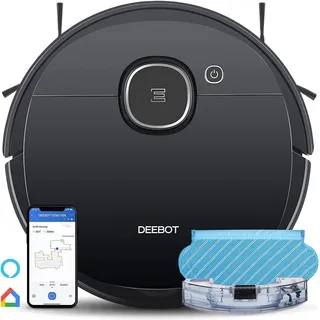
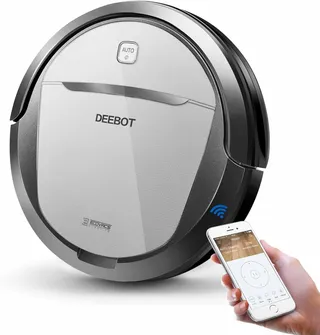
Ecovacs Deebot 711S
Released 2019
Suction
1,000 Pa
Battery
130 min
Navigation
vSLAM
Full Specifications
| Suction Power | 1,000 Pa |
| Battery Life | 130 min |
| Dustbin Capacity | 520 ml |
| Navigation | vSLAM |
| Robot Height | 3.27" |
| Threshold Climbing | 20 mm |
| Brush Roll | Single |
| Mopping | No |
| Self-Empty Dock | No |
| Obstacle Avoidance | No |
| WiFi | 2.4 GHz |
| Voice Assistants | Alexa, Google |
| Warranty | 1 year |
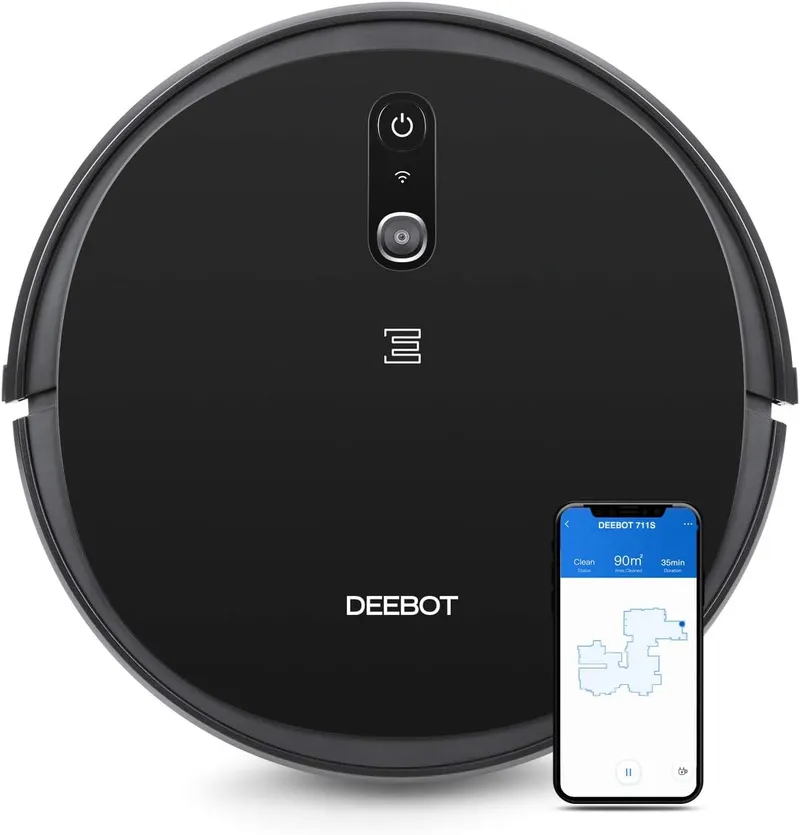
Ecovacs Deebot 711S
The Deebot 711S is a 2019-era robot vacuum that’s still kicking around on Amazon for $387, down from its original $550 asking price. Here’s the honest truth: it was a decent mid-range option six years ago. Today? It’s showing its age.
What you’re getting is essentially the original 711 with a bigger battery (130 minutes versus 110). That extra runtime is nice, but the 711S still lacks features that even budget models now include: no recharge-and-resume, no virtual boundaries, and obstacle avoidance that relies solely on bumping into things.
The Good, the Bad, and the Outdated
This vacuum does one thing well: systematic cleaning. Its vSLAM camera creates a map after the first run, then follows a methodical S-shaped pattern instead of bouncing randomly around your home. For a small apartment or single-floor home under 1,300 square feet, it’ll get the job done.
The 520ml dustbin holds enough for 2-3 days between empties. Battery life runs about 130 minutes in standard mode, though you’ll see roughly 70-80 minutes if you crank it to max suction. At 1000 Pa, that suction isn’t impressive by 2025 standards, but it handles hardwood, tile, and low-pile carpet without issues.
Where it falls short is everywhere modern vacuums have improved. Dies mid-clean? You’re manually restarting it. Want to clean just the kitchen? Too bad, it’s all-or-nothing. Have dark rugs? The cliff sensors will think they’re bottomless pits and refuse to cross them.
Hardware Specs
| Spec | Value |
|---|---|
| Suction Power | 1000 Pa |
| Dustbin | 520 ml |
| Runtime | 130 minutes (standard), ~70-80 min (max) |
| Charging Time | 4.5 hours |
| Height | 3.27 inches |
| Weight | 6.83 lbs |
| Battery | 2600 mAh Li-ion, 14.4V |
| Navigation | vSLAM camera (Smart Navi 2.0) |
The brush system consists of a single roller plus two side brushes. There’s no anti-tangle technology, so pet owners with long-haired dogs or cats should expect to clean the brush every week or two. The filters aren’t HEPA-rated and can’t be washed, meaning you’ll replace them every 3-6 months.
Navigation and Sensors
The vSLAM system works reasonably well in lit rooms. It creates a visual map on the first cleaning run, then navigates systematically on subsequent runs. You’ll see it cover 600+ square feet in about 45-60 minutes with minimal overlap.
Problems arise in low light (the camera needs ambient light to function), around mirrors and glass (reflections confuse it), and with thin cables lying flat on the floor (it can’t see them and will get tangled). The cliff sensors are the biggest frustration, throwing false positives on any dark-colored surface.
What you won’t find here: LiDAR, structured light sensors, or any AI-based object recognition. It navigates around furniture legs fine but will cheerfully roll over shoes, socks, and small toys.
Cleaning Performance
Hardwood and tile: Excellent. The systematic pattern means no missed spots in open areas.
Low-pile carpet: Good. Adequate suction for routine maintenance.
Medium-pile carpet: Acceptable. Don’t expect deep cleaning.
High-pile carpet: Poor. The 1000 Pa suction can’t penetrate thick fibers.
Edge and corner cleaning: Fair. The side brushes help, but the round body can’t reach into corners effectively.
For debris, it handles dust, short pet hair, sand, and larger particles like cereal or crumbs without trouble. Long hair presents more of a challenge, wrapping around the brush and requiring manual removal.
App and Smart Features
The ECOVACS HOME app (rated 4.6 stars on iOS) provides the basics: remote start/stop, scheduling, manual control via directional pad, and do-not-disturb mode. You can also connect it to Alexa or Google Assistant for voice commands.
What’s missing is anything beyond the basics. No multi-floor maps, no virtual boundaries or no-go zones, no room-specific cleaning, and no live video monitoring. The map it creates is functional but basic, and it only stores one floor plan at a time.
The app has its quirks. Users report occasional mapping amnesia (the vacuum “forgets” its map), room division errors, and scheduling that sometimes skips runs without explanation. Since the 711S has reached end-of-life status, don’t expect firmware updates to fix these issues.
Wi-Fi connectivity works on 2.4 GHz only. A physical remote control is included for those who prefer to skip the app entirely.
Dock and Maintenance
The charging dock is as basic as they come. No auto-empty feature, no mop washing station, just a simple charging platform that takes up roughly 10 by 8 inches of floor space. You’ll need about 3 feet of clearance on each side for the robot to dock and exit properly.
Maintenance is straightforward:
- Dustbin: Empty every 2-3 days (press-release mechanism)
- Brush roll: Tool-free removal, clean weekly if you have pets
- Filters: Tap to remove dust, replace every 3-6 months ($8-15 for third-party sets)
- Side brushes: Replace every 6-12 months ($5-12 for a set of four)
Annual maintenance runs $30-50 for typical use, or $60-100 if you’re running it daily with pets.
Known Issues
After six years on the market, the failure patterns are well documented:
| Problem | When It Happens | Impact |
|---|---|---|
| Cliff sensor failure | 18-24 months | Won’t cross dark surfaces |
| Map resets randomly | Unpredictable | Loses saved map, starts fresh |
| Wheel motor wear | 2+ years | Struggles with thresholds |
| Battery degradation | 2-3 years | Runtime drops significantly |
| vSLAM camera failure | 3+ years | Reverts to random navigation |
The dark rug problem isn’t technically a defect. It’s a design limitation. The cliff sensors can’t distinguish between a black rug and a staircase drop-off, so they err on the side of caution. Some users tape over the sensors, though that obviously disables fall protection.
Who Should (and Shouldn’t) Buy This
Consider the 711S if you:
- Have a single-floor home under 1,300 sq ft
- Want systematic navigation on a tight budget
- Don’t mind 2019-era features
- Prefer simple operation without complex app setup
- Live in an apartment with mostly hard floors
Look elsewhere if you:
- Have multiple floors (no multi-level mapping)
- Own pets that shed heavily (small dustbin, no anti-tangle brush)
- Have dark rugs anywhere in your home
- Want to clean specific rooms on demand
- Have lots of cables on the floor
- Need any mopping functionality
The Bottom Line
At $387, the Deebot 711S offers systematic navigation and reliable basic cleaning. That’s it. It’s a 2019 robot vacuum in a 2025 world where competitors at the same price point offer recharge-and-resume, virtual boundaries, and smarter obstacle avoidance.
The lowest recorded price was $198 back in November 2020. If you spot it at a steep discount, it might be worth grabbing for a small apartment where its limitations won’t matter. At full price, you’re paying for technology that was mid-range six years ago and is now firmly budget-tier.
For comparison, the TP-Link Tapo RV30 Max Plus runs $299 with newer tech. The Eufy RoboVac lineup and Shark IQ models in the $400-600 range offer features the 711S simply can’t match.
Specifications Summary
Physical: 35.3 cm diameter, 8.3 cm height, 3.1 kg (6.83 lbs), black only
Cleaning: 1000 Pa suction, 520 ml dustbin, single brush roll, 2 side brushes, non-HEPA filter
Power: 2600 mAh battery, 130 min runtime, 270 min charge time, no recharge-and-resume
Navigation: vSLAM camera, single-floor mapping, cliff sensors (with dark surface issues)
Smart Features: ECOVACS HOME app, Alexa/Google Assistant, scheduling, manual control
Not Included: Mopping, auto-empty, virtual boundaries, multi-floor maps, obstacle avoidance AI, pet waste detection
Warranty: 12 months (defects only, excludes consumables)