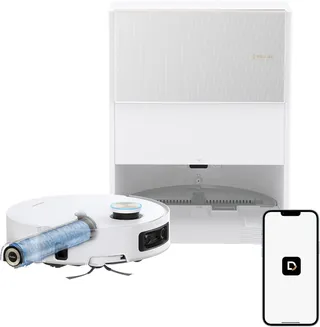
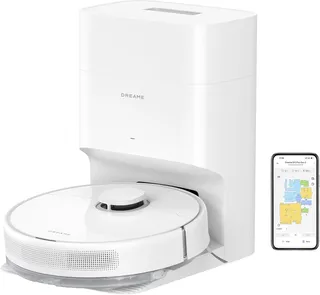
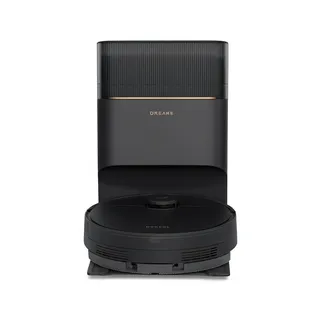
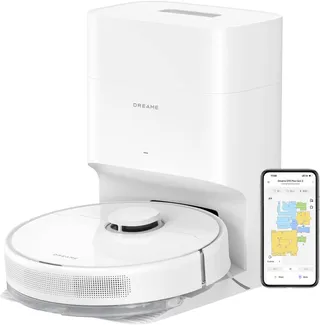
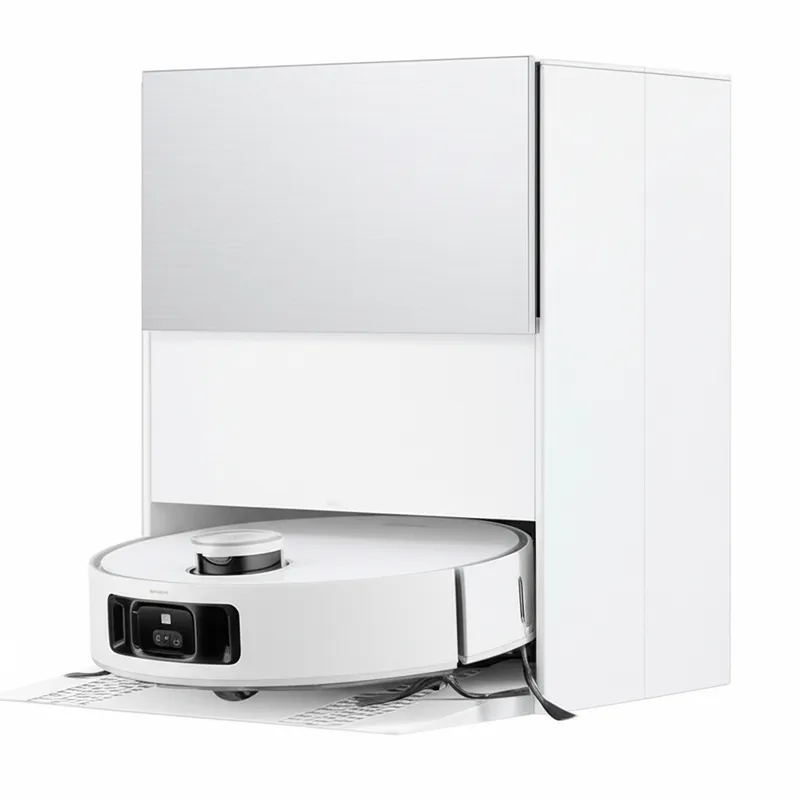
Dreame Aqua10 Roller
- mopping self empty mop washing mop drying lidar obstacle avoidance no go zones multi floor carpet boost
Released 2025
Suction
30,000 Pa
Battery
160 min
Navigation
dToF LDS LiDAR
Mopping
1 Roller
Full Specifications
| Suction Power | 30,000 Pa |
| Battery Life | 160 min |
| Dustbin Capacity | 220 ml |
| Navigation | dToF LDS LiDAR |
| Robot Height | 4.72" |
| Threshold Climbing | 42 mm |
| Brush Roll | HyperStream DuoBrush |
| Mopping | 1 Roller |
| Mop Raising Height | 14 mm |
| Self-Empty Dock | Bagged |
| Dock Bag Capacity | 3.2 L |
| Mop Washing | Hot Water |
| Mop Drying | Yes |
| Obstacle Avoidance | Yes |
| Objects Recognized | 240 |
| Multi-Floor Maps | Yes |
| No-Go Zones | Yes |
| Carpet Boost | Yes |
| HEPA Filter | Yes |
| WiFi | 2.4 GHz |
| Voice Assistants | Alexa |
| Warranty | 1 year |
Compare with similar models:
Dreame Aqua10 Roller Robot Vacuum: A Complete Guide
The Aqua10 Roller represents Dreame’s most ambitious cleaning robot yet. Launched in September 2025 at $1,399, this 2-in-1 vacuum and mop promises something few competitors deliver: genuinely clean floors without the daily hassle of manual mopping.
What makes it different? A full-width rolling mop that continuously rinses itself with fresh water while cleaning. Unlike robots that drag the same dirty pad across your entire floor, the Aqua10’s roller scrubs and cleans itself in real-time. Whether that innovation justifies the premium price depends on your priorities, but there’s no denying this is one of the most technically ambitious floor cleaners on the market.
What’s in the Box
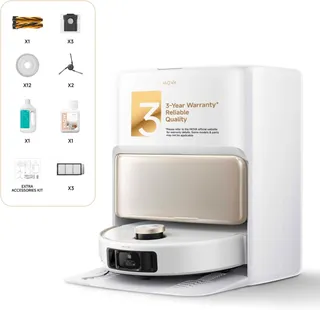
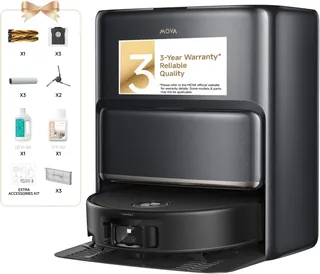
The package includes the robot, an all-in-one base station, and all essential parts pre-installed (main brush, side brush, roller mop, dustbin with filter, and brush guard). You also get two 3.2L dust bags (one installed, one spare), an automatic cleaning solution dispenser module, a 200ml bottle of Dreame’s floor cleaner, a washboard filter for the base’s mop-cleaning tray, a ramp extension for the base station, and the usual documentation.
Note: The standard Roller model shouldn’t be confused with the pricier Aqua10 Ultra Roller ($1,599), which adds a secondary “fluff” roller and dual cleaning solution tanks. Everything here covers the standard Roller only.
Hardware Specifications
Physical Dimensions
The robot measures 13.78 x 13.78 x 4.72 inches (35 x 35 x 12 cm) and weighs about 12.1 lbs. That 4.72-inch height includes the LiDAR sensor tower, which can retract down to roughly 3.84 inches when the robot needs to squeeze under furniture.
The base station is substantial: 16.5 x 17.3 x 19.9 inches (42 x 44 x 50.5 cm) and 23.6 lbs. Plan accordingly for floor space and clearance.
Battery and Runtime
A 6,400 mAh lithium-ion battery powers the Aqua10. Dreame advertises up to 180 minutes per charge, though the official listing specifies roughly 160 minutes as typical. Real-world users report 2 to 2.5 hours under light cleaning conditions, less when running high suction or intensive mopping.
Early firmware caused battery management headaches for some owners, with robots sometimes dying before reaching their dock. Updates in late 2025 improved this, though heavy-use scenarios still drain the battery faster than the marketing suggests.
Suction Power
Dreame claims 30,000 Pa maximum suction, one of the highest figures in the robot vacuum category. This is a lab measurement, and independent airflow testing isn’t available. That said, reviewers note the vacuum genuinely performs well, handling large debris and pulling dirt from rugs effectively.
Dustbin and Filtration
The onboard dustbin holds just 220ml, deliberately small because the system relies on automatic emptying into the base after each run. Some retailer listings incorrectly state “1000ml dustbin,” but that refers to the disposable dust bag in the base, not the robot’s bin.
A washable cloth filter handles fine dust. One known issue: the narrow dust intake path can clog with excessive hair or fur. Dreame is addressing this with a redesigned dustbin part, but until then, pet owners should monitor for blockages.
Drive System and Obstacle Climbing
The Aqua10 Roller features FlexRise suspension with retractable “legs” that extend from the wheel wells. This lets it clear obstacles up to 42mm (1.65 inches) in a single step, and Dreame claims up to 60mm (2.36 inches) for double-layer thresholds.
Testers have watched it surmount 1.5-inch planks without trouble. One reviewer noted the strong drive motors even pushed a heavy coffee table by over a foot when the robot tried to free itself, demonstrating serious torque. If you have lightweight furniture on smooth floors, it might shift slightly.
Navigation Technology
A dToF (direct Time-of-Flight) LDS LiDAR sensor handles room mapping and laser navigation. The front-facing dual AI camera system, paired with a structured light 3D sensor and LED illumination (Dreame calls it “OmniSight 2.0”), enables obstacle recognition in low light and identification of hundreds of object types.
This combination of LiDAR and AI camera gives the Aqua10 Roller both excellent mapping and object avoidance on paper, outperforming systems that rely on cameras or LiDAR alone.
Connectivity
An Nvidia AI chipset powers object recognition and smart features. The robot connects via 2.4 GHz Wi-Fi (no 5 GHz support) to the Dreamehome app. Voice control works through Amazon Alexa, Google Home, and Siri Shortcuts. A future OTA update will add Matter smart home protocol support.
Brushes
The HyperStream DuoBrush main roller uses a hybrid bristle-rubber design to resist hair tangles. Dreame claims “zero tangled hair” in lab tests (TÜV-certified), and early users confirm minimal hair wrap.
The motorized side brush extends telescopically when cleaning edges, then retracts to avoid tangling on obstacles. This helps sweep debris from wall edges more effectively than fixed brushes.
Mopping Capabilities
The AquaRoll System
Here’s where the Aqua10 Roller genuinely stands out. The full-width roller mop (approximately 260mm wide) actively scrubs floors rather than just dragging a damp pad around.
The cylindrical microfiber roller spins while being continuously wetted and rinsed with fresh water from an onboard tank. Multiple nozzles dispense clean water onto the roller as it mops. A squeegee mechanism scrapes dirty water off and into a separate waste chamber. The robot never mops with dirty water because the mop cleans itself in real-time.
Reviewers confirm this system leaves floors noticeably cleaner than older mop designs. No dragging accumulated grime across your kitchen.
Performance in Testing
Independent tests show the single roller mop provides excellent stain removal, often in one pass. The roller applies substantial pressure (Dreame cites about 1,100g of downward force) for genuine scrubbing action. T3’s review noted it handled everyday dirt and even stubborn dried-on marks like mud footprints surprisingly well.
Vacuum Wars found the Aqua10’s roller achieved their best mopping scores ever, outperforming dual-pad systems. Users report quick floor drying since the roller’s squeegee action leaves little excess water. The consensus: mopping is this robot’s biggest strength, delivering near floor-washer-level results.
Carpet Protection
The Aqua10 automatically detects carpets and protects them two ways: an AutoSeal carpet guard covers the wet roller with a shutter when crossing onto carpet, and a mop lifting mechanism raises the roller about 14mm (0.55 inches) off the ground.
Dreame claims zero carpet wetting on carpets up to 12mm thick, and reviewers observed clean transitions from hard floor to rug without soaking carpet edges. For very thick or high-pile carpets, the robot simply avoids mopping those areas (you can also mark no-mop zones in the app).
Edge Cleaning
The mop roller can extend outward beyond the robot’s chassis slightly when needed. Users note it reaches edges under cabinets and along walls better than round pad systems. Of course, like any round robot, it still can’t fully clean deep into 90-degree room corners.
Water Tanks
The robot carries a 100ml clean water tank and a 140ml dirty water tank internally. During operation, clean water sprays onto the roller while soiled water gets vacuumed into the waste tank. These small onboard reservoirs allow effective mopping for a moderate area before needing a refresh at the base.
Because the robot uses significant water to ensure continuous cleaning, expect frequent returns to the base to dump dirty water and reload, perhaps every 10 to 20 square meters of mopping depending on settings.
Cleaning Solution
The base has an automatic solution dispenser that mixes cleaning fluid into the mop water. Dreame includes a 200ml bottle of floor cleaning solution and recommends using their official product to avoid damaging internals.
Some early users report the solution dispensing was buggy, with a few units failing to release detergent at all. Those owners had to manually add solution to the clean water tank. This appears to be an isolated issue rather than universal.
Self-Cleaning and Drying
After mopping, the robot returns to the dock for a thorough self-clean. The base’s ThermoHub system washes the roller with up to 100C (212F) hot water. A textured washboard scrubber helps clean the roller, dirty water pumps to the waste tank, and then the base blows heated air to dry the roller and even circulates warm air through the dust compartment to prevent mold.
Users report no musty smell, unlike older robots where dirty wet mops could sit and develop odors. The high-temperature cleaning and drying does make noise and takes several minutes, but it’s fully automatic.
Software and App Features
Mapping and Navigation Control
The Aqua10 Roller uses the Dreamehome mobile app for setup and control. It supports multi-level mapping (save maps for multiple floors), automatic room segmentation, and room labeling. The LiDAR produces accurate maps you can edit. Virtual no-go zones and no-mop zones are easy to set.
AI Obstacle Avoidance
Beyond basic mapping, the OmniSight 2.0 AI recognizes over 240 common objects (shoes, cords, pet bowls, toys, and more) and attempts to avoid or clean around them. Reviewers found it does recognize and avoid most hazards, including typical pet waste and cables.
One caveat: the robot occasionally “avoids” small debris like kibble or paper scraps as if they were obstacles instead of vacuuming them. This can result in leaving some debris behind, though Dreame may refine object recognition through updates. An LED light helps the cameras work in low-light rooms.
Customization Options
The app offers extensive customization, perhaps too much. You can adjust suction power levels, water flow, scrubbing intensity, and behavior toggles for each mechanism. Specify whether the mop roller should extend on each run or only in certain rooms, whether to vacuum then mop or do both simultaneously, set room-specific cleaning schedules, and more.
Power users appreciate this granularity. Many others find the interface overwhelming and unintuitive. Gizmodo’s review specifically called the app “labyrinthine” and complicated for average users. The software allows fine-tuning virtually every aspect of operation, but the learning curve is steep.
Pet Features
Dreame includes Pet Care features in the app. A Pet Care mode claims to boost cleaning around pet areas (food bowls, litter boxes) and take photos of pets when encountered. In practice, these features appear limited. Gizmodo found the Aqua10 did not noticeably intensify cleaning around the litter box and left some litter bits behind. The pet camera captured only a couple images over days of use.
The robot can serve as a mobile pet camera (remote live view and even speak through it), but automated pet routines are more novelty than practical feature at present.
Voice and Smart Home Integration
Users have successfully linked the Aqua10 to Amazon Alexa and Google Assistant to start/stop cleaning or send it to the dock via voice. Siri Shortcuts work for iOS users. Matter protocol support is planned for late 2025 or early 2026.
Firmware Updates
Dreame has been actively pushing OTA firmware updates to address issues. Updates have improved navigation stability and battery life since launch. Early problems with docking (robots failing to align and running dead) have been reduced, though not entirely eliminated. Keep the firmware updated through the app to benefit from ongoing fixes.
Base Station
All-in-One Maintenance
The large automatic base station handles charging and multiple maintenance tasks. Key functions include:
Auto-Emptying: After cleaning, the base’s vacuum motor suctions debris from the robot’s 220ml dustbin into a disposable 3.2L dust bag. One bag lasts roughly 65 to 100 days depending on your home. The bag seals upon removal to prevent mess. The auto-empty is loud (about 10 seconds of vacuum noise) but effective.
Water Management: The dock holds a 4L clean water tank and 3.5L dirty water tank. During or after cleaning, the robot docks to refill its clean water and dump collected dirty water. Both tanks are easily removable jugs. The app alerts you when the dirty tank needs emptying, typically after a full-house mop or every few days of use.
Mop Washing and Drying: The dock performs an automatic hot-water wash of the roller mop after each session, then dries it with heated air. Water temperature reaches up to 212F (100C) for sanitizing. The base also gently heats air around the dust bag during drying to prevent dampness.
Solution Mixing: The base automatically mixes a set amount of cleaning solution into the water when refilling the robot. The app prompts when solution runs low.
Size and Footprint
The base station is large and heavy, roughly the size of a small end table. The glossy white plastic matches the robot. A flip-up lid provides access to the dust bag and water tanks. T3’s review explicitly listed the “bulky docking station” as a downside. Ensure at least 1.5 feet of clearance on each side for reliable docking.
Noise
The dock’s motors make noise. The empty cycle is a loud vacuum sound lasting only seconds. The hot air dryer hums for several minutes, comparable to a hairdryer on low, and usually runs after cleaning when you might not be present.
Maintenance Components
The base includes a removable filter tray in the mop washing tub to catch hair and debris from mop water (clean periodically). A ramp extension can attach if the base sits on thick carpet or you need a gentler slope for docking.
Known Base Issues
A number of early buyers reported water leakage from the base station, with clean water seeping onto the floor. Dreame has not issued a recall, indicating it’s not universal, but it is a known problem. If you encounter this issue, it’s covered under warranty and most users received replacement docks. Check for leaks during your return window.
Accessories and Ongoing Costs
What’s Included
| Accessory | Quantity | Notes |
|---|---|---|
| Robot Vacuum | 1 | Main unit with LiDAR turret and camera |
| Base Station | 1 | Handles charging, auto-empty, water refill, cleaning |
| Main Brush | 1 (pre-installed) | HyperStream DuoBrush, replace every 6-12 months |
| Side Brush | 1 (pre-installed) | Extending arm design, replace when bristles fray |
| Mopping Roller | 1 (pre-installed) | Microfiber, replace every 6-12 months |
| Dust Bags (3.2L) | 2 (1 installed, 1 spare) | Replace every 8-12 weeks |
| Filter | 1 (in robot) | Washable, replace every 6 months |
| Clean Water Tank | 1 (4L, in base) | Refill as needed |
| Dirty Water Tank | 1 (3.5L, in base) | Empty after each full cleaning |
| Cleaning Solution | 1 (200ml bottle) | For auto-dispenser |
| Washboard Filter | 1 (pre-installed) | Rinse weekly |
| Base Ramp Extension | 1 | For thick carpet placement |
| Documentation | 1 set | Quick start guide, user manual |
Replacement Costs
Dust bags run about $15-30 for a 3-4 pack, meaning roughly $5 per bag. Using 6-8 bags per year means about $30-40 annually. Cleaning solution adds perhaps $30-40 yearly if you use it (the robot can mop with just water). Replacing the main brush and filter once or twice yearly adds another $30-50. Budget around $100 per year in maintenance supplies, typical for a flagship robot vacuum.
Parts Availability
As a new model, official replacement parts were initially only available through Dreame or Amazon. By late 2025, dust bags are readily available from Dreame and third-party sellers. Other parts like roller mops, side brushes, and filters should become more available as the product matures. Some may be compatible with parts from Dreame’s X-series Ultra models.
Cleaning Performance
Hard Floors
On bare floors (tile, hardwood, laminate), the Aqua10 Roller’s vacuum performance is strong. It handles dust, crumbs, and even larger debris like cereal or dry pet food without trouble. The extended side brush sweeps out dirt from edges effectively. The combined vacuum and mop often leaves hard floors “gleaming.” Vacuum Wars ranked its hard floor pickup among the top tier.
One quirk: if small light objects are detected by the AI as obstacles, the robot might steer around them instead of vacuuming. But for typical dirt and debris, it cleans thoroughly.
Carpets
Carpet performance gets mixed reports. The robot has carpet boost mode (automatically maxes suction on carpet) and an Intensive Carpet Cleaning option for slower, double-pass cleaning.
T3’s review found it did well on medium-pile rugs, removing visible dirt and pet hair in one pass. Gizmodo’s testing called its carpet vacuuming “mediocre,” struggling with fine debris deep in carpet fibers.
The difference likely comes down to expectations and test conditions. The Aqua10 Roller lacks a bristled brush specifically for deep agitation; the DuoBrush is optimized to avoid tangles rather than aggressive carpet cleaning. On low to medium pile carpets it performs adequately, but it may not deep-clean high-pile or thick carpets as well as a traditional vacuum.
Pet Hair
For households with pets, the Aqua10 has trade-offs. The tangle-free brush design means you won’t spend time cutting fur out of the roller, and the sealed dust bag traps allergens without a puff of hair when emptying.
However, users with heavy-shedding dogs found that hair can clog the robot’s narrow dust intake, causing the vacuum to stop picking up until cleared. One user noted the Aqua10 “easily clogs with dog hair” compared to competitors. Running the robot more frequently (so there’s less hair per run) helps prevent this.
Mopping
This is where the Aqua10 Roller excels. It removes dried stains (coffee drips, light mud) that most robot mops struggle with. Vacuum Wars reported it achieved a near-perfect mopping score, better than any prior robot in their tests. Multiple reviewers saw it erase sticky spots that typically require manual effort.
The extending roller reaches most baseboard grime (only a thin line right in corners remains untouched). Floor drying is quick because the roller picks up dirty water rather than leaving it behind.
Noise Levels
On quiet mode, the Aqua10 is unobtrusive but low-powered. On standard modes, users describe “loud vacuuming” noise at max power. If noise matters to you, schedule cleaning during absences or use quiet mode (with reduced performance).
Navigation and Obstacle Handling
LiDAR Mapping
The spinning LiDAR maps your home accurately. Initial mapping is quick through an exploratory run. Once mapped, the robot follows systematic straight-line paths room by room. The LiDAR works in the dark.
In normal operation, the LiDAR stays raised (4.72 inches total height). When approaching low clearance furniture, it can retract the turret flush with the body (3.84 inches) to drive under, then pop back up. Testers watched the Aqua10 successfully go under couches that just barely fit when the sensor was down. It won’t try to squeeze under something unless it’s fairly sure it can fit.
AI Obstacle Recognition
The dual front cameras and 3D sensor detect obstacles as small as a few centimeters. The robot slows down and curves around shoes, wires, pet bowls, and similar objects rather than bumping into them. Dreame claims 240+ object types recognized, including pet waste.
The avoidance generally works well, though it can be over-cautious with some small debris, treating it as an object to go around rather than vacuum up.
Threshold Climbing
One of the Aqua10’s strengths is handling floor height changes. It climbs obstacles up to 1.65 inches in a single step and up to 2.36 inches over a double step using its wheel-leg extension. Common doorway transitions, sliding door tracks, and thick doormats pose no problems. Gizmodo’s test confirmed it climbed a 1.5-inch stack of wood without issue.
Be cautious: this power can result in the robot clunking into furniture or attempting to “mount” low shelves. Ensure delicate low items are marked as no-go zones.
Multi-Floor Support
The robot stores multiple floor maps for multi-story homes. You can carry it to another floor and select that map in the app. The base stays on one main floor since it’s not portable during runs. Multi-floor use is possible but requires manually moving the robot and managing water/dust emptying.
Docking Reliability
Early on, users complained about docking problems: “it found the dock but just didn’t manage to park in it.” After firmware updates, such failures are much rarer. If the dock is placed where the robot has a clear path, it usually docks fine. Remove obstacles near the dock and consider small adjustments in dock position if you notice struggles.
Pet Considerations
Hair Handling
The tangle-free brush is a boon for pet owners tired of cutting fur out of vacuum rollers. The brush stays largely clear, and auto-emptying into a sealed bag traps dander and allergens. However, heavy shedders might overwhelm the dust intake leading to clogs. Running the robot daily or every other day during high-shed seasons helps.
Accident Avoidance
Dreame markets the AI obstacle avoidance for pet waste. While we don’t have direct user tests with pet accidents, the technology is similar to other robots that successfully avoid simulated pet waste. The camera identifies small squishy objects and routes around them.
Pet Monitoring
Through the Dreamehome app, you can access the robot’s front camera to view live video of your home and pets, capture photos or videos, and even speak through the robot. The implementation is basic: you might get a couple of snapshots when the robot encounters pets, but it’s not a continuous recorder. You can manually drive the robot via the app to check on pets.
Cleaning Up After Pets
Paw prints and spilled kibble are common pet-owner challenges. The Aqua10 Roller handles muddy or dusty paw tracks excellently, scrubbing them away where a normal robot might just dampen the prints. The vacuum picks up kibble, though it occasionally avoids pieces due to AI misclassification. Wet food or pet vomit still requires manual cleanup.
Home Compatibility
Floor Types
The Aqua10 Roller works well on all hard floor types (hardwood, tile, vinyl, laminate, marble). The mopping system is safe for sealed wood floors since it doesn’t overly saturate. For area rugs and carpets, it vacuums low to medium-pile effectively. It automatically avoids mopping on carpets. Very thick or shag carpet isn’t ideal for this robot.
Home Size
With roughly 160 minute battery life and large dust/water capacity in the base, the Aqua10 can clean large homes (2,000+ square feet) in multiple stages. It will recharge mid-clean automatically if needed. The system scales up to big houses well. For small apartments, it works fine but the base station might feel disproportionately large.
Furniture Clearance
The 4.72-inch height is standard for a LiDAR robot, but the retractable tower (down to about 3.9 inches) lets it get under many sofas, beds, and cabinets that have 4-inch clearance. For furniture lower than about 3.8 inches, it simply won’t go under.
Multiple Floors
Multi-floor mapping is supported, but the base station can only be on one level at a time. If you want the Aqua10 to clean upstairs, you must carry it up and bring it back to the base afterward. Some users run the robot on the main floor daily and take it upstairs occasionally for a run.
Warranty and Support
Standard Coverage
Dreame provides a 1-year limited warranty on the Aqua10 Roller covering manufacturing defects. This includes the robot vacuum and base station, with batteries typically covered for 6 months.
Extended Coverage
In 2025, Dreame advertised a 3-year “universal” warranty for all robot vacuums purchased that year. Some UK buyers reported their device showed a 2 or 3-year warranty in-app. Register your product on Dreame’s site and keep proof of purchase; if the 3-year promotion applies, they’ll have it on record.
Support Experience
Dreame offers support via email and phone (U.S. hotline Monday through Saturday). Early adopters have had mixed experiences. Those who bought through Amazon or Dreame’s store generally got prompt exchanges for defective units. A Dreame representative on Reddit has actively gathered feedback and clarified issues.
For complex problems like base leaks, support typically exchanges the faulty unit rather than offering a quick fix. The warranty covers manufacturing defects but likely excludes wear-and-tear on consumables and damage from misuse.
Known Issues
Water Leakage from Base
A number of early users experienced the base station leaking clean water onto the floor. This appears to be a manufacturing defect in some units. Vacuum Wars confirmed multiple reports. If you get a unit with this issue, it’s covered under warranty and most users received replacements.
Dust Bin Clogging
The design can lead to clogs where the robot’s dust intake meets the dust box, especially with hair or large dust bunnies. Dreame acknowledged this issue and is providing a redesigned dustbin to customers in some markets. Pet owners should monitor for this.
Navigation and Docking
Early firmware had bugs causing robots to wander, redo areas, or fail to return to the dock properly. Updates have largely fixed these behaviors, though occasional odd pathing still occurs. Keep firmware updated and remap your house if you experience navigation issues.
Battery Life
The combination of power-hungry vacuum, AI cameras, and continuous water pumping meant some users saw shorter runs than expected (under 90 minutes on standard mode). Updates have improved battery management, and with proper settings most can achieve the 160-minute runtime. Running everything at maximum will reduce battery life significantly.
App Issues
The app had some glitches at launch: settings not sticking, maps needing re-saving, and UI freezes on certain devices. Integration with voice assistants was finicky initially. App updates have smoothed many of these out.
Limitations
Size and Space Needs: The robot is wider (about 350mm) and taller (about 120mm) than slim models, and the base station is very large. The base needs a permanent area roughly 2x2 feet. Small apartments or crowded rooms may find this challenging.
Weight and Portability: The robot weighs 12 lbs and the base 24 lbs. Moving it between floors isn’t trivial. Best suited for single-floor daily use.
Carpet Deep Cleaning: The Aqua10 Roller is not a dedicated carpet vacuum. It lacks a bristled agitation brush, so deep embedded dirt in high-pile carpets may remain. If your home is mostly carpet, a vacuum-only robot with stronger carpet pickup might serve better.
Corner Cleaning: The round robot form means perfect corner cleaning is impossible. Occasional manual touch-up in corners may be needed.
Complex Maintenance Systems: Multiple things require attention: solution filling, dirty water emptying, bag replacement, and base tray cleaning. Simpler robots with just a dustbin have less to track.
Price Point: At $1,399, this is an expensive investment. If your cleaning needs are light or you might move soon, the value proposition weakens.
No Plumbing Connection: Some newer models hook to water lines for automatic refilling and draining. The Aqua10 uses manual fill tanks.
Competition
The Aqua10 Roller sits in the top tier of robot cleaners. Key competitors include:
Roborock S8 Pro Ultra ($1,299-$1,599): A mature product with excellent navigation and solid vacuuming. Uses dual spinning mop pads instead of a roller. The Dreame beats it on mop performance and suction (S8 Pro is about 6,000 Pa versus Dreame’s 30,000 Pa), but Roborock wins on reliability and carpet vacuuming.
Ecovacs Deebot X2 Omni ($1,399): Square design reaches corners better. Comparable self-maintenance features. Pad-based mopping isn’t as thorough as Dreame’s roller system.
Narwal Freo/Flow ($800-$1,000): The Narwal Flow launched in 2025 with a roller mop similar to Dreame’s. A user who tested both concluded the Flow had better vacuuming and quieter operation, while the Dreame had slightly better navigation and scrubbing power. At lower price, Flow offers strong value.
Dreame’s Own Line: The L10s Ultra ($999) has auto empty/wash but uses a less effective drag pad and 5,300 Pa suction. The X50 Ultra uses dual main brushes for no hair tangles but lacks the roller mop.
Value Assessment
Is $1,399 worth it? That depends on how much you value hands-off convenience and mopping performance. For those who want truly clean floors daily with minimal effort, this robot delivers. It essentially replaces regular mopping and frequent manual vacuuming.
However, early issues (software bugs, base leaks) mean you’re partly paying to be an early adopter working through kinks. With updates, the product has improved, but at this price, expectations are justifiably high.
If you prioritize top-tier mopping and nearly hands-off maintenance, and you’re willing to tolerate some first-generation quirks, the Dreame Aqua10 Roller justifies its cost once initial issues are sorted. Many users say it has transformed how they maintain floors.
If your focus is on vacuuming performance or you want rock-solid reliability out of the box, you might find better value in competitors or waiting for software polish.