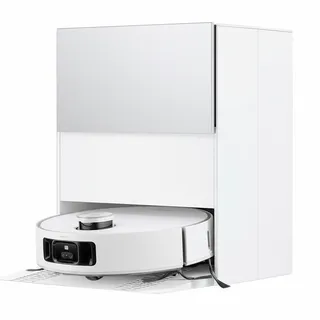
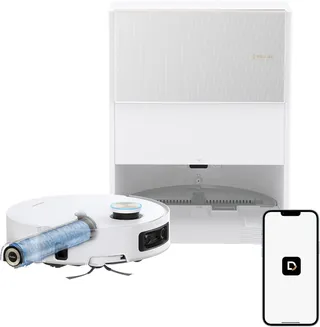
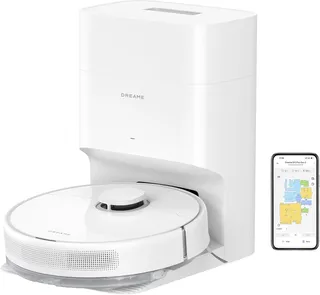
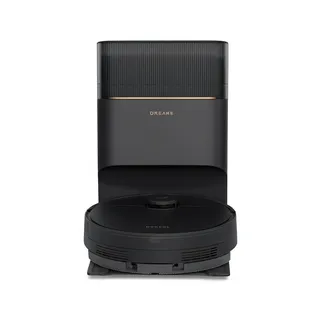
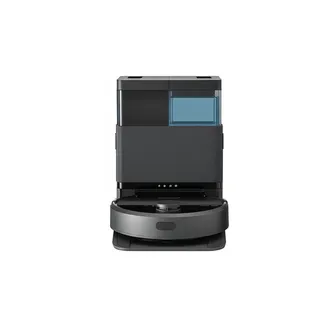
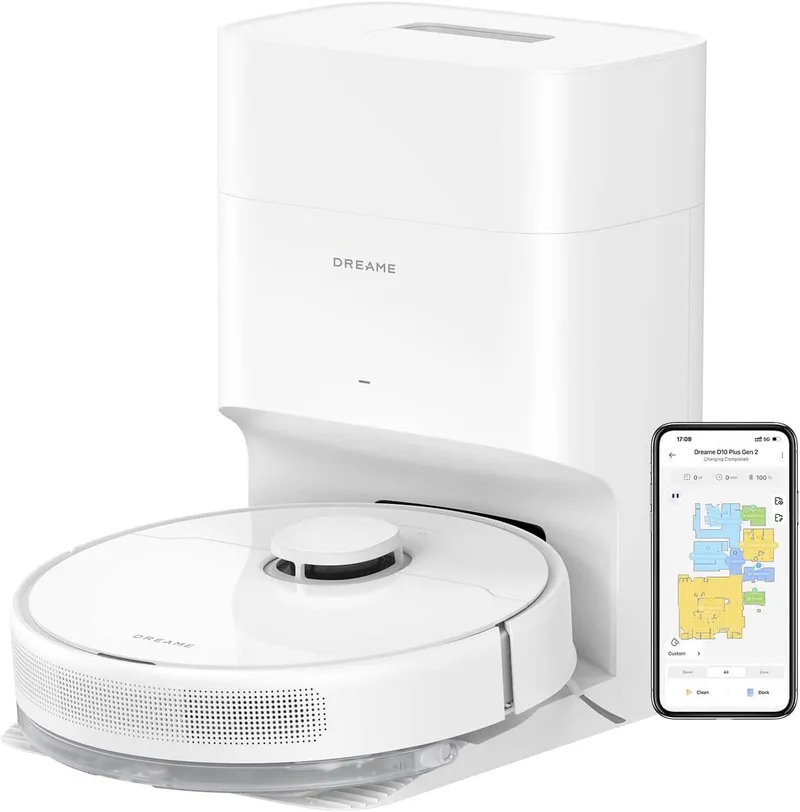
Dreame D10+ Gen2
Released 2024
Suction
6,000 Pa
Battery
285 min
Navigation
Spinning Lidar
Mopping
1 Fixed Pad
Full Specifications
| Suction Power | 6,000 Pa |
| Battery Life | 285 min |
| Dustbin Capacity | 400 ml |
| Navigation | Spinning Lidar |
| Robot Height | 3.8" |
| Threshold Climbing | 20 mm |
| Brush Roll | Single |
| Mopping | 1 Fixed Pad |
| Self-Empty Dock | Bagged |
| Dock Bag Capacity | 4 L |
| Obstacle Avoidance | Yes |
| Multi-Floor Maps | Yes |
| No-Go Zones | Yes |
| Carpet Boost | Yes |
| HEPA Filter | Yes |
| WiFi | 2.4 GHz |
| Voice Assistants | Alexa |
| Warranty | 1 year |
Compare with similar models:
Dreame D10+ Gen 2: Premium Features at a Mid-Range Price
Five years ago, you’d have paid over a thousand dollars for a robot vacuum with LiDAR navigation and an auto-empty dock. The Dreame D10+ Gen 2 brings both to your doorstep for around $280. That price shift tells you everything about where the robot vacuum market has landed in 2024.
Dreame Technology, a company that grew up within Xiaomi’s ecosystem, built this vacuum to hit what marketers call the “mass premium” sweet spot—capable enough to compete with robots costing hundreds more, cheap enough that most households can justify the purchase.
What Makes the Gen 2 Different
The “Gen 2” label signals evolution, not revolution. Dreame kept the navigation system and chassis from the original D10 Plus but swapped in a more powerful motor. Suction jumped from 4,000 Pa to 6,000 Pa—a 50% boost that makes a real difference on carpets.
Why focus on suction rather than adding flashy features? Dreame’s research suggested that budget-minded buyers treat mopping as a nice extra but view vacuuming power as non-negotiable. The Gen 2 reflects that priority.
The “Plus” designation means you get an auto-empty base station included. This single feature transforms the ownership experience. Without it, you’re emptying a 400ml dustbin every day or two. With the dock’s 4-liter capacity, you can forget about the robot for up to 90 days at a time. Bringing auto-empty capability below the $300 threshold is arguably the biggest reason to consider this vacuum.
Design and Build Quality
The Robot Itself
The D10+ Gen 2 follows the standard circular puck design that dominates the market. At 350mm in diameter and 96.3mm tall, it’s sized to fit between most chair legs (typically spaced 400-450mm apart) while still slipping under beds and sofas.
That height is dictated by the LiDAR turret on top—the spinning sensor array that lets the robot map your home. The turret includes a pressure sensor that triggers an immediate retreat if the robot wedges itself under furniture that’s squeezing down on it.
The ABS plastic shell is sturdy enough for the inevitable collisions with chair legs and baseboards, though the high-gloss white finish shows scuff marks and attracts static dust.
How It Moves
Two spring-loaded drive wheels provide traction and let the robot climb obstacles up to 20mm high—enough for most door thresholds and medium-pile rugs. The rubber treads grip well on hardwood and tile, preventing the wheel slippage that can throw off navigation.
A front caster wheel pivots freely, allowing the quick direction changes needed during cleaning. The suspension travel of 2-3cm keeps the wheels planted on uneven surfaces like tile grout lines.
The Suction System
Dreame brands their motor technology “Vormax.” At 6,000 Pa of static pressure, it’s built to pull debris from carpet fibers and floor crevices where weaker vacuums struggle.
There’s an important distinction here: static pressure (measured in Pascals) indicates the vacuum’s ability to lift heavy debris and pull air through resistant surfaces like thick carpet. Airflow (measured in CFM) determines how efficiently debris travels from floor to dustbin. The D10+ Gen 2 optimizes for high pressure, creating strong suction velocity at the cleaning head.
The Docking Station
The base measures 303 x 403 x 399mm—compact enough to tuck against a wall without dominating a room. When the robot docks, it uses a dual-port system: one port blows high-pressure air to dislodge compressed debris, while the other applies powerful suction (600W) to extract it. This push-pull approach handles matted pet hair far better than single-port designs.
Debris goes into a sealed bag that acts as the final filtration stage. When you remove a full bag, a sliding collar automatically seals the opening—a thoughtful touch for allergy sufferers.
Navigation: LiDAR Gets the Job Done
The rotating laser sensor on top is why this robot can map your home in under 10 minutes and remember where everything is. Here’s how it works: the laser fires infrared pulses that bounce off walls and furniture. By measuring how long each pulse takes to return, the robot calculates exact distances to every surface.
The turret spins at 300-360 RPM, collecting thousands of measurements per second. The robot’s processor assembles these into a 2D map showing room boundaries and obstacle locations.
Why LiDAR Beats Camera-Based Navigation
Some robot vacuums use cameras to navigate. The D10+ Gen 2’s laser system has clear advantages: it works in complete darkness, maps faster, and doesn’t care about lighting conditions. You can clean a pitch-black basement or a sunny living room with identical precision.
The SLAM Algorithm
SLAM—Simultaneous Localization and Mapping—is the software that interprets all those laser measurements. As the robot moves, tiny errors accumulate in its position estimate. The algorithm constantly compares live sensor data against the stored map, snapping the robot’s position back to correct coordinates when it recognizes familiar geometric patterns. This is why the robot can return to its dock with millimeter accuracy after cleaning a large house.
The cleaning pattern follows a logical serpentine path: outline the room perimeter first, then fill in the interior with parallel lines. This minimizes overlap (wasted battery) and missed spots.
What It Can’t See
Here’s the catch: the laser sweeps at a fixed height, roughly 10cm off the floor. Anything shorter than that—phone cables, socks, small toys, pet accidents—is invisible to the sensor.
When the robot encounters these objects, it relies on its mechanical bumper. For solid items like books, bump-and-turn works fine. For cables and fabric, the robot often drives over them before the bumper triggers, and the brush roll ingests whatever it finds.
Unlike Dreame’s premium models (L10s Ultra, X40 series), the D10+ Gen 2 lacks camera-based obstacle detection. You’ll need to “robot-proof” floors before cleaning—picking up cables, moving pet toys, corralling stray laundry.
Other Sensors
- Cliff sensors: Infrared emitters on the underside prevent staircase tumbles. They occasionally trigger false alarms on very dark carpet.
- Wall sensor: An IR sensor on the bumper lets the robot follow walls at a consistent 10mm distance, maximizing side brush reach.
- Carpet detection: The robot senses when it transitions to carpet (likely by measuring motor resistance) and automatically boosts suction.
Cleaning Performance
Hard Floors
On wood, tile, and laminate, 6,000 Pa is overkill for regular dust—even 2,000 Pa handles light debris. The extra power pays off when extracting cat litter, rice grains, or small pebbles from grout lines and floor crevices.
Carpets
This is where the upgraded motor earns its keep. Carpet fibers trap dust and allergens deep in the pile, and you need serious suction to pull air through the weave and extract embedded particles.
In standardized deep-cleaning tests where sand is embedded into carpet, the D10+ Gen 2 scored 90 out of 100—an exceptional result for a mid-range vacuum. The “floating” brush housing helps by physically dropping down to create a seal against the carpet surface, maximizing the pressure differential.
Hair and Tangles
The hybrid brush roll combines rubber blades with synthetic bristles. Bristles sweep dust from cracks and comb through carpet, while rubber blades beat carpet fibers to dislodge deep debris.
The downside: this design tangles more easily than all-rubber rollers. Human and pet hair wraps around the bristles and migrates to the axle bearings. Households with long-haired pets or family members should expect weekly maintenance—flipping the robot and cutting through wrapped hair with the included tool.
Mopping Reality Check
The D10+ Gen 2’s mopping is best understood as “maintenance wiping” rather than actual scrubbing. Unlike premium robots with spinning or vibrating mops, this one drags a static microfiber pad across the floor.
The 145ml water tank has an electric pump offering three wetness levels—a meaningful upgrade from older gravity-fed systems that left puddles. The mop handles fine dust that suction misses and leaves floors feeling polished. But don’t expect it to scrub dried coffee rings, muddy paw prints, or sticky spills.
The bigger limitation: the mop pad doesn’t lift. If the mop module is attached, it drags over every surface, including carpet. You must set “No-Mop Zones” in the app to protect rugs. This creates navigation constraints—if a carpet blocks the path to a hard floor area, the robot can’t cross without wetting the rug.
Noise Levels
The robot runs between 65 dB in Quiet Mode and 79 dB at maximum suction. That high end is noticeably loud, comparable to a standard upright vacuum—a necessary byproduct of that 6,000 Pa motor.
The auto-empty cycle is brief (10-15 seconds) but sounds like a small jet engine. You’ll want to set “Do Not Disturb” periods in the app to avoid 2 AM emptying sessions.
The App Experience
The D10+ Gen 2 works with Dreame’s standalone app or Xiaomi Home. Both show a real-time map with the robot’s cleaning path drawn as it moves.
The interface earns praise on iOS (4.8 star rating), though Android users report more friction (3.0 stars). You can store up to three floor plans, and the robot automatically recognizes which floor it’s on after a quick spin.
Room-Level Control
The software’s granularity is impressive. You can program the bedroom for Quiet mode with no mopping at 10 AM, then schedule the kitchen for Max suction with high water output at 2 PM. This transforms a simple robot into something approaching a customized cleaning service.
Connectivity Notes
The radio supports 2.4 GHz Wi-Fi only—standard for smart home devices since lower frequencies penetrate walls better. If your mesh network merges 2.4 and 5 GHz bands into one network name, you might need to temporarily disable 5 GHz during initial setup.
Commands route through Dreame’s cloud servers, so response time depends on your internet connection. Server outages occasionally disable remote features, leaving you with button-press control only.
Voice Control and Automation
The robot integrates with Amazon Alexa, Google Assistant, and Apple Siri (via Shortcuts)—that Siri support is a competitive advantage over many budget rivals. Commands are straightforward: start, stop, return to dock. Named rooms allow more specific requests like “Clean the kitchen.”
Through Xiaomi Home, you can build automation routines: lock the front door, detect no motion for 15 minutes, start the vacuum.
Privacy Consideration
No cameras means no video footage of your home. The LiDAR map is just a geometric grid of points—it can’t distinguish a person from a floor lamp, and it can’t read your mail. For privacy-conscious buyers, this is a feature, not a limitation.
How It Stacks Up Against Competitors
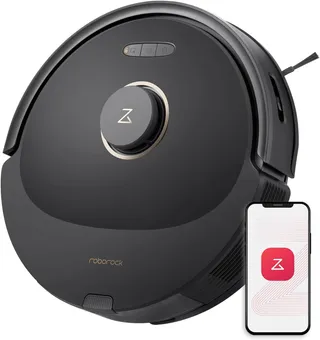
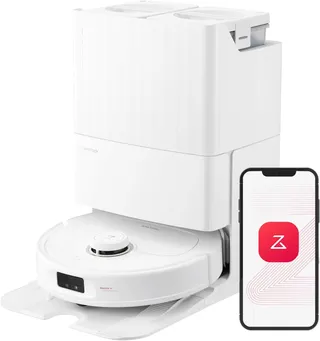
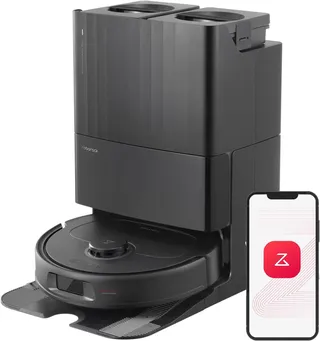
vs. Roborock Q5 Pro+ (~$350)
Roborock’s dual rubber brush system handles carpet better and resists hair tangles. Its 770ml onboard bin dwarfs the D10+‘s 400ml capacity. But the Roborock typically costs $50-100 more. The Dreame delivers roughly 90% of the performance for significantly less money.
vs. Shark Matrix Plus (~$300)
Shark’s LiDAR implementation tends toward map drift and navigation confusion; Dreame’s is more reliable. Shark’s bagless auto-empty bin eliminates recurring bag costs but releases dust back into the air during emptying—bad news for allergy sufferers. The Shark’s sonic scrubbing mop outperforms Dreame’s static pad.
vs. Eufy L60 SES (~$280)
The Eufy’s killer feature is a hair-cutting blade in the dock that slices tangles off the brush roll—directly addressing the D10+‘s biggest weakness. But Eufy’s 5,000 Pa suction trails slightly behind, and many L60 models skip mopping entirely.
| Feature | Dreame D10+ Gen 2 | Roborock Q5 Pro+ | Shark Matrix Plus | Eufy L60 SES |
|---|---|---|---|---|
| Navigation | LiDAR (High Precision) | LiDAR (High Precision) | LiDAR (Medium Precision) | iPath LiDAR |
| Suction | 6,000 Pa | 5,500 Pa | ~3,000 Pa | 5,000 Pa |
| Brush Roll | Single Hybrid | Dual Rubber | Self-Cleaning | Hair Cutting Dock |
| Mopping | Passive Drag | Passive Drag | Sonic Scrubbing | None (Usually) |
| Auto-Empty | Bagged (4L) | Bagged (2.5L) | Bagless (HEPA) | Bagged |
| Typical Price | ~$280 | ~$350 | ~$300 | ~$280 |
Real-World Scenarios
Pet Households
Two Golden Retrievers, 1500 square feet, mixed surfaces. The 400ml bin handles a full cleaning run’s worth of fur, and the auto-empty dock successfully extracts even matted clumps. The main brush needs detangling every 3-4 days. Without carefully placed no-go zones, the wet mop drags across dog beds.
Verdict: High satisfaction for reduced daily vacuuming, but brush maintenance remains a chore.
Small Apartments with Clutter
700 square feet, hardwood, cables and gym gear scattered around. The robot maps the space in 6 minutes and cleans floors beautifully—when it isn’t eating phone chargers or getting stuck on dropped socks. No AI obstacle avoidance means you must tidy up before each cleaning.
Verdict: The cleaning itself is excellent, but “set and forget” only works if you prepare the space first.
Multi-Story Homes
2500 square feet across two floors. Carry the robot upstairs and it recognizes the new environment automatically. But since the dock stays downstairs, the robot can’t empty itself mid-clean. If the bin fills on the second floor, it pauses and waits.
Verdict: Works well with the understanding that multi-story use involves some manual intervention.
Ownership Costs
Unlike a traditional vacuum, robots have recurring expenses:
- Dust bags: Replace every 45-90 days. Generic 10-packs run $15-20. Annual cost: roughly $10.
- Filters and brushes: HEPA filter and side brush every 6 months, main brush annually. Accessory kits cost around $30. Annual cost: roughly $40.
- Electricity: Negligible—under $5/year.
Total annual running cost: approximately $50-60.
Spare parts are widely available since the D10+ shares components with other Dreame and Xiaomi robots. With basic maintenance, expect 3-5 years of service life. The standard US warranty covers 1 year (2 years in the EU).
The Bottom Line
The Dreame D10+ Gen 2 doesn’t try to do everything. It skips the cameras, the self-cleaning mops, and the AI obstacle detection found on $1000+ flagships. What you get instead is a focused vacuum that excels at its core job: powerful suction, reliable navigation, and hands-off dust disposal.
The tradeoff is straightforward. If you’re willing to spend two minutes clearing cables and small items before each cleaning, and if you view mopping as a bonus rather than a necessity, this robot offers exceptional value. For the price, nothing else combines this level of mapping precision, suction power, and autonomous emptying.
It’s a workhorse, not a show horse—and for most households, that’s exactly what’s needed.
Quick Specs Reference
| Specification | Value |
|---|---|
| Model Number | RLD32GD |
| Release Year | 2024 |
| Navigation | LiDAR (no camera) |
| Suction Power | 6,000 Pa |
| Battery | 5,200 mAh (14.4V Li-ion) |
| Runtime | Up to 285 minutes (Quiet Mode) |
| Robot Bin | 400 mL |
| Dock Capacity | 2.5-4L (region dependent) |
| Water Tank | 145 mL |
| Mop Type | Static flat pad (no lift) |
| Obstacle Avoidance | Mechanical bumper only |
| Robot Dimensions | 350 x 350 x 96.3 mm |
| Dock Dimensions | 303 x 403 x 399 mm |
| Noise Level | 65-79 dB |
| Wi-Fi | 2.4 GHz only |
| Voice Control | Alexa, Google, Siri |
| Map Storage | 3-4 floors |
| Warranty | 1 year (US) |
| MSRP | $299.99 (often discounted) |