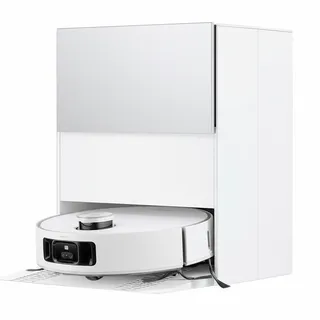
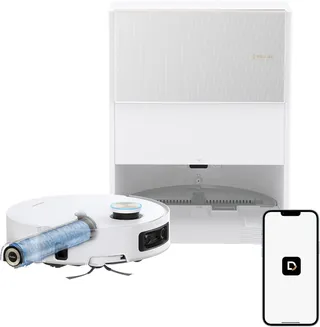
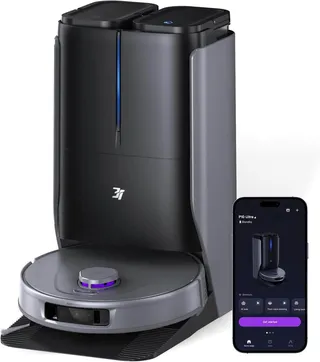
Dreame X50 Ultra Complete
Suction
20,000 Pa
Battery
220 min
Navigation
Retractable dToF Lidar
Mopping
2 Spinning Pads
Full Specifications
| Suction Power | 20,000 Pa |
| Battery Life | 220 min |
| Dustbin Capacity | 395 ml |
| Navigation | Retractable dToF Lidar |
| Robot Height | 4.37" |
| Threshold Climbing | 42 mm |
| Brush Roll | HyperStream DuoBrush |
| Mopping | 2 Spinning Pads |
| Mop Raising Height | 10.5 mm |
| Self-Empty Dock | Bagged |
| Dock Bag Capacity | 3.2 L |
| Mop Washing | Hot Water |
| Mop Drying | Yes |
| Obstacle Avoidance | Yes |
| Objects Recognized | 200 |
| Multi-Floor Maps | Yes |
| No-Go Zones | Yes |
| Carpet Boost | Yes |
| WiFi | 2.4 GHz |
| Voice Assistants | Alexa, Google |
| Warranty | 5 years |
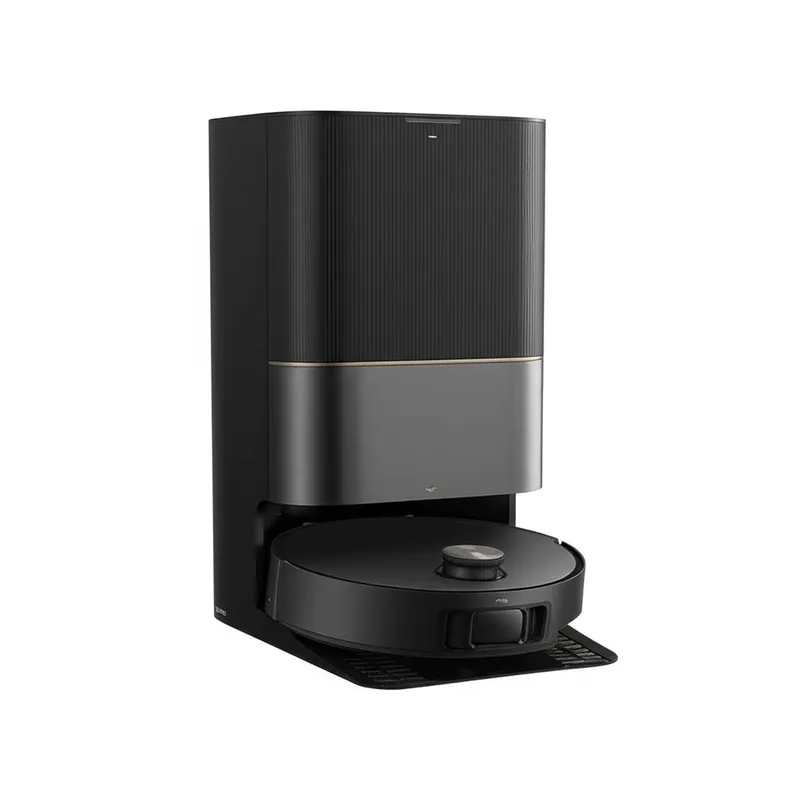
Compare with similar models:
The Dreame X50 Ultra can climb over door thresholds that would stop any other robot vacuum dead in its tracks. That’s probably the single most remarkable thing about it, and it tells you a lot about what Dreame was trying to accomplish here: build a robot that actually works in real homes, not just showroom floors.
Unveiled at CES 2025 and hitting US shelves on February 14, 2025, the X50 Ultra arrived with an MSRP around $1,699 for the Complete package. Street prices have dropped since launch, with early adopters grabbing it for around $1,399 using launch coupons, and UK Prime Day sales pushing it down to just under $1,000. It’s available in black or white, both priced identically.
The Headline Feature: Motorized Legs
The X50 Ultra’s “ProLeap” system gives it something no other consumer robot vacuum has: motorized legs that lift its front end to climb obstacles up to 4.2 cm (about 1.65 inches) for a single step. It can even handle two-tier combinations up to 6 cm if there’s at least a 4 cm plateau between steps.
Independent testing found it could reliably handle about 3.8 cm, which is still far beyond the roughly 2 cm limit of typical robots. This means thick door saddles, sliding door tracks, transitions to raised rooms, and thick rugs that would strand other robots are no problem. Owners with these home features report the X50 never gets stuck where their previous robots would.
The caveat: it can’t climb actual staircases. Those exceed its capabilities. But for everything short of stairs, it’s remarkably capable.
Size and Physical Design
The robot measures 35 cm (13.8 inches) in diameter. With its LiDAR turret retracted, it stands just 8.9 cm tall. When the turret extends during cleaning, that grows to 11.1 cm. This retractable LiDAR, called VersaLift, means the X50 can squeeze under furniture that would block competitors with fixed sensor towers.
The base station is substantial: roughly 59 cm tall, 34 cm wide, and 45 cm deep. You’ll need dedicated floor space for it, plus overhead clearance for the flip-up lid. The combined weight of robot and base hits about 15.6 kg, and Amazon lists the shipping weight at over 40 pounds with packaging. Once you set this thing up, you’re not casually moving it around.
Hardware That Actually Matters
Suction and Brushes
The 20,000 Pa suction rating nearly doubles its predecessor, the X40 Ultra, and ranks among the strongest available. More interesting is the dual main brushroll system, branded HyperStream Detangling DuoBrush. Two counter-rotating brushes with mixed rubber fins and bristles work together to agitate debris and, more importantly, prevent hair tangles. Owners report virtually no hair wrap even with long pet hair. The single V-shaped side brush extends on an articulating arm to reach corners and edges.
Navigation and Object Recognition
The X50 combines a top-mounted retractable LiDAR with a front-facing RGB camera and structured light 3D sensor. This combination lets it identify up to 200 types of objects, from shoes to cables to pet waste, and navigate around them. Real-world tests showed it avoiding roughly 87% of obstacles on bare floors without intervention, even on carpet where textured surfaces make detection trickier, it avoided about 75%.
Pet waste avoidance works reliably in testing, which matters enormously to pet owners who’ve experienced the alternative. The robot can still occasionally snag very thin cables or rug tassels, but these instances are rare.
Battery Life
The 6,400 mAh battery claims up to 220 minutes of runtime in quiet mode on hard floors, covering about 205 square meters. Lab testing exceeded this, measuring a maximum of 276 minutes in power-saving scenarios. However, higher power settings or complex tasks drop that significantly, with measurements showing a minimum of 119 minutes on max power.
Real-world use falls somewhere in between. One owner observed roughly 1% drain per minute during typical mixed cleaning, yielding about 100 minutes before recharge. The power-hungry dual brushes, AI cameras, and motorized legs all draw extra current. The robot returns to dock at 15% battery, recharges in about 2.5 to 3 hours, and resumes cleaning if it hasn’t finished.
For most average-sized homes of 120 to 150 square meters, the X50 completes its work in one charge on balanced settings. Larger homes may require a mid-job recharge.
What’s Missing
The robot lacks a true HEPA filter. The cartridge filter catches a lot of fine dust, but testing revealed some fine particles bypass it and blow out the exhaust. For allergy-sensitive users, this is worth knowing. The base’s dust bag, at least, is sealed and traps dust during auto-emptying.
Mopping: Hot Water and Spinning Pads
Two round spinning mop pads attach magnetically underneath the robot. The pads lift 10.5 mm when the robot detects carpet, enough to keep low-pile carpets dry without dragging wet fabric across them. On thicker carpets, the pads may still lightly brush the fibers, though users confirm they don’t leave moisture.
The base station handles water logistics: a 4.5-liter clean water tank and 4-liter dirty water tank mean the robot can mop large areas by periodically returning to dock for refills and pad washing. The washing process uses water heated to 80 degrees Celsius, hotter than most competitors, followed by hot air drying to prevent musty odors.
An auto-detergent dispenser adds cleaning solution at roughly 1:200 dilution, subtle enough that you won’t smell a strong cleaner. Dreame includes a 200 ml bottle to start.
For everyday mopping on tile or wood with light dirt, the X50 performs well. Tiles come away clean, and the extending mop pads cover almost every spot. Dried-on stains take more effort. Testing showed tough stains needed multiple passes even with max water settings, and large amounts of fine debris like coffee grounds turned to muddy sludge when mopped. The lesson: vacuum messy spills first, then mop.
The Dock Station
The base station automatically empties the dustbin into a 3.2-liter disposable bag, washes and dries the mop pads, refills the robot’s water, and adds cleaning solution. Owners report changing the dust bag roughly every couple of months even with multiple shedding pets.
The dock empties with a loud vacuum noise measured at 73 dB, lasting about 15 seconds. Water tank refills and pad drying are much quieter.
Inside the dock, a scale inhibitor cartridge in the clean water tank reduces limescale buildup, expected to last 18 to 32 months. A washboard filter catches lint and hair during pad cleaning. Both tanks have sensors that alert when they need attention.
Maintenance is minimal: refill the clean water tank and empty the dirty tank roughly once a week for average use. The dock’s top cover for the dust bag compartment takes a bit of practice to align properly, but most owners adapt quickly.
Software and App Control
The Dreamehome app offers multi-level mapping with automatic room recognition, virtual no-go and no-mop zones, and room-specific cleaning settings. Suction adjusts across five levels from Quiet to Max+, while mopping water flow spans an unusually granular 32 levels.
You can choose vacuum-only, mop-only, vacuum-then-mop, or simultaneous operation. Carpet Boost increases suction automatically on rugs. A “Mop-Detach” mode leaves pads at the dock until vacuuming finishes, while “Mop-Raise” keeps them attached but lifted for carpet cleaning.
Advanced settings control the retractable LiDAR height, collision avoidance sensitivity, stain recognition for scrubbing, and even whether the threshold-climbing legs move one at a time or together. This level of customization is unusual and appreciated by power users.
Voice control works through Alexa, Google Assistant, and Siri Shortcuts. The robot also responds to “Ok, Dreame” wake words through its three onboard microphones. Apple Watch support is available for basic start/stop functions. Matter compatibility is advertised for integration with Apple HomeKit and other platforms.
The front camera doubles as a mobile security camera with real-time video streaming and two-way audio. Privacy-minded users should note the UL Solutions Cybersecurity Diamond certification, the highest level UL certifies for IoT security.
App ratings vary by platform: iOS users rate it around 4.8 out of 5, while Android users average closer to 3.0. The disparity may reflect connectivity issues or regional import complications that historically affected Android users more.
Cleaning Performance: What Actually Happens
Hard Floors
The X50 quickly handles medium and large debris like crumbs and cereal thanks to strong suction and dual brushes. Fine dust is another story. Testing revealed it misses a fair amount of fine material on the first pass, particularly along baseboards and in corners where its round shape can’t reach. Users confirm small debris sometimes lines the edges of hard floors after cleaning.
The robot’s default cautious mode keeps it from rubbing against walls, which protects furniture but leaves a 1 to 2 cm strip along edges less thoroughly cleaned. Disabling collision avoidance lets it get closer to walls for better edge pickup.
Carpets
Performance on carpet is decent but not exceptional for deep cleaning. Medium and large debris gets picked up easily. Fine material embedded in carpet fibers, especially along edges and in corners, requires multiple passes or higher power modes. The dual brushes help with surface agitation, but the robot lacks the weight and aggressive beating action needed for truly deep carpet cleaning.
For routine maintenance cleaning of dust, hair, and crumbs, results satisfy most owners. Spring cleaning of high-pile rugs still benefits from a traditional upright vacuum.
Under Furniture
Here the X50 shines. With LiDAR retracted to just 8.9 cm height, it cleans under beds, couches, and cabinets that would block most competitors. Testing observed it perform a brief initial pass around table legs, then return later with LiDAR lowered to clean thoroughly underneath. It even handles draped curtains, sensing the fabric and passing beneath without tangling.
Pet Performance
Pet owners generally love the X50. Pet hair pickup on hard floors is excellent, with hair ending up in the dust bag rather than wrapped around brushes. The anti-tangle design means even long hair pulls off easily by hand. On carpet, surface hair gets collected though deeply embedded pet hair in carpet fibers remains challenging for any robot.
The pet waste avoidance works reliably, recognizing and steering around accidents that would create disasters with other robots. Quiet operation during cleaning means many skittish pets tolerate or ignore it entirely. One owner runs it at night while everyone, pets included, sleeps undisturbed.
Noise Levels
Standard operation measures around 55 dB on hard floors and 62 dB on carpet, quiet enough for conversation or television. Max+ mode peaks around 63.5 dB, still reasonable but noticeably louder. The dock’s auto-empty function is the loudest component at 73 dB, a brief vacuum roar that can interrupt a family room.
Overall, general cleaning is quiet enough that many run it at night or around pets without issue. Just expect that brief noise spike when it empties.
What’s in the Box
The Complete package includes the robot and auto-maintenance base, two dust bags (one installed, one spare), two mop pads and holders, a pre-installed side brush, the dual main brushroll assembly, dustbin with filter plus a spare filter, cleaning brush for maintenance, dock ramp extension plate, auto-detergent tank with 200 ml cleaning solution, and documentation.
Dreame sells a $150 accessory kit containing a year’s worth of consumables: main brushroll, two side brushes, two filters, two dust bags, six mop pads, and cleaning solution. Individual parts run roughly $20 for dust bag three-packs, $35 for filter packs, $45 for main brushrolls, and $20 for mop pad sets.
Replacement Schedule
Following manufacturer recommendations:
- Dust bags: every 2 to 4 months
- Filters: clean every 2 weeks, replace every 3 to 6 months
- Main brushrolls: clean every 2 weeks, replace every 6 to 12 months
- Side brushes: check every 2 weeks, replace every 3 to 6 months
- Mop pads: replace every 1 to 3 months
Annual maintenance costs run roughly $100 to $130 following strict schedules, though many owners stretch parts longer by cleaning and reusing them.
Build Quality and Durability
The X50 Ultra feels premium. Thick plastic construction, tight fits, and a rose-gold brushed metal LiDAR trim contribute to a flagship device feel. The dustbin features reinforced ribbing, and nothing creaks when pressed.
The modular design helps maintenance and potential repairs. The entire top cover lifts off with magnets, no tools required. Wheels, side brush motors, and main brush assemblies use standard screws rather than proprietary fasteners. The dual brushrolls click out easily for cleaning.
Dreame claims the climbing legs can deploy over 30,000 times without failing, suggesting long-term durability of that mechanism. The retractable LiDAR motor is small but includes sensors to avoid jamming.
One cosmetic note: the finish can scuff if it rubs objects, with one owner noticing a visible white line on their black unit within an hour of first use. The robot’s gentle navigation minimizes contact, but some owners add thin foam tape around the perimeter as a precaution.
Warranty and Support
US buyers receive an unusually long 5-year warranty, well above the industry standard of 1 to 2 years. UK and European buyers get 3 years, still above average. Warranty covers the main unit and dock for manufacturing defects but excludes consumables like filters, brushes, and mop pads.
Dreame’s US support operates via email and phone, staffed Monday through Saturday 9am to 9pm Eastern, with limited Sunday hours. Users report response times typically within 24 hours and generally positive experiences resolving issues.
A critical note for anyone considering imports: warranty coverage is region-bound. Units purchased from other countries, particularly Chinese market versions, won’t receive local warranty service and may require app workarounds to function.
Who Should Buy This
The X50 Ultra makes the most sense if you have high door thresholds or floor transitions that would strand other robots, if you want truly hands-off operation with minimal weekly maintenance, if you have shedding pets and want effective hair pickup without constant brush cleaning, or if you have low furniture you want cleaned underneath.
It makes less sense if you need deep carpet cleaning as your primary use case, if edge and corner cleaning perfection matters to you, if you’re allergic to fine dust and need HEPA filtration, or if you’re price-sensitive and can accept more manual intervention from a mid-range model.
How It Compares
Against competitors like the Roborock S8 MaxV Ultra or Ecovacs Deebot X2 Omni, the X50 Ultra leads in obstacle avoidance accuracy, threshold climbing ability, and self-maintenance automation. Its hot water mop washing exceeds most competitors that use room temperature or warm water.
Testing suggests the Roborock S8 MaxV Ultra performs better on pure debris pickup across floor surfaces, and the Roborock Q Revo offers superior mopping. The X50’s 10.5 mm mop lift limits its ability to vacuum and mop thick carpeted areas in one pass, where robots with higher lift or detachable mops have an advantage.
Compared to the previous-generation X40 Ultra, the improvements in climbing, suction, dual brushes, and pet features may not justify upgrading if you already own one, unless you have specific needs the new features address.
Known Limitations
Early firmware caused spinning circles and vanishing maps for some users. Updates have largely resolved these issues, but keeping firmware current remains recommended.
Edge cleaning leaves a thin dust line along walls and baseboards, common to round robots and mitigated by disabling collision avoidance mode. The side brush sometimes flags nonexistent obstacles on patterned carpets or low-contrast surfaces.
Battery life under heavy use falls well short of the 220-minute marketing claim. Expect closer to 100 to 120 minutes with CleanGenius mode actively adjusting power.
The lack of true HEPA filtration means some fine allergen particles escape through the exhaust. For allergy sufferers, this is a real consideration.
The Bottom Line
The Dreame X50 Ultra represents the bleeding edge of robot vacuum capability in 2025. It solves problems other robots can’t even attempt, particularly threshold climbing and under-furniture cleaning with its retractable LiDAR. The self-maintaining dock with hot water washing dramatically reduces manual intervention.
The trade-offs are real: edge cleaning isn’t perfect, deep carpet cleaning won’t match a good upright, and fine dust filtration falls short for allergy sufferers. The high price, even discounted, puts it in competition with multiple mid-range robots that collectively might serve some homes better.
For the right home, with high thresholds, low furniture, shedding pets, and owners who value automation over manual control, the X50 Ultra delivers on its promise of nearly hands-off floor maintenance. Just don’t expect perfection in every corner.