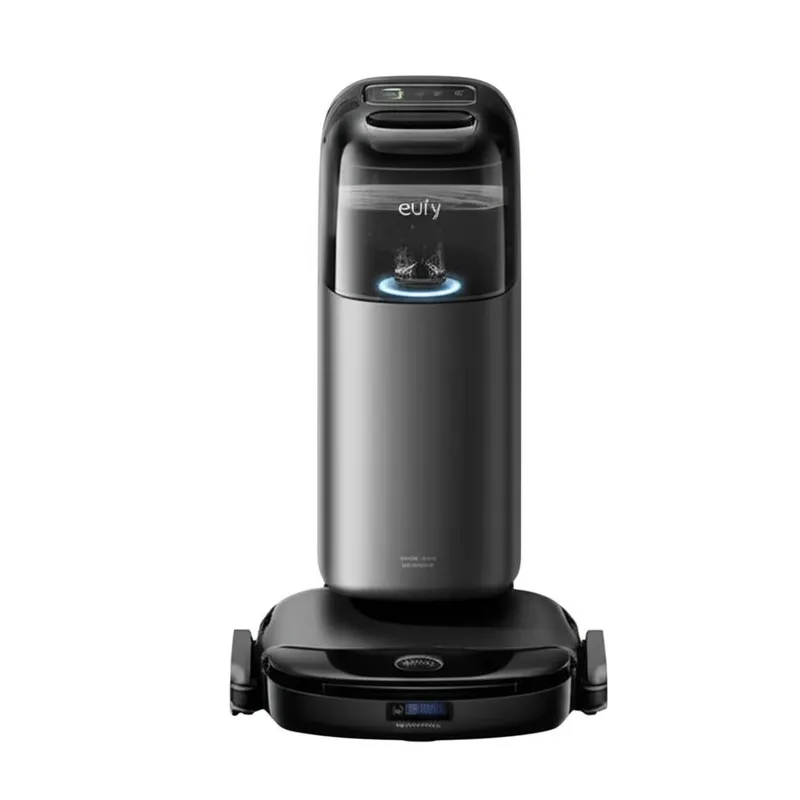
Eufy Omni S1 Pro
- mopping self empty mop washing mop drying lidar obstacle avoidance no go zones multi floor carpet boost
Released 2024
Suction
8,000 Pa
Battery
216 min
Navigation
dToF Lidar
Mopping
1 Roller
Full Specifications
| Suction Power | 8,000 Pa |
| Battery Life | 216 min |
| Dustbin Capacity | 250 ml |
| Navigation | dToF Lidar |
| Robot Height | 3.8" |
| Threshold Climbing | 20 mm |
| Brush Roll | Single |
| Mopping | 1 Roller |
| Mop Raising Height | 12.7 mm |
| Self-Empty Dock | Bagged |
| Dock Bag Capacity | 2.5 L |
| Mop Washing | Yes |
| Mop Drying | Yes |
| Obstacle Avoidance | Yes |
| Objects Recognized | 100 |
| Multi-Floor Maps | Yes |
| No-Go Zones | Yes |
| Carpet Boost | Yes |
| WiFi | 2.4 GHz |
| Voice Assistants | Alexa |
| Warranty | 1 year |
Compare with similar models:
The Eufy Omni S1 Pro does something genuinely different: instead of dragging a mop pad across your floor like most robot mops, it uses a spinning roller that continuously rinses itself with clean water. Think of it as a miniature floor-washing machine that vacuums too. After using one for several months, here’s what you need to know.
The Short Version
This robot excels at mopping hard floors and avoiding obstacles. It struggles with carpets and costs more to maintain than simpler robots. If your home is mostly tile, hardwood, or laminate, and you want floors that actually look mopped rather than just damp, the S1 Pro delivers. Carpet-heavy homes should look elsewhere.
Price and Availability
Eufy launched the S1 Pro in June 2024 at $1,499 after a successful Kickstarter campaign that raised over $3.5 million. That retail price has dropped considerably since launch. By late 2025, it regularly sells for $1,099-$1,299, and major sales events have pushed it under $1,000. Some retailers have even listed it around $700-$800 during limited promotions.
The robot’s available in the US, UK, Australia, and other regions through Eufy’s website, Amazon, and Best Buy. Only one color exists: black robot with a dark gray station. Buy from authorized retailers if you want warranty coverage, and stick to your region’s version for the correct voltage.
Physical Design
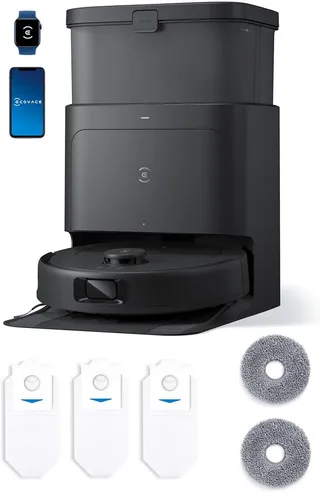
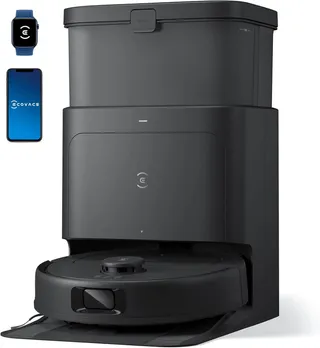
The robot measures 12.8 by 13.7 inches and stands just 3.8 inches tall. That low profile lets it squeeze under furniture that blocks taller robots. The base station, however, towers at 26.4 inches with a 15.1 by 18.4-inch footprint. Plan your placement accordingly.
Weight runs 11.3 pounds for the robot and 19.1 pounds for the station. Despite the substantial build, the robot handles transitions smoothly and doesn’t feel sluggish.
Hardware That Matters
Suction Power: Eufy rates it at 8,000 Pa. Some sources incorrectly cite 18,000 Pa, but independent testing confirms the 8,000 Pa figure. Vacuum Wars measured 1.45 kPa sealed suction, significantly above average. Strong enough for most debris on hard floors, though carpet cleaning lags behind the best performers.
Airflow: About 14 CFM at the brush head in normal operation. RTINGS measured 13.9 CFM, while Vacuum Wars recorded around 25 CFM in a max-power bench test. The difference comes from testing methodology, but either way, airflow exceeds what most robots deliver.
Dustbin: Just 250 ml, smaller than typical because the robot also carries two internal water tanks. The small bin matters less than you’d think since the base empties it automatically. The station’s 2.5-liter dust bag lasts roughly 6-8 weeks under normal use, though the narrow channel means you’ll realistically get about 1.7 liters of usable capacity before the app alerts you.
Brushroll: A single rubberized roller without bristles. Eufy calls it a detangling brush, and it does resist hair wrapping better than bristle brushes. A magnetic top cover pops off for easy access, and the brush removes without tools. Long pet hair still wraps around the ends occasionally and needs clearing.
Side Brushes: Two three-arm brushes, one on each front corner. They sweep debris inward effectively, though they can flick light particles into corners that the robot sometimes misses on subsequent passes.
Navigation: dToF LiDAR with what Eufy calls TrueCourse SLAM. The laser sensor sits in a low-profile turret, contributing to that modest 3.8-inch height. Mapping runs quickly and accurately, and the robot saves multiple floor plans for multi-story homes.
Obstacle Avoidance
The S1 Pro uses a 3D MatrixEye system combining an RGB camera with binocular infrared depth sensors. Eufy claims recognition of over 100 object types: shoes, toys, cables, pet waste, and the usual household hazards.
Independent testing backs up the claims. RTINGS gave it a perfect score for obstacle avoidance, and the robot maintained a 100% success rate dodging simulated pet waste. Users report it rarely bumps solid furniture, slowing and steering around chair legs with precision that impresses. Cables and socks get reliably avoided.
The system can be too cautious. Some owners find the robot keeps distance from walls and corners, leaving debris along edges. A “Tiny Obstacle Avoidance” toggle in settings lets you dial back the sensitivity, though doing so risks the robot ingesting small items.
Very thin wires, clear objects, and mirrors can still cause problems. The camera-based cliff detection sometimes treats dark flooring as a drop-off, refusing to cross dark thresholds until you disable the feature.
Battery Life
Runtime genuinely impresses. Eufy rates it at 216 minutes for vacuum-only operation and 140 minutes with mopping enabled. Real-world usage confirms these numbers. One reviewer saw only 6% battery drain after 22 minutes of light vacuuming, suggesting over 5 hours of runtime in quiet mode. Even at maximum suction, expect over 2 hours.
Full recharge takes about 4 hours. The robot returns to base at 10% battery (lower than most competitors’ 20% threshold), maximizing runtime before pausing. Recharge and resume works as expected, picking up where it left off after topping up the battery.
The Mopping System
This is where the S1 Pro distinguishes itself. A 29-centimeter rotating microfiber roller spans the rear of the robot, spinning at up to 170 RPM. Clean water wets the roller while a squeegee and suction mechanism pull dirty water into a separate onboard tank. The mop stays clean throughout the job rather than redistributing grime like pad-based systems do.
Spring loading applies about 1 kilogram (2.2 pounds) of pressure to the floor. That’s substantially more than most pad robots manage, and it mimics actual hand scrubbing on stuck-on messes.
Three intensity settings (Soft, Standard, Deep) combine with single or double-pass options. The robot can clean dried coffee stains and muddy paw prints that defeat typical robot mops. It even picks up liquid spills without leaving streaks, though Eufy warns against using it for major spills like a full cup of water.
The robot carries 240 ml of clean water and 220 ml of dirty water internally. The base station holds 3 liters of clean water and 2 liters of waste water. Before each mopping run, the base refills the robot and can add cleaning solution automatically. During operation, the robot returns periodically to wash the mop and swap water. One user found the 3-liter reservoir lasted about six mopping cycles of an average apartment.
When the S1 Pro detects carpet, it lifts the mop roller about 12 mm (half an inch) and stops wetting it. This keeps low and medium pile rugs dry during vacuuming. Very thick carpets might still get touched, so mark those as no-mop zones in the app.
The base station generates ozonated water for the cleaning supply, which Eufy claims eliminates 99.99% of bacteria on the mop. Whether or not you trust that number, the ozone likely helps keep the mop and tanks fresher between uses. An included 600 ml bottle of cleaning solution dispenses automatically into the water, though testing showed little difference between using the solution and plain water.
App and Software
The Eufy Clean app handles everything competently. You can select individual rooms, draw custom zones, adjust suction and water levels per room, and set virtual boundaries. No-go zones block the robot entirely; no-mop zones allow vacuuming but prevent mopping.
Scheduling works by time, day, and room. Want to vacuum the living room every morning and mop the hallway every other day? That’s possible. Some users find the scheduling interface less intuitive than competitors, though.
Quick mapping lets the robot survey your floor in 10-20 minutes without cleaning. The app automatically divides rooms, which you can rename, merge, or split. Multi-floor support stores 2-3 maps. The robot recognizes the correct floor when you move it or prompts you to create a new map.
What’s missing: no 3D mapping or furniture visualization. Eufy confirmed that hardware limitations prevent adding these features via firmware. The app also repeatedly requests access to phone photos even after being denied, which RTINGS flagged as concerning.
Amazon Alexa and Google Assistant integrate for basic voice commands. No Siri, HomeKit, or Matter support.
The robot uses 2.4 GHz Wi-Fi only. Initial setup requires Bluetooth pairing. Most users report stable connections, though heavy Wi-Fi interference can cause disconnects.
Firmware updates arrive every few months. A March 2025 update caused problems for some owners, making robots get lost or clean erratically until Eufy pushed fixes. The company has been responsive about patching issues, but new features tend to arrive on newer models rather than existing ones.
The Base Station
Eufy calls it a “10-in-1” all-in-one station, which sounds like marketing fluff until you count what it actually does. The UniClean base empties the dustbin into a disposable bag, washes the mop roller, refills the robot’s water tank, dries the mop with heated air, dispenses cleaning solution, and sanitizes water with ozone. An LCD display shows status and allows manual control.
The auto-empty cycle takes a few seconds but hits about 78 dB. Loud enough to startle, brief enough to tolerate. The mop washing sprays clean water onto the roller and scrubs it against a wash tray, then sucks dirty water into the waste tank. The base uses room-temperature water rather than hot, which means less sanitization than some competitors offer but still effective grime removal.
After washing, heated air dries the roller for about 4 hours at a quiet hum around 50 dB. No damp mop smell even if you leave it for days.
The station needs about 1.5 feet of clearance on each side for the robot to dock properly. Some users tuck it in corners or closets. No plumbing connections exist for auto-refill or drain. You’ll refill clean water and empty dirty water yourself, typically once a week with daily mopping.
Accessories and Maintenance Costs
The box includes two rolling mop rollers, two pairs of side brushes, two dustbin filters, two dust bags, a brush cleaning tool, a 600 ml bottle of cleaning solution, and the usual documentation. Generous inclusions that postpone your first supply purchase.
After that, expect around $100-150 per year in consumables. RTINGS specifically flagged the S1 Pro’s recurring costs as high. Dust bags run about $6-7 each (changed every 1-2 months). Mop rollers cost around $15 each. Filters, side brushes, and cleaning solution add up. Third-party alternatives haven’t emerged yet given the robot’s proprietary designs.
Eufy insists on using their cleaning solution, warning that other cleaners may cause damage from foaming or corrosion. Some users try mild, low-foam alternatives, but doing so risks warranty coverage if problems arise.
The battery is user-replaceable. Eufy sells spares for around $80 and provides a tutorial for the swap. Expect to need this after 2-3 years of regular use.
Daily Maintenance
The base handles dustbin emptying and mop washing, but you’re not completely hands-off. Every few days, empty the dirty water tank and rinse it to prevent sediment buildup. The mop washing tray and its filter catch debris and need regular rinsing, especially if you mop frequently. Neglect this and you’ll find it gunked up within a week.
Every week or two, wipe sensors and charging contacts with a dry cloth. Check the main brush and side brush hubs for wrapped hair. The provided cleaning tool helps cut away tangles. The robot announces things like “Clean my cliff sensors” if it detects issues.
The water tanks slide out easily from the base’s front. Refilling and emptying takes less than a minute, and the tall station design means you don’t have to bend over.
Performance on Hard Floors
The S1 Pro shines here. Standardized tests gave it 8.0/10 for hard floor debris pickup. Fine dust, sand, crumbs, cereal, pet hair tumbleweeds: all handled with authority. Strong suction and airflow rarely leave anything behind.
The side brushes can scatter very light debris like powder, though the robot typically passes back over those areas. Fine particles sometimes end up wedged against baseboards where the robot’s cautious obstacle avoidance prevents full contact.
Mopping performance genuinely impresses. The roller mop removes dried coffee, tea, and muddy paw prints that pad-based robots can’t touch. Floors look properly mopped rather than just damp. The waste water after a whole-house clean shows exactly how much grime the robot actually removes.
Performance on Carpet
Here’s the weakness. The S1 Pro scored about 5/10 on carpet tests, leaving fine debris behind and sometimes missing larger bits. The single rubber brushroll doesn’t agitate carpet fibers like dual-brush systems do. Long pet hair tends to stay on top rather than getting pulled in.
Even at maximum suction, some debris remains embedded. The cautious obstacle detection occasionally mistakes dense dirt or fur clumps as objects to avoid rather than clean. One user disabled tiny-object avoidance specifically to improve hair pickup.
For maintenance cleaning of area rugs, it’s acceptable. For deep cleaning of high-pile carpet, you’ll still need an upright vacuum or a robot built specifically for carpet. Eufy recommends keeping it off pile higher than 1 inch.
Edge and Corner Cleaning
Mixed results. The robot hugs walls fairly closely, reaching within 2 cm in most cases. The semi-flat front helps slightly in corners compared to round robots.
But the obstacle avoidance works against it here. The robot sometimes keeps distance from walls and corners, leaving debris behind. Users report it “cannot clean edges” well without adjusting settings. Disabling tiny obstacle avoidance helps the robot get closer to walls, though at some risk.
Small bits of dust in right-angle corners may remain. Along baseboards, expect a fine line of dust to accumulate over time. Quick touch-ups with a hand vacuum help.
Navigation and Coverage
The LiDAR navigation produces neat, systematic cleaning patterns. Room by room, the robot works in zig-zag rows without missing areas. Complex layouts get handled well, with logical area divisions.
Cleaning speed isn’t the fastest. The robot slows for obstacles and prioritizes thoroughness over speed. Expect around 10-15 square feet per minute in a furnished home. A 500 square foot area takes roughly 40 minutes.
The S1 Pro rarely gets stuck. RTINGS recorded a 0% intervention rate on their obstacle course. Users report it never bumps furniture and navigates around chair legs, pet bowls, and children’s toys with precision. Cliff sensors reliably prevent tumbles off stairs.
Very fringy rug edges can tangle in side brushes. Unstable obstacles like coat racks might get bumped at speed. But genuine “stuck” incidents are uncommon.
Threshold and Rug Transitions
The robot handles standard door thresholds up to about 20 mm (3/4 inch). It may hesitate at dark transitions, thinking they’re drop-offs. Disabling visual anti-drop helps.
Borderline obstacles around 2 cm sometimes require multiple attempts. The robot occasionally backs up and takes a “running start” to get over. Very thick carpets above 25 mm pile can trap it entirely.
Height clearance defaults to a conservative setting. In “Safe” mode, the robot avoids anything under about 3.7 inches. Switch to “Free Mode” to attempt any gap equal to its 3.9-inch height, though you’re accepting more risk of getting wedged.
Pet Considerations
Hard floor pet hair pickup: excellent. The robot collects fur tumbleweeds and dander efficiently. The small dustbin doesn’t matter since it empties automatically each run.
Carpet pet hair: mediocre. Long hair stays on top unless the brush pulls it in, which happens inconsistently.
The obstacle avoidance specifically targets pet waste and maintains 100% avoidance in testing. The nightmare scenario of a robot smearing an accident across your floor is extremely unlikely. When the robot spots something suspicious, it places a poop icon on the map to alert you. It also recognizes and avoids pet bowls, marking them on the map.
Pets generally tolerate the robot well. Quiet mode runs around 60 dB, subdued enough that curious cats watch rather than flee. The robot navigates around sleeping pets rather than nudging them.
Allergies are worth considering. The S1 Pro doesn’t use HEPA filtration, so some fine dander may blow back into the air. The bagged emptying helps contain dust during disposal.
Home Compatibility
The S1 Pro suits medium to large homes with mostly hard flooring. Long battery life and automatic water refills let it cover 2,000+ square feet across multiple sessions. Very large homes simply take multiple recharge cycles.
Small apartments work fine if you can fit the large base station. The robot might be overkill for one or two rooms, though.
Multi-story homes require carrying the robot between floors. Only one base exists, so upper floors won’t get automatic emptying or mop washing. The robot recognizes different floor maps when moved.
The 3.8-inch height clears most modern furniture. Check your sofas and TV stands. Anything under about 4 inches gets skipped entirely.
Open floor plans suit the robot well. LiDAR navigation handles large spaces efficiently. Cluttered rooms work too, though the robot may skip congested areas rather than risk getting stuck. Pre-clean tidying helps: pick up stray socks, cables, and small toys for the most thorough coverage.
Competitive Comparison
The S1 Pro competes against other premium all-in-one robots around $1,200-$1,600. Each makes different trade-offs.
Roborock S8 Pro Ultra / S8 MaxV Ultra ($1,399-$1,599): Better carpet cleaning thanks to dual-brush design and more agitation. More refined app with 3D mapping. But mopping doesn’t match the S1 Pro’s roller system. Pads don’t pick up liquid, and they require removal for vacuum-only runs.
Ecovacs Deebot X2 Omni ($1,199-$1,549): Strong suction and good vacuuming. The X2’s square shape cleans edges exceptionally. But obstacle avoidance on older models was mediocre, and the app has historically been buggy. Pad-based mopping doesn’t match the S1’s stain removal.
iRobot Roomba Combo j7+ / j9+ ($999-$1,399): Superior carpet cleaning with Roomba’s proven dual-brush system. Polished app and reliable navigation. But mopping is minimal. The pad is static with no spinning or scrubbing. Stain removal doesn’t compare.
Dreame L10s Ultra and similar ($799-$1,199): High suction, decent obstacle avoidance, good mopping with rotating pads. Often priced lower than the S1 Pro. Build quality and app polish don’t quite match.
Eufy X10 Pro Omni (~$799): The S1 Pro’s predecessor with twin spinning mop pads instead of a roller. Taller body, weaker obstacle avoidance. The S1 Pro improves in most measurable ways.
Where the S1 Pro Wins
Outstanding mopping. The roller system with continuous cleaning outperforms pad-based competitors on dried stains and wet spill handling.
Obstacle avoidance. Among the most reliable at dodging pet messes, cables, and toys without intervention.
Full automation. Everything in one package: dust emptying, mop washing, mop drying, water refilling, solution dispensing, water sanitizing. Few competitors match the complete set.
Price when discounted. Sales often push it below competitors with similar specs.
Where the S1 Pro Loses
Carpet cleaning. The single rubber brushroll doesn’t match dual-brush systems for deep cleaning or hair pickup.
No advanced app features. No 3D mapping, furniture recognition, or camera viewing that some competitors offer.
Large base station. At 26 inches tall, it won’t fit in tight spaces.
High recurring costs. Bags, rollers, solution, and filters add up to around $100-150 annually.
Known Issues
Edge avoidance: The obstacle detection keeps the robot away from walls and corners, sometimes leaving debris behind. Disabling “tiny obstacle avoidance” helps but introduces other trade-offs.
Occasional wire tangles: Despite excellent avoidance, thin dark cables on dark floors sometimes get missed. Floor prep remains advisable.
Base maintenance: The dirty water tray and filter need cleaning every few days. Users expecting completely hands-off operation find this disappointing.
App quirks: 2.4 GHz only, repeated photo permission requests, and fewer advanced features than competitor apps.
Firmware hiccups: A Spring 2025 update caused robots to get lost mid-clean. Eufy fixed it, but the episode reminded owners how software-dependent these robots are.
Dark floor confusion: The visual cliff detection sometimes treats dark thresholds as drop-offs. Disabling the feature or adding no-go zones works around it.
The Bottom Line
The Eufy Omni S1 Pro works best for homes with extensive hard flooring where the mopping capability actually matters. It removes stains that other robot mops leave behind, avoids obstacles more reliably than most competitors, and automates nearly all routine maintenance.
Carpet cleaning is genuinely weak. If you have wall-to-wall carpet or thick rugs, look at Roborock or Roomba instead.
For mixed-floor homes dominated by tile, hardwood, or laminate, with area rugs that aren’t too thick, the S1 Pro delivers on its promise of hands-free floor cleaning. The roller mop genuinely improves mopping performance over pad-based systems. You’ll refill water and empty waste tanks occasionally, clean the base’s filter every few days, and pay for consumables over time. In exchange, you get floors that actually look clean.
At its discounted pricing around $1,000, the S1 Pro competes well against alternatives. At full retail, the value proposition depends on how much you prioritize mopping performance and obstacle avoidance over carpet cleaning.