Suction
2,500 Pa
Battery
180 min
Navigation
Spinning Lidar
Mopping
1 Vibrating Pad
Full Specifications
| Suction Power | 2,500 Pa |
| Battery Life | 180 min |
| Dustbin Capacity | 470 ml |
| Navigation | Spinning Lidar |
| Robot Height | 3.8" |
| Threshold Climbing | 20 mm |
| Brush Roll | Single |
| Mopping | 1 Vibrating Pad |
| Mop Raising Height | 5 mm |
| Self-Empty Dock | No |
| Obstacle Avoidance | No |
| Multi-Floor Maps | Yes |
| No-Go Zones | Yes |
| Carpet Boost | Yes |
| WiFi | 2.4 GHz |
| Voice Assistants | Alexa |
| Warranty | 1 year |
Compare with similar models:
The Mopping Pioneer That’s Now a Budget Buy
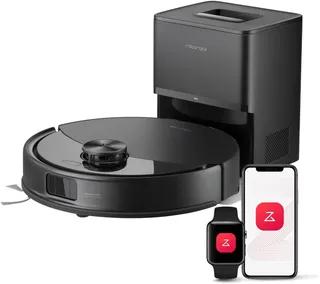
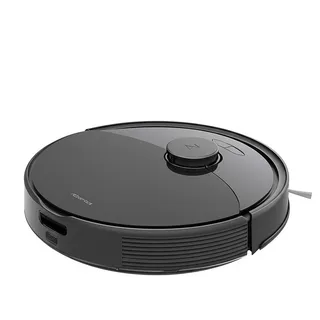
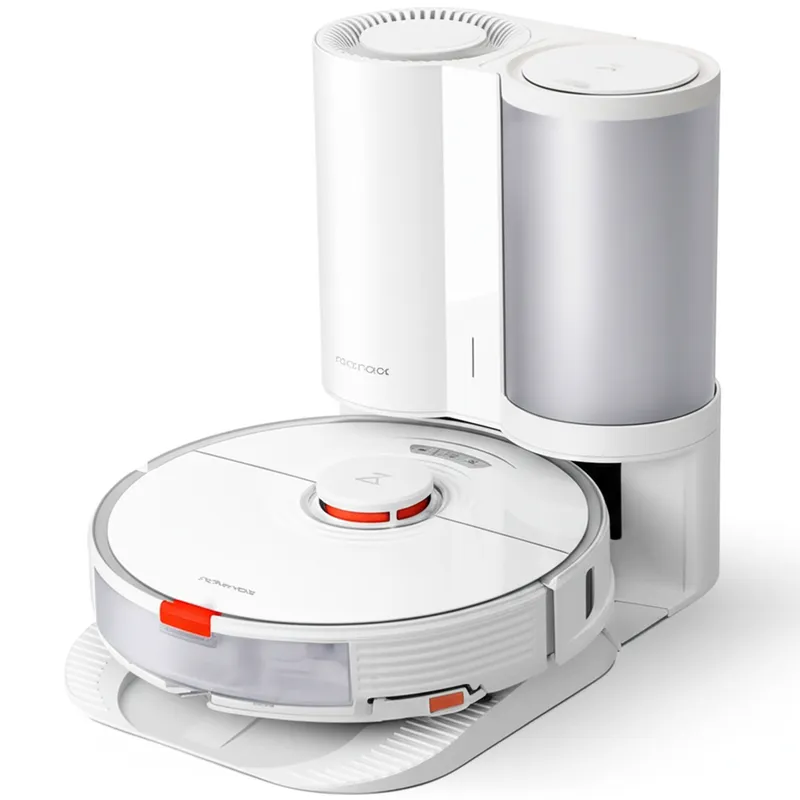
Back in 2021, the Roborock S7 changed what people expected from a robot vacuum. Its VibraRise technology—a mop that scrubs floors 3,000 times per minute and lifts itself when it hits carpet—was genuinely revolutionary. Four years later, the S7 has become a legacy product, but that’s actually good news if you’re hunting for a deal on the used market.
Here’s the honest assessment: don’t pay new-model prices for this robot. The 2,500 Pa suction was impressive in 2021 but falls short compared to modern mid-range units pushing 5,500-7,000 Pa. If you can snag a refurbished S7 for under $250, though, and your home is mostly hard floors? That’s a smart buy.
Who Should Actually Consider This Robot
The S7 makes sense for a specific buyer: someone shopping the used market who cares more about mopping than deep carpet cleaning. If you’ve got hardwood or tile throughout most of your home, the VibraRise system still holds up against competitors years newer. For dried coffee spills and muddy footprints, this thing scrubs circles around basic drag mops.
Skip it entirely if your home has lots of carpeting. A Roborock Q5 Pro at $350 new will outperform this aging model on rugs, and the newer Qrevo adds self-washing mops for around $650.
The Mopping System That Still Competes
The S7’s headline feature remains genuinely impressive. The sonic mopping system applies 600 grams of downward pressure while vibrating the pad at high frequency, mimicking a scrubbing motion rather than just dragging wet cloth around.
When the ultrasonic sensor detects carpet, the mop lifts 5mm off the floor. This works well on low-pile rugs but won’t fully clear medium or high-pile carpet—the wet pad may still graze the fibers. The 300ml water tank uses electronic pump control for consistent flow.
One catch that newer robots have solved: you’re washing that mop cloth by hand after every run. Modern “Ultra” docks handle this automatically, but the S7 predates that convenience.
Vacuuming Performance: Where Age Shows
The single all-rubber brush resists hair tangles better than bristle alternatives, which pet owners appreciate. Hair migrates to the roller ends rather than wrapping around the center, making maintenance easier.
On hard floors, expect 95%+ pickup of sand, rice, and cereal. The story changes on carpet. Low-pile performs adequately, but the modest suction struggles to extract fine dust from deeper fibers. High-pile carpet? The robot may barely move through it effectively.
The 470ml dustbin fills at a reasonable pace. Roborock offered an Auto-Empty Dock (sold separately as the S7+ package) that could handle dust collection automatically, though finding one in 2025 requires some hunting.
Navigation Without Obstacle Smarts
LiDAR navigation builds accurate maps in total darkness and enables features like room-specific scheduling, no-go zones, and multi-floor mapping (up to 4 levels). The Roborock app enjoys a well-deserved reputation as the most reliable and intuitive in the industry.
What the S7 lacks: any obstacle avoidance beyond basic bumpers and six cliff sensors. Cables, pet toys, socks on the floor—it will run over all of them. You’ll need to tidy up before each cleaning session, a chore that newer AI-equipped models like the S7 MaxV or S8 series handle automatically.
Those cliff sensors can also trigger false positives on dark or black-patterned rugs, treating the color as a drop-off and refusing to cross. Covering the sensors fixes this but creates real danger near stairs.
Battery and Runtime
The 5,200 mAh battery delivers up to 180 minutes in Quiet mode, roughly 90 minutes on Max. Roborock claims coverage around 2,150 square feet per charge. The robot will return to dock mid-clean and resume automatically if needed.
Recharging takes 4-6 hours—significantly longer than newer models with fast charging. Plan for overnight recovery after a full-house clean on Max mode.
Noise and Filtration
Running at 59 dB in Quiet mode, the S7 stays unobtrusive enough for background operation. Max mode jumps to 70-72 dB, louder than average due to airflow design.
The washable E11 filter captures fine dust but isn’t medical-grade HEPA. For allergy sufferers, this matters. Since the S7 lacks a camera (unlike the MaxV variant), it does offer one advantage: no video recording of your home, which appeals to privacy-conscious buyers.
Long-Term Reliability Concerns
User reports over three years of operation highlight a few recurring problems:
Error 1 (Lidar Turret): The belt driving the spinning lidar sensor can wear out or jam. DIY-fixable but annoying.
Error 12/105 (Wheel Failures): “Wheel suspended” or “open circuit” errors represent the most common fatal flaw in units aged 2-3 years. Often requires motherboard or wheel module replacement—expensive repairs.
Water Tank Cracking: The plastic tank develops stress cracks when exposed to essential oils or harsh chemicals. Stick to water only or approved cleaning solutions.
Maintenance Routine
- After each mopping session: Wash the mop cloth manually
- Weekly: Clear hair from rubber brush ends (it migrates to the axles)
- Monthly: Wash the filter and let it dry completely for 24 hours
Replacement parts remain affordable and widely available. Third-party filters run $12-15 for a two-pack, rubber brushes cost $15-20, and mop pads go for about $10-15. Budget roughly $40-60 annually if using aftermarket consumables.
The Numbers That Matter
| Spec | Value |
|---|---|
| Suction | 2,500 Pa |
| Battery | 5,200 mAh (up to 180 min) |
| Dustbin | 470 ml |
| Water Tank | 300 ml |
| Mop Vibration | 3,000/minute |
| Mop Lift Height | 5mm |
| Robot Height | 3.8 inches |
| Weight | 10.3 lbs |
| Threshold Climbing | 2cm (0.79 in) |
| Noise (Max) | 70-72 dB |
| Floor Plans | 4 |
How It Compares Today
| Feature | Roborock S7 | Q5 Pro ($350 new) | Q Revo ($650 new) |
|---|---|---|---|
| Suction | 2,500 Pa | 5,500 Pa | 5,500 Pa |
| Brush Type | Single Rubber | Dual Rubber | Single Rubber |
| Mopping | Vibrating | Static Drag | Dual Spinning |
| Mop Lift | Yes | No | Yes |
| Obstacle Avoidance | No | No | Yes (AI) |
| Self-Washing Dock | No | No | Yes |
The Bottom Line
The Roborock S7 pioneered features that became industry standards. Its mopping technology still performs remarkably well, and the rubber brush handles pet hair without tangling.
But time has caught up with the suction power and obstacle handling. At original retail prices, this robot no longer makes sense. Find a clean refurbished unit under $250 for a hard-floor-focused home, and you’ve got a capable machine. Otherwise, the extra $100-150 for a new Q5 Pro buys meaningfully better carpet performance and a longer expected lifespan.
What’s in the Box
- Roborock S7 robot
- Standard charging dock with power cable
- VibraRise mop cloth mount
- VibraRise mop cloth
- User manual
- Note: Extra filters and side brushes typically not included
Technical Notes
The S7 connects via 2.4GHz WiFi only, standard for IoT devices. Voice control works through Alexa, Google Assistant, and Siri Shortcuts. Matter compatibility? That’s reserved for S8 MaxV and newer 2024-2025 models.