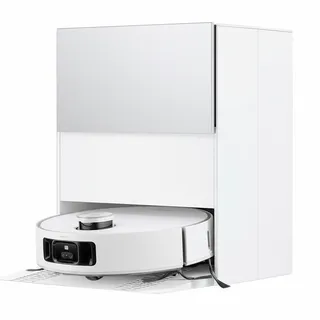
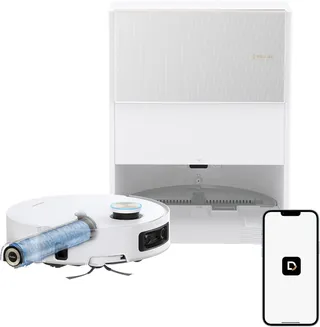
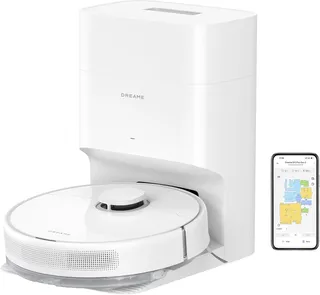
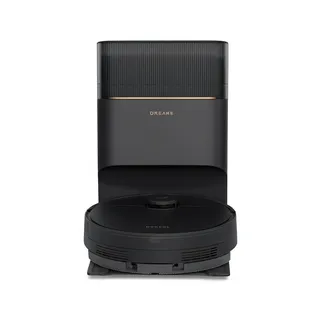
Dreame D9 Max Gen 2
Released 2024
Suction
6,000 Pa
Battery
285 min
Navigation
Spinning Lidar
Mopping
1 Fixed Pad
Full Specifications
| Suction Power | 6,000 Pa |
| Battery Life | 285 min |
| Dustbin Capacity | 570 ml |
| Navigation | Spinning Lidar |
| Robot Height | 3.81" |
| Threshold Climbing | 20 mm |
| Brush Roll | All-Rubber Floating Brush |
| Mopping | 1 Fixed Pad |
| Self-Empty Dock | No |
| Obstacle Avoidance | Yes |
| Multi-Floor Maps | Yes |
| No-Go Zones | Yes |
| Carpet Boost | Yes |
| HEPA Filter | Yes |
| WiFi | 2.4 GHz |
| Voice Assistants | Alexa |
| Warranty | 1 year |
Compare with similar models:
Dreame D9 Max Gen 2: Flagship Suction at a Budget Price
The robot vacuum market has split into two camps. On one side, you’ve got premium machines with heated mop washing, plumbing connections, and AI that can identify your dog’s accidents before disaster strikes. On the other side? Robots like the Dreame D9 Max Gen 2, which take a different approach entirely: pack as much raw cleaning power as possible into an affordable package.
This robot won’t empty its own dustbin or wash its mop pads. What it will do is match the suction power of vacuums costing twice as much. At street prices often hovering between $140 and $280, the D9 Max Gen 2 delivers 6,000 Pascals of suction, a massive 5,200 mAh battery, and precise LiDAR navigation. For buyers who don’t mind emptying a dustbin themselves, that’s a compelling trade-off.
What Makes the D9 Max Gen 2 Stand Out
Dreame engineered this robot with one goal: dominate the spec sheet where it counts most. The 6,000 Pa suction rating matches what you’d find in premium 2023 flagships like the Roborock S8 or Dreame’s own L10s Ultra. That’s a major jump from the 4,000 Pa found in the first-generation D9 Max.
The navigation relies on LiDAR (marketed as Pathfinder Technology), which provides accurate mapping and efficient cleaning paths. Unlike camera-based systems, the laser sensor works perfectly in complete darkness, making overnight cleaning schedules practical.
But here’s where the trade-offs come in. The D9 Max Gen 2 uses mechanical bumpers for obstacle detection rather than the optical sensors found in higher-end models. It navigates by bumping into things it can’t see with the LiDAR. The mopping system is a basic drag-style pad that can’t lift over carpets. And there’s no self-emptying dock whatsoever—just a compact charging station.
The D-Series Evolution
Dreame’s D-series has always been about bringing premium features to budget prices. The original D9 introduced affordable LiDAR navigation. The D9 Max bumped suction to 4,000 Pa. Now the Gen 2 pushes to 6,000 Pa and adds an all-rubber floating brush—a feature borrowed directly from premium competitors like Roborock.
Worth noting: the D9 Max Gen 2 differs from the D10 Plus Gen 2. Both share identical robot hardware, but the D10 Plus includes an auto-empty dock. If you want hands-free dustbin maintenance, look to the D10. If you’d rather save around $100 and don’t have space for a larger dock, the D9 Max is your pick.
Physical Design and Build
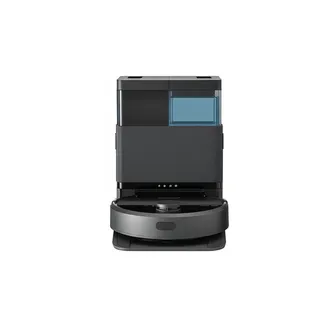
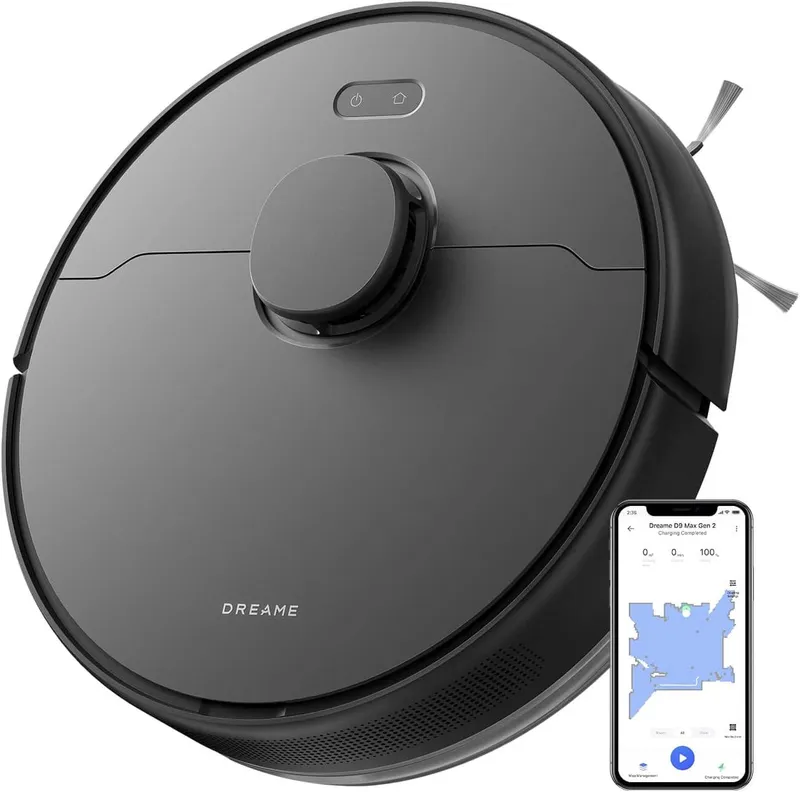
The D9 Max Gen 2 follows the standard cylindrical design common to LiDAR robots. Here are the numbers that matter:
- Diameter: 350 mm (13.78 inches)—fits between most chair legs but struggles in tight corners
- Height: 96.8 mm (3.81 inches)—the LiDAR turret dictates this, so anything lower than about 4 inches won’t get cleaned underneath
- Weight: 3.21 kg (7.08 lbs)—heavy enough for carpet traction, light enough to carry between floors
The matte ABS plastic construction resists fingerprints and hides scratches well. Available in black or white, the top panel features a hinged lid over the dustbin. Physical controls are minimal: a power/clean button and a home/dock button, both with status LEDs.
How It Navigates
The LiDAR turret spins at roughly 5-6 Hz, firing a pulsed laser beam that measures distances to walls and furniture with centimeter-level accuracy. It works in complete darkness and builds maps quickly—a 1,000 square foot home typically maps in under 10 minutes during the first run.
Supporting sensors include:
- Cliff sensors on the underside that detect stairs and ledges (though they sometimes false-trigger on ultra-black rugs)
- A spring-loaded front bumper with microswitches that trigger when the robot contacts low obstacles
- A wall sensor that lets the robot follow edges at about 10mm distance without constant bumping
- Gyroscopes and wheel encoders that track rotation and distance traveled
Once mapped, the robot cleans systematically: perimeter sweep first, then a back-and-forth Z-pattern to fill the interior. It circles furniture legs before resuming its path. The system supports up to three stored maps for multi-floor homes.
The Obstacle Avoidance Reality Check
Here’s where budget meets reality. The LiDAR sees a 2D slice of the world at about 4 inches off the ground. Anything below that plane—socks, cables, pet bowls, toys—doesn’t exist until the bumper hits it.
The robot will push light objects around. It will run over phone chargers, shoelaces, and anything else in its path. Items can tangle in the main brush, causing the robot to error out with a “Main Brush Stuck” message.
Most importantly: the D9 Max Gen 2 has absolutely no capability to detect pet waste. Running it in a home with an untrained puppy risks what’s euphemistically called a “poop-ocalypse.” Premium robots with front-facing cameras avoid these disasters; this one requires you to keep floors clear before cleaning runs.
Suction System Deep Dive
The Vormax Suction System uses a high-speed brushless DC motor. Brushless motors last longer than brushed alternatives and deliver better efficiency at high RPMs.
Four power modes are available through the app:
- Quiet (~55 dB)—good for maintenance cleaning on hard floors
- Standard—balanced daily use
- Strong—higher power for carpets
- Turbo—full 6,000 Pa for deep cleaning (burns through battery fast)
The All-Rubber Brush
A significant Gen 2 upgrade is the all-rubber main brush. Traditional bristle brushes wrap hair tightly around themselves, often requiring scissors to free. The rubber blade design lets hair slide off and migrate to the ends of the roller, where it’s easily removed.
The trade-off? Rubber brushes can be slightly less effective at combing dust from high-pile carpets than stiff bristles. The 6,000 Pa suction is meant to compensate.
The brush housing “floats” on springs, maintaining a tight seal against floors whether you’re on uneven tile or thick carpet. That seal maximizes suction efficiency.
Side Brush
A single side brush sits on the front right. It sweeps debris from edges into the main roller’s path. The app can vary its speed—faster along walls, slower in open areas to prevent scattering debris across the room.
Real-World Cleaning Performance
On hard floors (laminate, tile, hardwood), the D9 Max Gen 2 performs exceptionally well. Tests show nearly 100% pickup of fine debris like tea in a single pass. Rice, salt, sugar, cat litter, coffee grounds—all handled effectively. Larger debris like cereal or dry pet food gets picked up reliably when the bin isn’t full.
On carpets, the Carpet Boost feature automatically ramps to Turbo mode when it detects increased brush resistance. It extracts embedded dust effectively, though deep shag rugs create significant drag that drains battery faster.
Mopping: Expectations vs. Reality
Think of the mopping function as maintenance, not deep cleaning. The system uses a detachable mop module that clips to the rear of the water tank.
What It Actually Does
The mop pad is a static semicircular microfiber cloth. It doesn’t vibrate like Roborock’s VibraRise or rotate like Dreame’s L-series mops. It simply drags behind the vacuum.
This works for:
- Removing ultra-fine dust after vacuuming
- Polishing hard floors to clear light footprints
It doesn’t work for:
- Dried spills (sticky soda, sauce)
- Muddy paw prints (needs multiple passes)
- Grime in grout lines
Water Control
An electronic pump draws from the 235 ml tank and saturates the pad. You can set low, medium, or high water flow through the app. The pump stops when the robot stops, preventing water damage if it gets stuck.
The Carpet Problem
Here’s the biggest operational friction: the mop pad doesn’t lift. At all. If the mop module is attached, the robot drags a wet cloth over your carpets and rugs.
The workaround? Draw “No-Mop Zones” over every rug in the app. When mopping, the robot avoids these areas entirely—meaning carpets don’t get vacuumed during mop runs. To vacuum carpets, you physically remove the mop module. There’s no true “whole home” autonomous clean for mixed-flooring homes.
The Dreamehome App
Dreame has moved away from Xiaomi Home to its native Dreamehome app. The interface offers:
- Map management: Split and merge rooms, name them, reset maps
- Room cleaning: Select specific rooms
- Zone cleaning: Draw boxes around specific areas
- Spot cleaning: A 1.5m x 1.5m square around the robot
- Power settings: Quiet, Standard, Strong, Turbo
- Water levels: Low, Medium, High
- Multi-pass cleaning: 1x, 2x, or 3x runs
- Scheduling: By time, day of week, and specific rooms
- History: Logs of past runs with area covered and time taken
Connectivity Notes
The robot connects via 2.4 GHz Wi-Fi only—no 5 GHz support. Smart features depend on cloud connectivity, and some users have reported “EMQ Server” errors or connection timeouts, particularly in Europe and parts of North America. These are typically temporary server-side issues. Grey-market imports often face geo-blocking problems.
Smart Home Integration
Supported voice assistants include Amazon Alexa and Google Assistant. There’s no native Apple HomeKit or Matter support, but iOS users can create Siri Shortcuts within the app for voice control.
Maintenance Requirements
Without a self-emptying dock, you’re the maintenance system. Here’s what that looks like:
| Component | What to Do | How Often | Difficulty |
|---|---|---|---|
| Dustbin (570ml) | Empty contents, tap HEPA filter | Every 2-3 runs | Easy |
| Water Tank (235ml) | Refill before mopping, empty after | Each mop run | Easy |
| Mop Pad | Wash by hand or machine, air dry | After each mop | Easy |
| Main Brush | Remove hair from axles, check for tears | Weekly | Easy (no tools) |
| Sensors | Wipe LiDAR and cliff sensors with dry cloth | Monthly | Easy |
| Side Brush | Check for tangles | Monthly | Easy (screwdriver) |
| Filter | Wash with water (24h dry time) or replace | Monthly wash, replace every 3-6 months | Easy |
What Wears Out Eventually
- LiDAR motor: The spinning turret can seize from dust after 2-4 years—a common failure across all LiDAR robots
- Drive wheels: Some users report grinding noises from dried lubricant or hair in the gearbox
- Battery: The 5,200 mAh lithium-ion pack is good for roughly 500 charge cycles (about 2 years of daily use) before dropping to 80% capacity
The battery is user-replaceable: flip the robot, remove 6-8 Philips screws from the bottom plate, unplug the old battery, plug in the new one. Consumables like brushes, filters, and pads are widely available on Amazon and AliExpress.
How It Compares
vs. Roborock Q5 Pro
The Q5 Pro is the main competitor at this tier. Its DuoRoller dual-brush system extracts carpet debris better and resists tangles more effectively. It has a larger 770ml bin versus the Dreame’s 570ml. Roborock’s app is also generally considered more stable. But the Q5 Pro typically costs $50-100 more. If you find the D9 Max Gen 2 under $200, the value equation favors Dreame.
vs. Xiaomi S10+
The S10+ offers dual rotating mop pads that actually scrub, plus front-facing obstacle avoidance lasers. For mopping-focused buyers, it’s the better choice. For buyers prioritizing raw suction at the lowest price, the D9 Max Gen 2 wins.
vs. Dreame D10 Plus Gen 2
Same robot, different dock. The D10 Plus includes an auto-empty base. Buy it if you have allergies or despise emptying dustbins. Buy the D9 Max if you want to save ~$100 and have limited floor space.
The Bottom Line
The Dreame D9 Max Gen 2 is a focused machine. It doesn’t try to do everything—it tries to vacuum really well at a price that undercuts the competition.
Where it excels:
- 6,000 Pa suction is exceptional at this price point ($150-$200 on sale)
- LiDAR navigation is efficient and works in darkness
- The 5,200 mAh battery rarely runs dry in normal homes
- All-rubber brush minimizes hair maintenance headaches
Where it falls short:
- Mopping is basic—a nice addition, not a floor-cleaning solution
- The mop can’t lift over carpets, creating workflow hassles in mixed-flooring homes
- No obstacle avoidance below the LiDAR line means cables and socks are fair game
- You empty the bin and wash the pad yourself
Best suited for:
- Budget-conscious buyers who want flagship vacuuming power without the $500+ price tag
- Pet owners dealing with fur on hard floors and carpets
- Homes with simple floor plans (mostly hard floor or mostly carpet) where the mopping limitations matter less
Not recommended for:
- Buyers who want total automation
- Homes with cluttered floors, kids’ toys, or cables everywhere
- Anyone who needs serious mopping for sticky messes
Technical Specifications Summary
Product Details:
- Model: Dreame D9 Max Gen 2
- Manufacturer: Dreame Technology
- Series: D-Series (Entry/Mid-Range)
- Release: 2024/2025
- MSRP: ~$299.99 (Street Price: $140-$200)
| Category | Specification | Notes |
|---|---|---|
| Cleaning System | ||
| Suction Power | 6,000 Pa | Vormax System |
| Main Brush | All-Rubber Floating | Anti-tangle design |
| Side Brush | Single (Right side) | Variable speed |
| Dustbin Capacity | 570 ml | Manual empty |
| Mopping System | ||
| Type | Passive Drag Plate | Detachable |
| Water Tank | 235 ml | Electronic pump |
| Flow Levels | 3 (Low, Med, High) | App controlled |
| Mop Lifting | No | Requires No-Mop zones |
| Navigation | ||
| Sensor Type | LiDAR (LDS) | Pathfinder Technology |
| Obstacle Avoidance | Mechanical Bumper | No camera/AI |
| Mapping | Multi-Floor (3-4 maps) | Fast Mapping |
| Threshold Climbing | 20 mm (0.78 in) | |
| Power | ||
| Battery | 5,200 mAh | Lithium-Ion |
| Runtime | Up to 285 mins | Quiet Mode |
| Charging Time | ~6 Hours | |
| Recharge & Resume | Yes | |
| Connectivity | ||
| Wi-Fi | 2.4 GHz Only | |
| App | Dreamehome | iOS/Android |
| Voice Assistants | Alexa, Google, Siri Shortcuts | No Matter/HomeKit |
| Physical | ||
| Dimensions | 350 x 350 x 96.8 mm | |
| Weight | 3.21 kg | |
| Colors | Black / White | |
| Noise Level | ~55 dB | Quiet Mode |
Key Features:
- Vormax 6,000Pa Suction
- 5,200mAh High-Capacity Battery
- LiDAR Navigation (LDS)
- Carpet Boost Auto-Suction
- Tangle-Resistant All-Rubber Brush
- Virtual Walls, No-Go Zones, No-Mop Zones
- Voice Control Integration