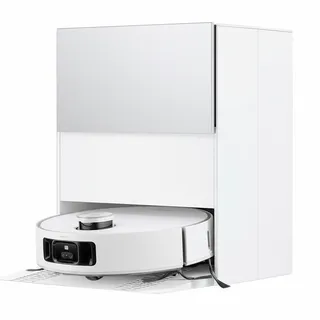
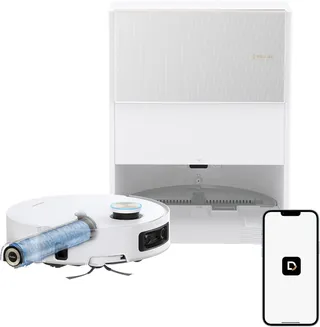
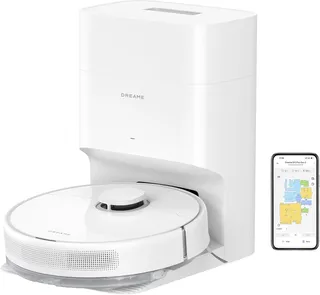
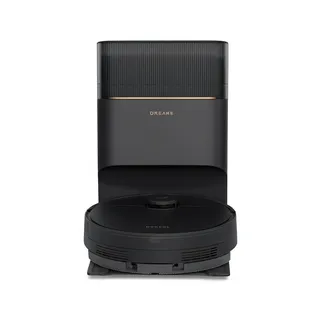
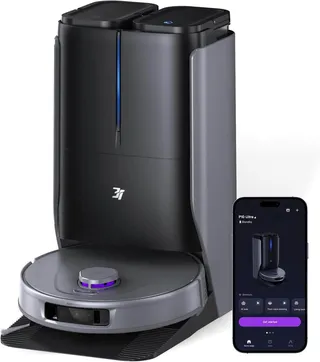
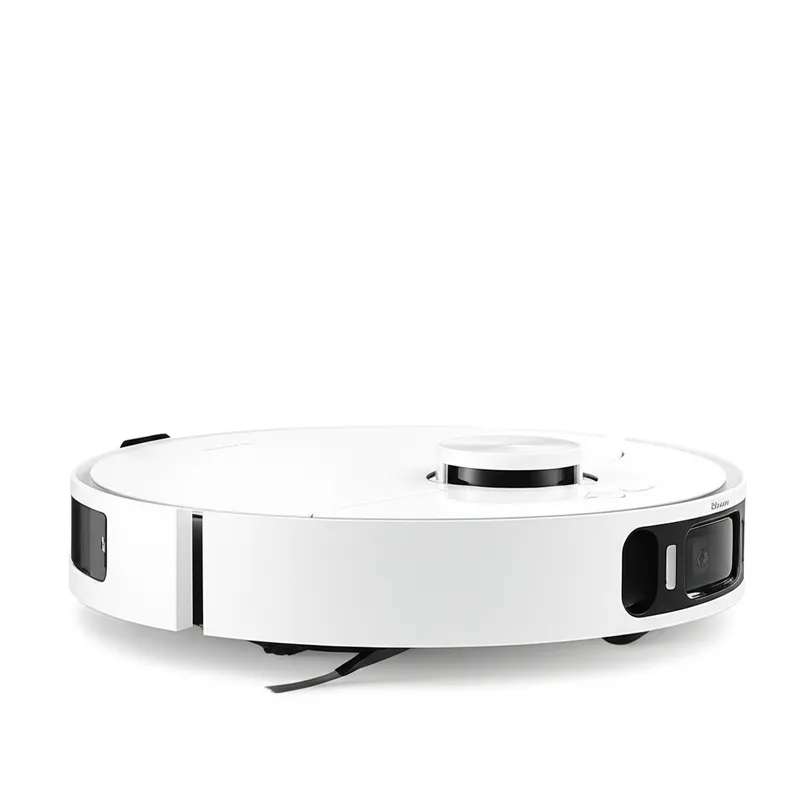
Dreame L40s Ultra AE
Suction
19,000 Pa
Battery
180 min
Navigation
Spinning Lidar
Mopping
2 Spinning Pads
Full Specifications
| Suction Power | 19,000 Pa |
| Battery Life | 180 min |
| Dustbin Capacity | 395 ml |
| Navigation | Spinning Lidar |
| Robot Height | 3.8" |
| Threshold Climbing | 20 mm |
| Brush Roll | Single |
| Mopping | 2 Spinning Pads |
| Mop Raising Height | 10.5 mm |
| Self-Empty Dock | Bagged |
| Dock Bag Capacity | 3.2 L |
| Mop Washing | Hot Water |
| Mop Drying | Yes |
| Obstacle Avoidance | Yes |
| Objects Recognized | 120 |
| Multi-Floor Maps | Yes |
| No-Go Zones | Yes |
| Carpet Boost | Yes |
| HEPA Filter | Yes |
| WiFi | 2.4 GHz |
| Voice Assistants | Alexa |
| Warranty | 3 years |
Compare with similar models:
Dreame L40s Ultra AE: A Complete Guide
The Dreame L40s Ultra AE landed in summer 2025 and quickly earned a reputation as one of the best values in premium robot vacuums. Vacuum Wars called it their “Best Value of the Year,” and after examining everything this machine offers, it’s easy to see why.
What makes the AE special? It packs nearly all the features of Dreame’s flagship L40s Ultra at roughly $300 less. You get monster suction power, a self-cleaning base station that washes and dries the mop pads with hot water, and obstacle avoidance that actually works. The catch? There are a few trade-offs, which we’ll cover in detail.
Price and Availability
The L40s Ultra AE retails for $1,099.99 in the US. In Canada, it debuted at CAD $799.99 on promotion, while European pricing hovers around EUR 799 (though sales have dropped it as low as EUR 400-600 at times, frustrating some full-price buyers).
Both white and black variants are available at the same price. Buy from Dreame’s official Amazon storefront or their website to ensure you get English support, correct voltage, and warranty coverage. Gray market imports from China may have firmware region locks or connectivity issues with the Dreamehome app.
The L40s Family Explained
Dreame’s naming can confuse people. The L40s series includes three models:
- L40s Ultra CE (Core Edition): The budget option at roughly $899
- L40s Ultra AE (Auto-Empty): The mid-tier sweet spot covered here
- L40s Ultra: The flagship at $1,399 with extra features
The “AE” designation indicates it includes an auto-empty base, though all three models actually have one. Think of AE as the Goldilocks option: most of the flagship features without the flagship price.
Physical Dimensions
The robot measures 350 x 350 x 97mm (about 13.8 x 13.8 x 3.8 inches) and weighs 4.0kg (8.8 lbs). That 97mm height matters because it’s slimmer than many LiDAR robots, letting it slide under furniture that would block taller competitors.
The base station is substantial: 457 x 340 x 590mm (18.0 x 13.4 x 23.2 inches) and 9.0kg (19.8 lbs) empty. With water tanks filled, it’s heavier still. Make sure you have space for this tower-style dock.
Suction and Cleaning Power
Here’s where the L40s Ultra AE flexes: 19,000 Pa of suction. That’s an almost absurd figure for a robot vacuum when most high-end competitors top out around 4,000-6,000 Pa. Dreame calls this their “Vormax” suction system, and while that’s likely a peak measurement under ideal lab conditions, the real-world performance is genuinely impressive.
Even at half power, it has strong pickup. Crank it to maximum and it can visibly lift light rugs. The robot also scored 85% on Vacuum Wars’ deep carpet cleaning test, where fine sand is embedded into mid-pile carpet. That beats the roughly 75% category average.
The Brush System
Dreame includes two main brush options in the box:
TriCut Brush 3.0: This brush has integrated hair-cutting blades that automatically slice long hairs before they can tangle. It comes pre-installed and works remarkably well. One owner reported going three months without once needing to clean hair from the brush. For homes with pets or long-haired humans, this alone might justify the purchase.
Rubber Brush: A traditional brushroll with rubber fins, included as a spare. Some users prefer it for large debris pickup, though it lacks the hair-cutting feature.
A single side brush sweeps edges. Unlike the flagship L40s Ultra, this side brush doesn’t extend or retract, which we’ll discuss more in the cleaning performance section.
Navigation Technology
The robot navigates using a dToF LiDAR scanner in its turret, giving it precise mapping that works even in complete darkness. For obstacle avoidance, there’s a front-facing 3D structured-light sensor with an LED assist light. Dreame claims it can recognize over 120 types of obstacles, including cables, shoes, socks, pet toys, and yes, pet waste.
This is where the AE model actually outperforms its more expensive sibling. In Vacuum Wars’ testing, the AE scored 19/24 on obstacle avoidance, far above the roughly 17 average. The flagship Ultra? Just 7/24. The cheaper CE? 8/24. The reviewers called it a “night-and-day difference.”
One user summed it up: “The object avoidance works so well, even in the dark. It stays clear of cat toys, cords, socks, paper towels, all sorts of junk.”
Climbing Ability and Limitations
The robot handles obstacles up to 20mm (0.79 inches) high, which covers most door thresholds and transition strips. The flagship Ultra has auxiliary wheels for climbing up to 40mm in certain configurations, but the AE lacks those extras. It’ll handle standard floor trims, but thick thresholds or plush shag carpets might stop it.
Battery and Runtime
A 5,200 mAh battery delivers up to 180 minutes on quiet mode over hard floors. Realistic runtime depends heavily on settings:
- Balanced mode on hard floors: roughly 2 hours
- High suction on carpet: around 90 minutes
- Lab testing showed coverage of about 1,808 square feet per charge under standard settings
- Vacuum Wars measured it hitting 2,400+ square feet per charge
If the battery runs low mid-job, the robot automatically returns to dock, recharges, and picks up where it left off. Full charging takes about four hours.
Mopping Performance
The L40s Ultra AE vacuums and mops simultaneously using dual spinning pads roughly 5-6 inches in diameter. They rotate to scrub the floor, and the spinning action combined with downward pressure handles dried stains better than simple drag-mop designs.
Water System
The robot carries a small internal reservoir (about 80ml) that the base station automatically refills. The base itself holds:
- Clean water tank: 4.5 liters
- Dirty water tank: 4.0 liters
The base pumps fresh water (mixed with cleaning solution if you add some) to rinse the pads, then suctions dirty water into the waste tank. Dreame includes a 200ml bottle of cleaning solution, and the base can auto-dispense it during cycles.
MopExtend Technology
This is genuinely clever: one of the two mop assemblies can slide outward to reach edges and corners that round robots typically miss. When the robot approaches a wall, you’ll see one pad extend beyond the body to wipe right up to the baseboard. Both the L40s Ultra and Ultra AE have this feature; the cheaper CE model doesn’t.
Mop Lifting
The pads lift approximately 10.5mm off the floor when detecting carpet or returning to base. That’s enough for very low-pile rugs but won’t clear anything with pile taller than about 3mm. Dreame recommends setting carpet areas as no-mop zones during mopping runs.
Hot Water Washing
The base washes pads with water heated to 75C (167F), among the hottest on the market. Most competitors use 50-60C. A textured washboard scrubs the pads while hot water flushes through, and users consistently report pads coming out noticeably cleaner with less odor.
After cleaning, hot air drying runs for up to two hours to prevent mildew. It’s automatic but adjustable in the app.
Mopping Test Results
In Vacuum Wars’ testing, the AE actually outperformed the flagship Ultra at mopping. It removed dried stains effectively while leaving only 0.35 grams of residual water on the floor, compared to 0.95 grams from the Ultra and 2.2 grams from the CE. Less residual water means fewer streaks and no pooling.
The Base Station
Dreame calls this an “8-in-1 Intelligent PowerDock,” which sounds like marketing speak but accurately describes what it does:
- Empties the robot’s dustbin into a disposable bag
- Washes the mop pads with hot water
- Dries the mop pads with heated air
- Refills the robot’s water tank
- Auto-dispenses cleaning solution
- Self-cleans the washboard
- Stores clean and dirty water separately
- Provides charging
Dust Emptying
After each cleaning run, the base vacuums debris from the robot into a 3.2-liter disposable bag. Dreame advertises 60-90 days of hands-free operation, though homes with multiple pets may need more frequent bag changes. The vacuum noise during emptying is loud (around 75-80 dB) but only lasts about 15 seconds. Bags have a sealing flap, so removal doesn’t create dust clouds.
Water Tank Management
The clean water tank needs periodic refilling depending on how much you mop. For a moderately-sized home of about 100 square meters of hard floor, expect to use 0.5-1 liter per session. The dirty water tank collects wastewater with a strainer for larger particles. Empty and rinse it every few sessions to prevent odor.
App and Smart Features
The Dreamehome app provides visual mapping after the robot’s first run. You can:
- Save multiple floor maps (3-5 depending on the model)
- Name and edit rooms
- Set no-go zones and no-mop zones
- Create cleaning schedules by room
- Adjust suction power (five levels from Quiet to Max+)
- Control water output for mopping
- Enable CleanGenius mode for AI-driven automatic adjustments
Cleaning Modes
Auto Clean: Covers the whole mapped area or selected rooms Room Clean: Choose specific rooms to vacuum and/or mop Zone Clean: Draw rectangles on the map for spot cleaning Spot Clean: Press the physical button for a 1.5 x 1.5 meter spiral clean around the robot’s current position
The robot supports voice control through Amazon Alexa, Google Assistant, and Siri Shortcuts. Matter support isn’t available as of late 2025.
App Quirks
User opinions on the Dreamehome app are mixed. It’s feature-rich but can feel overwhelming, and some users have encountered:
- Settings not saving properly (tip: always confirm you hit the checkmark)
- Connectivity requiring WPA2 instead of WPA3 on some routers
- Occasional freezing during live map view
- Scheduling bugs where custom routines revert to defaults
The app hovers around 3.0 stars in app stores. It works, but expect a learning curve and occasional frustrations.
Cleaning Performance by Surface
Hard Floors
Excellent across the board. In lab testing on laminate, the robot scored 97.4/100 for debris pickup. Fine dust, crumbs, grit, and larger debris all disappear reliably. One thing to note: the TriCut brush sometimes pushes medium-sized debris (like small chunks of drywall) forward rather than sucking it in immediately. It usually gets picked up on subsequent passes.
Carpets
Above-average performance. The 85% deep carpet cleaning score beats most competitors, and the automatic carpet boost cranks suction to maximum when it detects carpet. Pet hair pickup tested at 81%, slightly above the roughly 80% category average.
One Reddit user did report poor carpet performance, but it turned out their unit had a defective roller that wasn’t touching the floor. Once replaced, performance matched expectations.
Edges and Corners
This is where round robots struggle, and the L40s Ultra AE is no exception. The single side brush sweeps debris from along walls reasonably well, but the 90-degree corners where wall meets floor will have a thin line of dust remaining. One German review gave it 0/5 for corner cleaning, which is typical for round robots without extending brushes.
The MopExtend feature partially compensates during mopping by physically wiping right up to walls, catching fine dust that vacuuming missed.
Pet Hair
The TriCut brush genuinely shines here. Multiple owners with long-haired pets report essentially zero tangles over months of use. Hair gets cut and sucked into the dustbin rather than wrapping around the brush. One user stated: “All my previous vacuums would get hair tangled in a single run. After 24 hours with Dreame, 0 hair stuck. Not one.”
Pet-Specific Considerations
The L40s Ultra AE was clearly designed with pet owners in mind:
Hair pickup: Powerful suction and the anti-tangle brush handle shedding from dogs and cats effectively. Running daily during shedding season keeps floors essentially fur-free.
Accident avoidance: The obstacle avoidance recognizes pet waste and navigates around it. Testing with fake dog poop confirmed reliable avoidance. The risk of a “poopocalypse” is significantly lower than with older robots.
Food and water bowls: The robot identifies bowls as obstacles and navigates around them. Most owners don’t bother moving bowls during cleaning runs.
Pet reactions: The robot moves systematically without sudden jerky movements. Cats typically watch with curiosity or indifference. Dogs may bark initially but often habituate quickly. At 68 dB maximum, it’s quieter than most upright vacuums.
Home Compatibility
Size Requirements
The robot handles homes of essentially any size:
- Small apartments (500-1,000 sq ft): Overkill in features but performs beautifully. Finishes in 30-60 minutes.
- Medium homes (1,000-2,000 sq ft): Squarely in its element. Covers everything in 1-2 hours including mopping.
- Large homes (3,000+ sq ft): May need one recharge mid-clean, which happens automatically.
Multi-Floor Homes
The robot stores 3-5 maps, so multi-story homes are manageable. You’ll need to carry the robot between floors (it can’t climb stairs), and most people leave the bulky base station on the main floor. For upstairs cleaning, carry the robot up, run the cycle, then bring it back down to empty.
Floor Types
Works well on hardwood, tile, laminate, and low-to-medium pile carpet. Not suitable for:
- High-pile or shag carpet (may get stuck or treat as obstacle)
- Thresholds over 20mm
- Black surfaces (may trigger cliff sensors as false drops)
Dock Placement
Place the base on hard floor (not carpet) near an outlet. Allow about 1.5 feet of clearance on each side. The robot needs clear approach space of roughly 4 feet in front.
Maintenance Schedule
Weekly Tasks
- Empty dirty water tank
- Refill clean water tank
- Wipe sensors with dry cloth (optional but helpful)
Monthly Tasks
- Change dust bag (or as prompted)
- Rinse dustbin filter
- Check main brush for debris
- Machine wash mop pads (optional, the base cleans them automatically)
Every 6-12 Months
- Replace dustbin filter
- Replace main brush (or alternate between the two included)
- Replace side brush if frayed
- Replace mop pads if worn
The app tracks consumable usage and alerts you when parts need attention.
Included Accessories
The box includes:
- Robot vacuum
- PowerDock base station
- 2 dust bags (one installed, one spare)
- 2 mop pads (one pair installed)
- TriCut brush (installed)
- Rubber brush (spare)
- Side brush (installed)
- Cleaning tool with cutter
- 200ml cleaning solution
- Base station ramp extension
- Documentation
Ongoing Costs
Budget for these consumables:
- Dust bags: $15-20 per 3-pack, changing every 1-2 months
- Filters: $20 per 2-pack, replacing every 3-6 months (washing extends life)
- Main brush: $30-50, replacing every 6-12 months
- Side brush: $10-15, replacing every 6 months
- Mop pads: $20 per pair from third parties, replacing every 6-12 months
- Cleaning solution: $15 per bottle, lasting several weeks
Annual cost runs roughly $100 if replacing everything on schedule with OEM parts. Third-party alternatives can reduce this.
Warranty and Support
Dreame provides a standard one-year warranty, though they announced all 2025 robot vacuum purchases come with a three-year warranty (verify with your regional Dreame website). Extended warranty plans are available: $69 for one additional year or $139 for two additional years.
Support channels include email (support.na@dreame.tech for North America), phone (+1 866-977-5177), and an active presence on Reddit where brand reps help troubleshoot issues.
User experiences with support vary. Some report quick replacements of faulty units; others have waited months for resolution. Dreame’s US infrastructure is still growing. If you buy from Amazon or Best Buy, their return policies may provide faster resolution within the return window.
Known Limitations
Corner cleaning: Round shape means it physically cannot reach into 90-degree corners. Expect a thin line of dust in corners.
App quirks: Settings may reset, curtain zones may not work as expected, interface can feel cluttered. Stay updated on firmware.
Mirror and glass confusion: LiDAR may see “through” mirrors and create phantom rooms in the map. Solution: set no-go zones along mirror edges.
Threshold limit: Cannot climb obstacles over 20mm. Some older homes have higher interior thresholds.
Black surface avoidance: Cliff sensors may mistake dark floors or rugs for drops and refuse to clean them.
Mop pad lift limitation: 10.5mm lift isn’t enough for medium-pile carpets. Mark them as no-mop zones.
Base station noise: Auto-empty is loud (about 15 seconds of vacuum noise). Schedule cleaning times accordingly.
Hardware Issues (Rare)
A small number of users have reported:
- Mop motor failure within first few weeks
- Water pump issues in the base station
- Defective rollers not contacting the floor
These appear to be quality control outliers rather than design flaws. Test the robot thoroughly during your return window to catch any early failures.
How It Compares
vs. Dreame L40s Ultra ($1,399)
The flagship adds an extendable side brush, dual brush rolls (slightly better carpet performance), and the ability to drop mop pads at the base. However, its obstacle avoidance tested significantly worse (7/24 vs 19/24). For most people, the AE is the smarter buy.
vs. Dreame L40s Ultra CE ($899)
The CE saves $200 but lacks MopExtend and uses a simpler obstacle avoidance system that also tested poorly. The AE’s superior obstacle avoidance and edge mopping justify the price bump.
vs. Roborock S7 Max Ultra ($1,199)
Similar price point. The Roborock has a more polished app and can serve as a pet-viewing camera. The Dreame has significantly stronger suction (19,000 vs roughly 6,000 Pa), better obstacle avoidance in testing, and hotter mop washing. The Roborock’s vibrating mop is effective but doesn’t self-clean as thoroughly.
vs. Ecovacs Deebot T20 Omni ($1,099)
Very comparable feature sets. Both have dual spinning pads and self-cleaning bases. The Dreame has much higher suction, and its 75C water washing beats Ecovacs’ roughly 55C. Both apps have their quirks.
vs. iRobot Roomba Combo j7+ ($999)
The Roomba has a clever mop arm that lifts completely off carpet, plus iRobot’s established support network. But no self-cleaning mop pads, weaker suction, and you’ll manually wash the mop. The Dreame is more automated overall.
The Bottom Line
Vacuum Wars ranked the L40s Ultra AE among their top three robots of 2025 and called it the best value in its class. That’s not hyperbole.
For roughly $1,100, you get suction power that rivals robots costing hundreds more, obstacle avoidance that actually prevents tangles and stuck situations, a mopping system that handles dried stains with hot water washing and drying, and a maintenance experience that borders on hands-free.
The trade-offs are real but manageable: corners need occasional manual attention, the app takes some getting used to, and Dreame’s support infrastructure is still maturing. None of these overshadow what the robot does well.
If you have pets, mixed flooring, or simply want to spend less time thinking about floor cleaning, the L40s Ultra AE delivers. It’s not perfect, but it hits that rare sweet spot where premium features meet reasonable pricing.