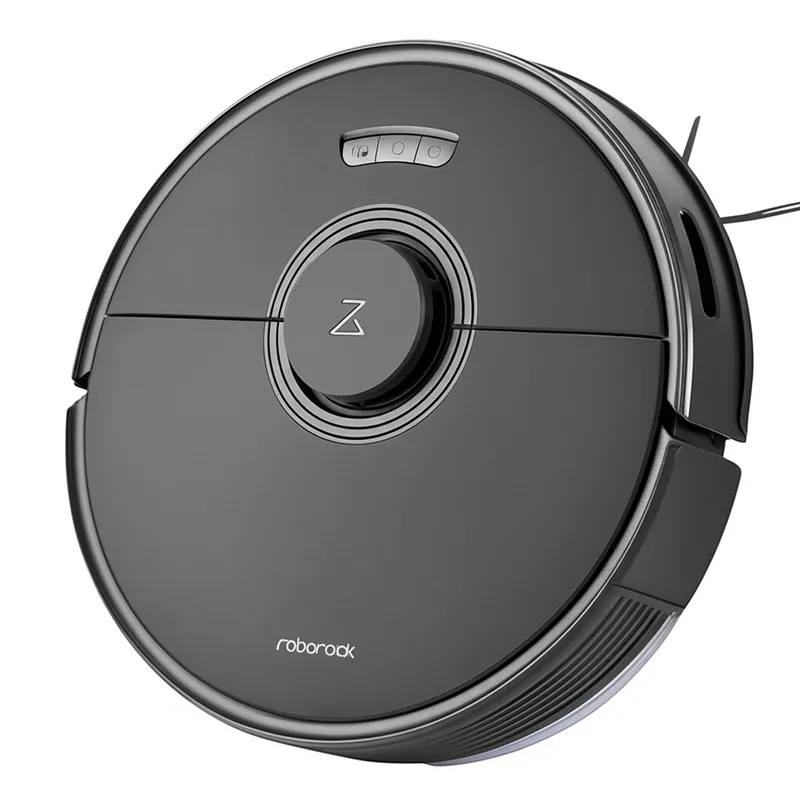
Roborock Q7 Max+
Released 2022
Suction
4,200 Pa
Battery
180 min
Navigation
Spinning Lidar
Mopping
1 Fixed Pad
Full Specifications
| Suction Power | 4,200 Pa |
| Battery Life | 180 min |
| Dustbin Capacity | 470 ml |
| Navigation | Spinning Lidar |
| Robot Height | 3.8" |
| Threshold Climbing | 20 mm |
| Brush Roll | Single |
| Mopping | 1 Fixed Pad |
| Self-Empty Dock | Bagged |
| Dock Bag Capacity | 2.5 L |
| Obstacle Avoidance | No |
| Multi-Floor Maps | Yes |
| No-Go Zones | Yes |
| Carpet Boost | Yes |
| HEPA Filter | Yes |
| WiFi | 2.4 GHz |
| Voice Assistants | Alexa |
| Warranty | 1 year |
Compare with similar models:
The Roborock Q7 Max+ hit the market in April 2022 as a compelling mid-tier option. Now, three years later, it’s being cleared out at steep discounts—dropping from its original $700 price tag to somewhere between $160 and $300. That price collapse tells you everything about where this vacuum stands today: capable hardware that’s been surpassed by newer models, but potentially a solid deal if you know its limitations.
The Good: Battery Life and Navigation
Where the Q7 Max+ genuinely excels is battery efficiency. Independent testing measured 2.04 minutes of runtime per percentage of battery consumed—tied for best among tested models. That 5200mAh battery delivers roughly 240 minutes in Quiet mode or about 80 minutes at maximum power. For most homes, expect coverage around 1,900 square feet on a single charge.
Navigation efficiency impresses too. The PreciSense LiDAR system maps your home methodically at 0.88 square meters per minute, matching more expensive robots like the S8+. It supports four floor maps, offers 2D and 3D viewing in the app, and handles multi-room layouts without getting confused.
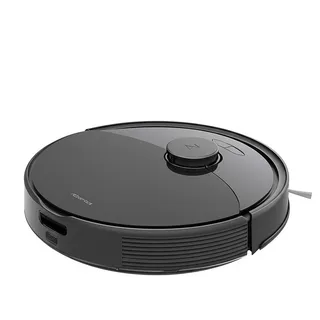
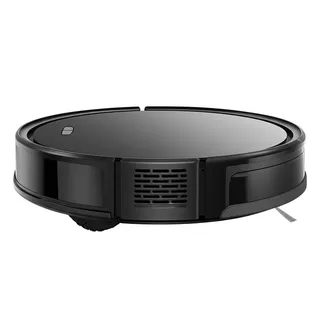
The robot measures 13.9 by 13.8 inches and stands 3.8 inches tall at 8.38 pounds. It can climb thresholds up to 2cm reliably, though anything taller causes problems.
Cleaning Performance: A Mixed Bag
Suction is rated at 4200 Pa, which sounds impressive until you compare it to real-world testing. Actual measured suction came in at 0.60 kPa—those Pa numbers don’t translate directly to cleaning power. Airflow testing showed:
- Quiet mode: 7.91 CFM
- Balanced mode: 9.33 CFM
- Turbo mode: 10.99 CFM
- Max mode: 15.68 CFM
On hard floors, the Q7 Max+ handles fine dust, sand, cereal, and rice without drama. Carpet performance splits depending on pile height—it does surprisingly well on high-pile carpet but struggles with fine debris embedded in low-pile surfaces. The single rubber brushroll (anti-tangle design) limits agitation compared to dual-roller competitors.
Pet hair pickup is frankly poor. The single brush doesn’t lift pet hair effectively from carpet fibers and tends to press it deeper instead. Multiple passes might get the job done, but this isn’t the vacuum for households with shedding animals.
The Obstacle Avoidance Problem
Here’s the Q7 Max+‘s most significant flaw: it has no real-time obstacle avoidance. None. The robot relies on basic infrared proximity sensors that can’t detect small objects like socks, cords, phone chargers, or pet waste. It will run straight over anything in its path.
Chair legs, rug tassels, kids’ toys—these become regular sources of stuck notifications. You’ll need to prep your floors before every cleaning session, removing anything the vacuum might encounter. For cluttered homes or households with pets that occasionally have accidents, this makes the Q7 Max+ a non-starter.
Mopping: Light Maintenance Only
The mopping system uses a passive vibrating design (non-scrubbing) with a 350ml water tank integrated into a combined dustbin module totaling 750ml. You get an impressive 30 adjustable water flow levels through the app—far more granular control than most competitors offer.
That said, don’t expect stain removal. The mop handles light dust and fresh spills adequately, but dried-on messes require either pre-soaking the microfiber pad or multiple passes. RTINGS rated the mopping performance as poor even at maximum water settings. This works for maintenance cleaning between more thorough manual sessions, not as a replacement for actual mopping.
Auto-Empty Dock
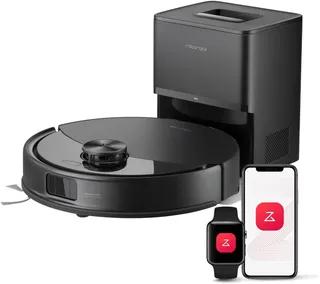
The “Plus” in Q7 Max+ refers to the Auto-Empty Dock Pure included with this variant. When the robot finishes cleaning, it returns to the dock and automatically empties its dustbin into a 2.5-liter bag. Official guidance says bags last about seven weeks, though your mileage varies with cleaning frequency.
The bags are self-sealing and act as secondary HEPA filtration, capturing 99.7% of particles down to 0.3 microns. A six-pack runs about $32 from Roborock, working out to roughly $5.33 per bag. Third-party alternatives exist at lower prices, but user reports suggest sticking with official bags for reliability.
The dock itself takes up notable floor space—taller than most competitor docks—and includes electrode cleaning brushes that wipe the robot’s charging contacts automatically.
App and Smart Features
The Roborock app earns solid ratings (4.8 stars on iOS from 54,200 reviews, 4.6 on Android from 309,000 reviews), though user complaints about reconnection issues and login hassles appear frequently. You’ll probably need to manually reconnect the vacuum every few sessions.
Feature-wise, it’s comprehensive: room-specific scheduling, cleaning zone creation, no-go zones for both vacuuming and mopping, real-time position tracking, and maintenance reminders for filters, brushes, and bags. The carpet boost feature automatically increases suction when the robot detects carpet.
Voice control works through Amazon Alexa, Google Assistant, and Siri Shortcuts. Matter protocol isn’t supported—Roborock reserved that for newer models like the S8 MaxV Ultra and Saros series. The robot requires cloud connectivity; you can’t operate it locally even on the same WiFi network.
One technical limitation worth noting: 2.4 GHz WiFi only. No 5 GHz support.
Maintenance and Longevity
Most maintenance is straightforward. The dustbin, brushroll, and filter remove without tools. Replacing the side brush requires a screwdriver.
Recommended cleaning schedule:
- Brushroll hair removal: once or twice weekly
- Filter rinsing: every two weeks
- Side brush debris removal: monthly
- Dock filter cleaning: every one to two months
Annual maintenance runs roughly $40 to $60 for typical use, mostly spent on replacement bags and occasional filters.
Durability is where concerns emerge. Multiple users report LiDAR sensor failures within 12 months—often conveniently after warranty expiration. Cliff sensor corrosion from water tank proximity, dock cycling problems, and map corruption after firmware updates appear in user forums regularly. Realistic lifespan seems to be 2-3 years with proper care.
Warranty and Support
Roborock provides a one-year limited warranty covering defects in materials and workmanship. Extended warranty options (one or two additional years) exist but are non-transferable if you sell the vacuum.
Customer support receives overwhelmingly negative feedback on Trustpilot. Common complaints include slow response times, generic troubleshooting replies, and warranty claim denials for what users believe are valid defects. Successful claims often require extensive documentation and persistence.
Who Should Buy This
The Q7 Max+ makes sense for specific situations: minimalist homes with mostly hard floors, budget-conscious buyers willing to accept clearance pricing, and users who don’t own pets and can commit to pre-cleaning before each session.
It doesn’t make sense for pet owners (weak hair pickup, zero waste avoidance), homes with regular clutter (no obstacle detection), carpet-heavy spaces (low-pile struggles), or anyone wanting current technology (this is three-year-old hardware).
At current clearance prices between $160 and $300, the value proposition exists—but only if you understand exactly what you’re getting. The Q7 M5+ successor offers 10,000 Pa suction (more than double), though it trades away those 30 water flow levels for just three presets. The Q8 Max adds obstacle avoidance if that’s your priority.
Specifications
| Category | Detail |
|---|---|
| Release Date | April 20, 2022 |
| Suction | 4200 Pa (rated) |
| Battery | 5200mAh, 180 min advertised |
| Dustbin | 470ml (750ml combined module) |
| Water Tank | 350ml |
| Height | 3.8 inches |
| Weight | 8.38 lbs |
| Navigation | PreciSense LiDAR |
| Obstacle Avoidance | None |
| Dock | Auto-Empty, 2.5L bagged |
| WiFi | 2.4 GHz only |
| Maps | Up to 4 floors |
| Warranty | 1 year |
What’s in the Box
- Roborock Q7 Max+ robot
- Auto-Empty Dock Pure with lid
- Charging cable
- E11 HEPA filter (pre-installed)
- Rubber brushroll
- Side brush
- Brushroll guard
- 2 disposable dustbags
- Mopping attachment with microfiber pad
- User manual
Replacement Parts Pricing
| Part | Cost | Replacement Frequency |
|---|---|---|
| E11 Filter | $15-20 | Every 3-6 months |
| Brushroll | $22.99 | Every 6-12 months |
| Side Brush (2-pack) | $15-20 | Every 3-6 months |
| Mop Pads (pair) | $12.99-16.99 | As needed (washable) |
| Dustbags (6-pack) | $31.99 | Every 7 weeks per bag |