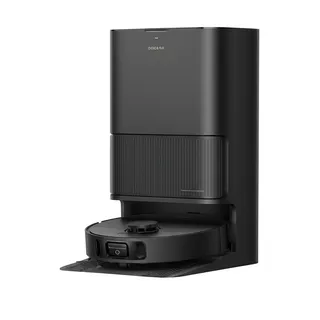
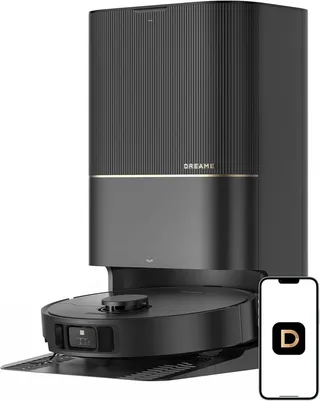
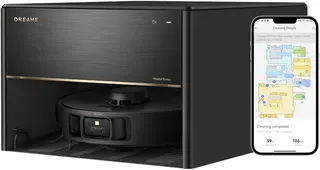
Roborock Qrevo Slim
- mopping self empty mop washing mop drying lidar obstacle avoidance no go zones multi floor carpet boost
Released 2024
Suction
11,000 Pa
Battery
180 min
Navigation
3D ToF Lidar
Mopping
2 Spinning Pads
Full Specifications
| Suction Power | 11,000 Pa |
| Battery Life | 180 min |
| Dustbin Capacity | 220 ml |
| Navigation | 3D ToF Lidar |
| Robot Height | 3.2" |
| Threshold Climbing | 20 mm |
| Brush Roll | Dual |
| Mopping | 2 Spinning Pads |
| Mop Raising Height | 10 mm |
| Self-Empty Dock | Bagged |
| Dock Bag Capacity | 2.7 L |
| Mop Washing | Hot Water |
| Mop Drying | Yes |
| Obstacle Avoidance | Yes |
| Objects Recognized | 73 |
| Multi-Floor Maps | Yes |
| No-Go Zones | Yes |
| Carpet Boost | Yes |
| HEPA Filter | Yes |
| WiFi | 2.4 GHz |
| Voice Assistants | Alexa, Google |
| Warranty | 1 year |
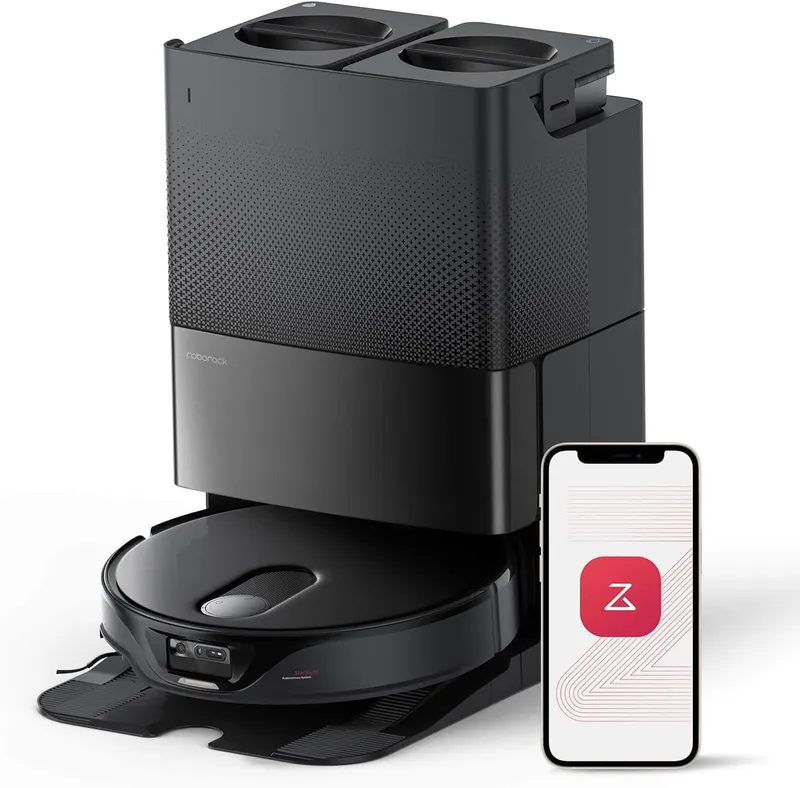
Compare with similar models:
Roborock Qrevo Slim
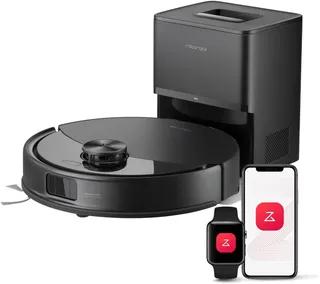
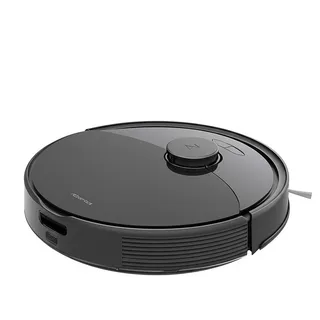
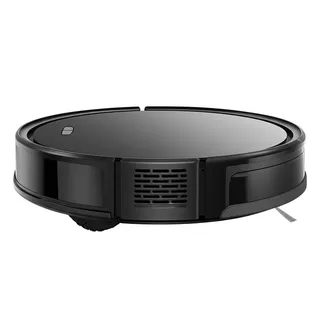
Here’s the pitch: what if you could get a robot vacuum that actually fits under your couch? The Roborock Qrevo Slim, launched at IFA 2024 and hitting US stores in October of that year, stands just 8.2 cm tall. That’s roughly two centimeters shorter than most competitors, and it makes a real difference when you’ve got low-clearance furniture.
But slim profiles often mean compromises. So does this one deliver where it counts?
What You’ll Actually Pay
The official MSRP sits at $1,399.99, but almost nobody pays that. During typical promotions, expect $1,000 to $1,100. Black Friday and seasonal sales push it down to $899-$1,000 (about 36% off). The robot comes in black only and ships to North America, Europe, and Asia-Pacific markets. In China, it goes by V20.
The Slim Advantage (And Its Tradeoffs)
At 8.2 cm (3.23 inches) tall, the Qrevo Slim can access spaces that defeat conventional robot vacuums. It measures 35.3 cm long by 35 cm wide and weighs 5 kg. The dock adds another 5 kg and stands 52.1 cm tall by 48.7 cm deep and 34 cm wide.
That low profile comes with a catch: the internal dustbin holds only 220 ml. For perspective, that’s roughly half what you’d find in most competitors. Pet owners especially feel this limitation. More on that shortly.
Cleaning Performance
Suction and Debris Pickup
The 11,000 Pa suction falls in the middle of the pack. It’s higher than the Qrevo Master’s 10,000 Pa but well below the Curv’s 18,500 Pa or the Saros 10R’s 19,000 Pa. Real-world airflow measures around 6.9 CFM, which is average for the category.
Don’t let the numbers fool you though. On hard floors, the Slim excels. It picks up 97% or better of sand, cereal, pet litter, and similar debris. Fine dust? Essentially 100%. The dual counter-rotating rubber brushes (Roborock calls them DuoRoller Riser) handle hair well without tangling, and the FlexiArm auto-extending side brush reaches edges and corners that round robots typically miss.
Carpet performance tells a more nuanced story. On low and medium pile, you’re looking at 92-99% pickup depending on debris type. High-pile carpet? The Slim struggles. The robot simply can’t adapt its height like the Curv’s body-lift feature allows.
Navigation and Obstacle Avoidance
Here’s where things get interesting. The Slim finished third in Vacuum Wars’ obstacle avoidance tests with a 4.38/5 rating, beating out even Roborock’s own flagship S8 MaxV. The 3D Time-of-Flight sensors combined with an RGB camera recognize 73 different object types.
The absence of a top-mounted LiDAR tower (that’s what keeps it so slim) does have consequences. In cluttered environments, the robot needs more time to reorient itself. Move your furniture around between cleaning cycles, and you’ll notice the navigation takes longer to adapt compared to traditional LiDAR models.
Quick mapping runs about 5 minutes. The app supports up to 4 floor maps, virtual barriers, no-go zones, and room division.
Mopping Capabilities
Dual spinning mop pads with hot water washing at 60C kill 99.9% of bacteria, according to Roborock. The mop pads lift 10 mm when the robot detects carpet, preventing wet stains on rugs.
But mopping isn’t the Slim’s strongest suit. Testing scores put it at 2.98/5 for mopping versus 3.85/5 for vacuuming. The robot handles dried coffee stains and light soil acceptably, but stubborn marks need manual attention.
One notable absence: no automatic detergent dispenser. The Curv and Saros models have this feature. With the Slim, you’re adding detergent manually if you want it.
Battery and Runtime
The 5,200 mAh lithium-ion battery (60 Wh) promises 180 minutes of runtime. That’s at the lowest suction setting. Mixed-mode cleaning realistically delivers 100-140 minutes before the robot heads back to the dock.
Coverage per charge tops out around 300 square meters under ideal conditions. Typical use? Closer to 110 square meters. Homes larger than 300 square meters will need multiple charging sessions for complete coverage.
Fast charging is available, but full charges still take about 180 minutes.
The Dock: Where the Magic Happens
The Multifunctional Dock 3.0 handles charging, auto-emptying, mop washing, and water refilling. The clean water tank holds 4 liters; dirty water gets 3.5 liters. Dust bags (2.7 L capacity) last about 7 weeks in a typical 80-100 square meter home.
Hot water mop washing runs 3-5 minutes per cycle. Warm air drying takes about 3 hours by default, though you can adjust this. A motor-driven squeegee system keeps the dock base clean.
You’ll need about 70 cm of clearance above the dock for tank removal. Plan your placement accordingly.
Software and Smart Home Integration
The Roborock app earns high marks. iOS users rate it 4.7-4.8 stars across 54,000+ reviews. Android sees 4.6 stars from 309,000+ reviews. The interface handles mapping, scheduling, and room-specific settings intuitively.
Smart home integration covers the major platforms: Amazon Alexa, Google Home, Apple Siri (via Shortcuts in iOS 18.4+), and Matter protocol for full HomeKit compatibility. The built-in “Hello Rocky” voice command works without internet.
Some standout features: live camera feeds during cleaning, pet detection with photo capture, and a pet search function that sends the robot looking for your animals on command. The app also captures photos of obstacles encountered during runs.
Privacy Considerations
Roborock collects device diagnostics, cleaning maps, Wi-Fi credentials, and usage analytics. Data centers operate in China, Germany, and the United States. EU residents get their personal data processed on German servers for GDPR compliance.
The company states it doesn’t sell or share personal data under CPRA definitions. Most app features require cloud connectivity, though the Hello Rocky voice commands work locally.
What Breaks and What Annoys
The 220 ml Dustbin Problem
This deserves its own section. Pet owners consistently complain about the tiny dustbin filling mid-run. Even with auto-emptying set to “High,” homes with multiple shedding animals overwhelm the system. If you have cats or dogs that shed heavily, consider this a serious drawback.
Other Common Issues
- Docking alignment: The robot occasionally misaligns when returning to base, requiring manual repositioning (1-2 times monthly for most users)
- Cord entanglement: Happens 1-2 times weekly in typical homes; “Sensitive” obstacle avoidance mode helps
- App reconnection: Some users report needing to reconnect about 1 in 3 uses
- Navigation Error 31: A sensor blockage error affecting roughly 1-2% of units; usually fixable via sensor cleaning or factory reset
What Won’t Work Well
- High-pile and shag carpet cleaning
- Homes larger than 300 square meters without mid-run recharging
- Layouts where furniture moves frequently (navigation struggles to adapt)
- Automatic detergent dispensing (feature not available)
- Mopping without vacuuming (they’re coupled functions)
Warranty and Support
Here’s an uncomfortable truth: Roborock’s warranty and support experiences get mixed reviews at best. The standard US warranty covers 6 months from purchase, which is shorter than many competitors offer. Coverage applies to defects in materials and workmanship only.
User reports on warranty claims vary wildly. Some customers describe smooth replacements. Others report unresponsive support, repeated documentation requests, and denials despite valid proof of purchase.
Support channels include email (support@roborock.com, typically 3-7 day response), limited US phone support, and in-app chat that’s inconsistently available. Reddit’s r/Roborock community often provides faster help than official channels.
Consider third-party extended warranties from Upsie ($103.99 for 3 years) or Asurion ($107.99 for 3 years). Both include round-trip shipping, and claims reportedly go smoother than dealing with Roborock directly.
Maintenance Costs and Schedule
Annual maintenance runs $80-$150, depending on how much pet hair and debris your home generates.
Replacement part costs:
- Side brushes (2 pcs): $15.99 OEM, $8-12 third-party
- Mop cloths (2 pcs): $22.99-$29.99 OEM, $10-18 third-party
- HEPA filter (2 pcs): $15-25 OEM, $8-15 third-party
- Dust bags (6 pcs): $31.99 OEM, $12-18 third-party
The HEPA filter is washable, though Roborock recommends against it. Users report success with compressed air, gentle tapping, or careful hand-rinsing followed by 24+ hours of air drying.
Maintenance schedule:
- Weekly: Tap filter, check for hair wraps
- Monthly: Wash filter if desired, clean dock water tanks
- Every 3-6 months: Replace mop pads
- Every 6-12 months: Replace side brushes
- Every 12-36 months: Replace filter if performance degrades
How It Compares
vs. Qrevo Master
The Master stands 2.1 cm taller (10.3 cm) and uses traditional LiDAR navigation instead of 3D ToF. The Slim actually has slightly more suction (11,000 Pa vs 10,000 Pa), but the Qrevo Master’s navigation handles complex layouts and furniture rearrangements more reliably. Similar pricing around $1,100.
Pick the Slim if: Low furniture clearance matters most. Pick the Master if: Navigation reliability trumps height.
vs. Qrevo Curv
The Qrevo Curv brings significantly more suction (18,500 Pa), a body-lift feature for thick carpets, automatic detergent dispensing, and 15 mm mop pad lift versus the Slim’s 10 mm. It’s also bigger and costs $1,500+.
Pick the Slim if: Budget matters and you have mostly hard floors. Pick the Curv if: You need serious carpet cleaning power.
vs. Saros 10R
The flagship Saros 10R nearly doubles the suction at 19,000 Pa, adds a larger 6,400 mAh battery, and uses the newer StarSight 2.0 navigation system. It’s also actually 4.1 mm shorter than the Slim. But you’ll pay $1,800+ for it.
Pick the Slim if: You want 70% of flagship performance at 55-60% of the cost. Pick the Saros 10R if: You want the best and budget isn’t the deciding factor.
Market Position
Vacuum Wars testing ranks the Qrevo Slim around 7th-9th overall among 2025 robot vacuums, behind the Dreame L50 Ultra and Roborock’s own Qrevo Curv, but comfortably ahead of budget models.
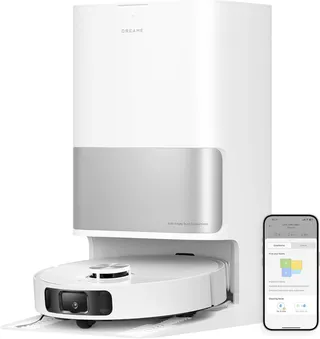
At similar prices, you’ll find the Dreame X50 Ultra (better object avoidance, 12,000 Pa suction) and ECOVACS X8 Pro Omni (superior carpet pickup at 75.5%). Both worth considering before you buy.
Who Should Buy This Robot
The Slim makes sense if you:
- Have furniture with clearance under 9 cm (sofas, beds, cabinets)
- Live in a home that’s predominantly hard floors
- Want flagship-level features at $1,000-$1,200 instead of $1,500+
- Have pets with short to medium hair that don’t shed excessively
- Live in a home of 100-250 square meters
- Value strong app control and Matter/HomeKit integration
- Want hot-water mop washing without detergent tank complexity
Look elsewhere if you:
- Have lots of high-pile or shag carpet
- Own a home larger than 300 square meters
- Have multiple heavy-shedding pets
- Rearrange furniture frequently
- Need automatic detergent dispensing
- Live in a region with limited Roborock support
The Bottom Line
The Roborock Qrevo Slim does exactly what it promises: it fits where other robots can’t. That 8.2 cm profile accesses spaces under furniture that would defeat any traditional robot vacuum. The third-place obstacle avoidance ranking and 97%+ hard floor pickup prove this isn’t just a gimmick.
But the compromises are real. That 220 ml dustbin will frustrate pet owners. Mopping performance trails competitors at this price. And the warranty support situation should give anyone pause.
Best buying strategy: Wait for a sale in the $1,000-$1,100 range. Add a third-party extended warranty for about $100. And go in with realistic expectations about what that slim profile costs you elsewhere.
For the right home, that trade-off makes perfect sense.