Suction
3,300 Pa
Battery
180 min
Navigation
Trinocular Lidar
Mopping
1 Fixed Pad
Full Specifications
| Suction Power | 3,300 Pa |
| Battery Life | 180 min |
| Dustbin Capacity | 500 ml |
| Navigation | Trinocular Lidar |
| Robot Height | 3.35" |
| Threshold Climbing | 20 mm |
| Brush Roll | Single |
| Mopping | 1 Fixed Pad |
| Self-Empty Dock | No |
| Obstacle Avoidance | Yes |
| Objects Recognized | 100 |
| Multi-Floor Maps | Yes |
| No-Go Zones | Yes |
| Carpet Boost | Yes |
| HEPA Filter | Yes |
| WiFi | 2.4 GHz |
| Voice Assistants | Alexa |
| Warranty | 1 year |
Compare with similar models:
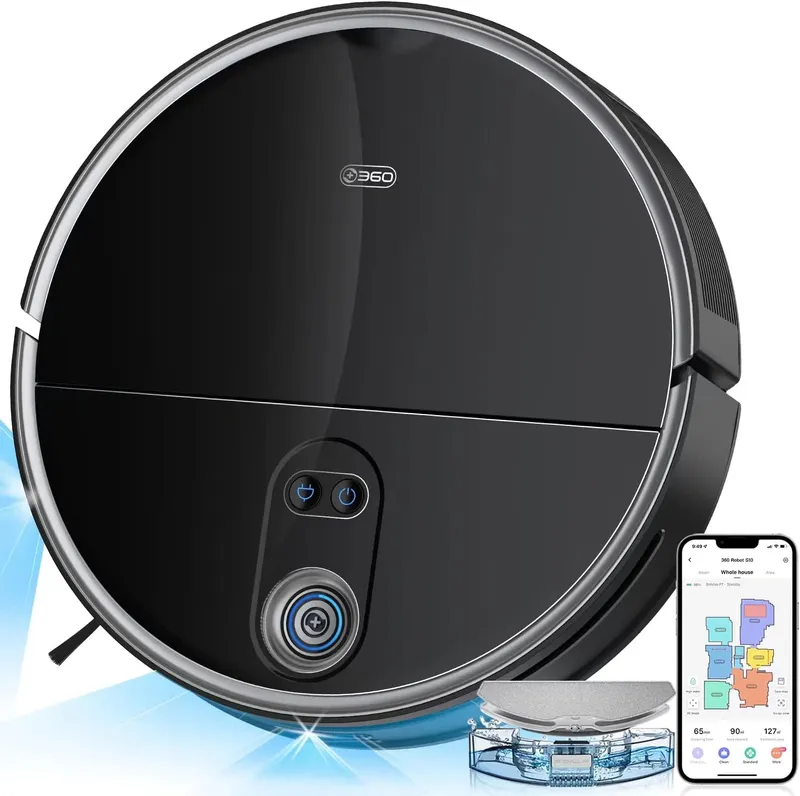
The 360 S10 solved a problem nobody else had figured out: how to pack serious LiDAR navigation into a robot slim enough to clean under your couch. At just 8.5 cm (3.35 inches) tall, this 2021 flagship from Qihoo 360 fits where competitors with bulky laser turrets simply can’t go.
But that low profile isn’t the only thing going for it. The S10 has 3300 Pa of suction (roughly 32% more than the Roborock S7 had at launch) plus a triple LiDAR system that recognizes over 100 types of obstacles without using any cameras. For privacy-conscious pet owners tired of finding their robot tangled in charging cables, that combination makes this one worth a closer look.
Price and Availability
The S10 debuted at a premium $799 through Indiegogo and Asian markets, with North American availability delayed by pandemic logistics. Street prices have since dropped to the $500-600 range. You’ll find it on Amazon, through regional distributors like Botslab, and occasionally through gray-market importers on AliExpress or eBay.
A word of caution on gray-market purchases: while cheaper, these units may lack local warranty support. The standard warranty runs one year for most regions (two years in the EU per consumer law), so buying from an authorized seller matters if something goes wrong.
Some regions sell this same hardware as the “360 X100 Max.” Parts are cross-compatible, so don’t let the naming difference throw you when shopping for accessories.
Hardware and Design
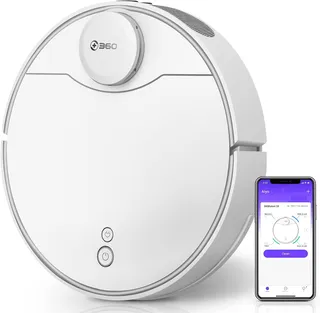
The S10 measures 35 cm in diameter and weighs 3.85 kg (8.5 lbs). That 8.5 cm height is the real story here. 360 achieved it by embedding the LiDAR sensors flush into the body rather than sticking them in a protruding turret. The result is a robot that slips under furniture where dust bunnies have been hiding for years.
The Nidec brushless motor delivers up to 3300 Pa in Max mode. Four power levels give you flexibility: Quiet (~600 Pa) for running while you sleep, Standard (~1000 Pa) for daily maintenance, Powerful (~1500 Pa) for tougher jobs, and Max for when your in-laws announce a surprise visit.
Note: Some retailer listings erroneously showed “18,000 Pa,” which is a typo. The actual spec is 3300 Pa, which independent reviews confirm as genuinely powerful in practice.
The 500 mL dustbin is above average for the category. 360 claims it holds two weeks of debris under normal use, though pet owners will want to empty more frequently. The design includes a one-touch release: press the latch and a trap door opens on the bottom, dropping debris straight into your trash without getting your hands dirty.
A washable HEPA-type filter handles fine particles, with a pre-filter mesh extending its life. The app tracks consumable status so you know when replacement is due.
Navigation Technology
Here’s where the S10 really separates itself. Instead of a single spinning LiDAR sensor, it uses what 360 calls “Trinocular LiDAR,” three separate units working together:
- One rotating laser distance sensor for 2D mapping
- Two angled lasers for 3D depth sensing and obstacle detection
This dToF (Direct Time-of-Flight) technology, the same principle NASA rovers and recent iPhones use, provides fast, precise distance measurement. The result is millimeter-accurate mapping with no blind spots, achieved without any camera that might raise privacy concerns.
The triple LiDAR array builds a 3D view of your floor and can identify over 100 types of objects: power cords, slippers, pet waste, bathroom scales, and more. The system decides whether to avoid each obstacle or push it aside. 360 claims “900% better obstacle avoidance” compared to their previous model. That’s marketing speak, sure, but real-world testing backs up the core claim that this thing navigates cluttered rooms remarkably well.
What it can’t do: extremely small objects, transparent items, and very thin obstacles may still cause problems. Pre-tidying tiny Lego pieces remains wise advice.
Six cliff sensors prevent stair tumbles. An ultrasonic carpet sensor triggers automatic suction boost on rugs and marks them as no-mop zones when the water tank is attached. The system can even judge furniture clearance height before attempting to pass underneath, reducing stuck situations.
Battery Life
A high-capacity lithium-ion battery (approximately 5000 mAh) delivers up to 180 minutes of runtime in Standard mode, enough to cover roughly 250 square meters before recharging. Testing shows it can clean about 90-100% of an 88 square meter apartment on a single charge.
Max mode cuts that runtime to roughly 60 minutes, which makes sense given the power draw. If the battery runs low mid-clean, the S10 returns to dock, recharges, then picks up where it left off. Charging time runs 4-5 hours from empty.
Some early retailer specs listed “3300 mAh,” another typo. All evidence from 360 and independent reviewers confirms the ~5000 mAh figure.
Brushes and Cleaning System
The S10 uses a single bristle-style main brush with integrated rubber fins, mounted on a floating head that adjusts to floor contours. An anti-tangle design funnels hair into the dustbin rather than wrapping it around the roller. The package includes a small cleaning tool for dealing with any hair that does accumulate.
One side brush handles edge and corner sweeping. The layout is standard for round robots, and testing shows nearly perfect (99%) pickup on hard floors.
Noise levels are around 60 dB in standard operation, quiet enough for comfortable daytime use. Quiet mode drops even lower, suitable for nighttime cleaning. Max mode naturally gets louder (estimated 70 dB range). 360 built in a dual-layer muffling air duct and suspended motor mount specifically to keep noise down without sacrificing suction.
Mopping Capabilities
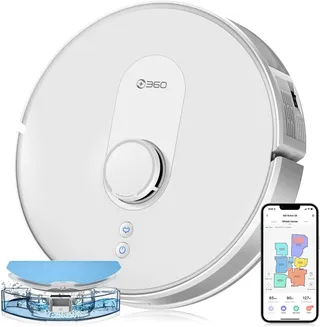
The S10 handles both vacuuming and mopping, either simultaneously or separately. An attachable 520 mL electronic water tank (larger than most competitors at ~300 mL) slides into the back of the robot. A removable plate on the tank bottom holds a microfiber mop pad.
An electronic pump manages water flow across three levels (Low, Medium, High), adjustable through the app. The large tank covers roughly 100 square meters on a single fill. An “Intelligent” mode lets you specify floor type (wood, tile, etc.) and the S10 adjusts water output accordingly.
Like most combo robots, the S10’s mopping handles light maintenance: dust, footprints, minor spills. It drags a damp microfiber pad across the floor in a back-and-forth pattern. Floors come out clean with minimal water streaks, but don’t expect it to scrub away dried-on stains. There’s no vibration or spinning action here.
The ultrasonic sensor automatically creates no-mop zones over carpeted areas. When the mop module is attached, the S10 simply won’t venture onto rugs. This works reliably (no soggy carpets) but it means the robot can’t vacuum a carpeted area during the same run it’s mopping.
Some discussions mentioned “10 mm mop lifting,” but the S10 doesn’t actually have an automatic mop lift. It relies entirely on avoidance instead.
The microfiber pad is washable and reusable. Rinse it after each session and empty remaining water from the tank to prevent mildew. No automatic pad washing or drying here; that requires fancier docking stations the S10 doesn’t use.
Software and App Features
The 360Robot smartphone app controls everything, and reviewers consistently call it one of the most feature-packed robot vacuum apps available, though “feature-packed” occasionally crosses into “overwhelming.”
The S10 uses SLAM algorithms to create detailed floor plans during its first run. Watch it trace out rooms in real-time on your phone if you enjoy that sort of thing. It stores multiple floor maps (at least three, possibly up to ten), automatically recognizing which floor it’s on when you carry it upstairs.
The app provides both 2D and 3D map views. The 3D visualization looks cool and shows furniture heights, though its practical value is debatable. As one reviewer put it: “I don’t fully get why a 3D map is necessary, but it’s fun to interact with.”
The app lets you:
- Toggle between Vacuum, Mop, or Vacuum+Mop modes
- Adjust suction power and water flow
- Send the robot to specific rooms or draw custom zones
- Set no-go areas (supporting squares, circles, and polygons, not just rectangles)
- Create separate no-mop zones
- Schedule cleanings by time, day, room, and cleaning type
- Enable two-pass “deep cleaning” mode
Voice assistant integration covers Amazon Alexa, Google Assistant, and Naver Clova. Basic commands like starting, stopping, and docking work fine. No Apple HomeKit support.
Here’s the catch: the app requires internet connectivity and routes commands through 360’s servers. If those servers hiccup (which has happened), your app may show the robot as “offline” even with working Wi-Fi. Some users have reported connectivity frustrations.
The good news: stored schedules still run when internet is down, and you can start a cleaning with the physical button on the robot. The S10 doesn’t become a brick without cloud access, but you lose app-based remote control until connectivity returns.
All features come included. No subscription fees required.
Dock and Base Station
The S10 comes with a standard charging dock: a small, low-profile cradle with metal contact pads. It includes built-in cable management to keep things tidy.
What it doesn’t include: self-emptying (you empty the dustbin by hand), mop washing or drying (you clean the pad yourself), or a protective mat (consider adding one if you mop frequently, since the robot may return to dock with a damp pad).
360 never released an auto-empty station compatible with the S10. If hands-free maintenance is a priority, you’ll need to look at other models.
What’s in the Box
- 360 S10 robot (with main brush and filter pre-installed)
- Charging dock and power cord
- One side brush
- 520 mL water tank with mop pad holder
- One microfiber mop cloth
- Cleaning tool for hair removal
- User manual
No spare filters or extra mop pads included, so budget for replacement consumables down the road.
Accessories and Ongoing Costs
Replacement parts are widely available and inexpensive:
- HEPA filters: $10-15 for multi-packs (replace every 3-6 months)
- Main brush: $10-20 (replace every 6-12 months)
- Side brushes: ~$5 each or $10 for a pair (6+ months lifespan)
- Mop pads: ~$15 for 2-4 pack
- Replacement battery: $40-60 (third-party compatible options exist for DIY replacement)
Third-party accessory kits on Amazon, eBay, Walmart, and AliExpress commonly bundle main brush, multiple filters, side brushes, and mop cloths for around $20. Annual consumable costs should run roughly $20-30 assuming normal use. No subscription fees or proprietary bags required.
Maintenance
The S10 requires standard robot vacuum upkeep:
Regular tasks include emptying the dustbin after full-house cleans (or every run with heavy pet hair), tapping out or washing the HEPA filter every week or two, checking the main brush for hair wrap weekly, rinsing and drying the mop pad after each mopping session, and wiping cliff sensors and LiDAR covers occasionally with a dry cloth.
Everything pops out tool-free for easy access. The dustbin lifts from the top, the filter slides out, and the main brush cover unclips with latches.
Users report solid build quality with few hardware failures. The hidden LiDAR design actually helps longevity since there’s no external turret to break when the robot squeezes under furniture, and less exposure to dust on the sensors. 360 claims this extends service life by 300%, which is marketing hyperbole, but the underlying point holds.
With proper care, expect 3-5 years of useful life before major components like the battery might need replacement.
Real-World Cleaning Performance
On hard floors, the S10 excels. Testing showed 99% debris pickup on hardwood, essentially flawless performance on tile, laminate, and similar surfaces. Pet hair, food crumbs, cat litter, and general dust all get collected efficiently.
On low-pile carpet, results drop to about 76% in controlled tests. The main issue is very fine debris like granulated particles that the S10 struggles to extract from thin carpet fibers. Larger debris and pet hair still get handled well. If you have mostly low-pile carpet with fine dust problems, you may need multiple passes or Max mode.
Surprisingly, the S10 performs better on thicker carpets, around 90% debris removal. The brush engages more with deeper fibers, and the automatic carpet boost helps.
Pet hair is where the S10 does its best work. Multiple users report being “absolutely shocked” at the amount of fur it pulls from carpets daily. One tester with a heavy-shedding dog empties a full bin after every run. The large dustbin handles the volume without issue.
Round robots inevitably leave traces in 90-degree corners. The S10’s side brush handles wall edges well, but expect the occasional crumb hiding in a deep corner.
The triple LiDAR system successfully avoids common hazards (cables, shoes, pet toys) far better than older robots. It slows near obstacles, threads carefully around chair legs, and won’t enter spaces it can’t pass through. Pet owners appreciate that the system recognizes pet waste, the classic “poop avoidance” scenario 360 specifically advertises.
That said, no robot is stuck-proof. Tangled cable clusters, fringed rugs, and chaotic floor clutter can still cause problems. Pre-tidying obvious hazards before runs remains good practice.
How It Compares
Compared to the Roborock S7, the S10 offers higher suction (3300 Pa vs 2500 Pa) and a larger water tank (520 mL vs 300 mL). The S7 counters with sonic mop scrubbing and a mop lift for carpet crossing, features the S10 lacks. The Roborock also scored slightly higher in carpet testing (97% vs 88%). If you prioritize carpet cleaning and want an available auto-empty dock, Roborock may suit better. If you need better obstacle avoidance and under-furniture access, the S10 wins.
Against the Roomba j7+, iRobot’s vacuum excels at carpet cleaning thanks to its dual-brush rubber system, particularly for fine debris where the S10 is only adequate. The j7 also offers an auto-empty base (with recurring bag costs). However, the S10 maps more precisely, works in complete darkness (the j7’s camera needs light), and handles mopping. Different tools for different priorities.
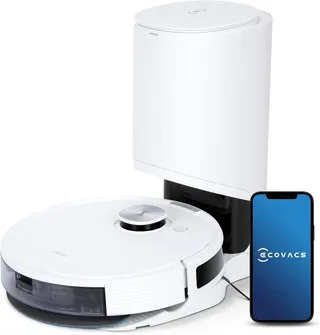
Against the Ecovacs Deebot T8 AIVI, both pioneered AI obstacle avoidance (T8 with camera, S10 with LiDAR). The S10 has stronger suction and works in low light where cameras struggle. The T8 series offers auto-empty options the S10 lacks.
Strengths
- Great navigation and obstacle avoidance without privacy-compromising cameras
- Ultra-slim 8.5 cm profile reaches under furniture other robots can’t touch
- Powerful 3300 Pa suction handles pet hair very well
- Large 500 mL dustbin and 520 mL water tank reduce how often you refill
- 180-minute runtime covers large homes in a single charge
- Feature-rich app with multi-floor mapping, custom zones, and granular scheduling
- Automatic carpet detection protects rugs during mopping
- Quiet operation at around 60 dB on standard settings
- No camera means no visual privacy concerns
- Solid build quality with few reported failures
Weaknesses
- No auto-empty dock available, so manual bin emptying is required
- Basic mopping without scrubbing or mop-lifting capability
- Adequate but not exceptional fine debris removal on low-pile carpet
- App complexity can overwhelm first-time users
- Cloud dependency means server outages disable app control
- Smaller brand presence than iRobot or Roborock for local support and retail availability
- Very bright blue LED on top that some find annoying at night
Best For
The S10 makes the most sense for:
- Pet owners dealing with regular hair and dander (with the bonus of pet waste avoidance)
- Homes with lots of furniture where obstacle avoidance and under-furniture reach matter
- Multi-level homes needing multi-floor map support
- Privacy-conscious users who don’t want cameras mapping their space
- Tech enthusiasts who appreciate granular app control
- Mixed flooring with both hard floors and rugs (automatic carpet detection works well here)
It’s less ideal if you hate emptying bins (get something with auto-empty), have wall-to-wall carpet as your primary flooring (carpet-specialized vacuums perform slightly better), or need maximum brand support and local retail availability.
Known Issues
The most common complaint involves the robot occasionally showing “offline” in the app due to 360’s cloud server issues. This typically resolves on its own but can frustrate users expecting immediate app control.
The feature-rich interface takes time to master. Some settings are tucked away in non-obvious places.
Despite some online claims, the S10 doesn’t have automatic mop lifting. It avoids carpets entirely when mopping rather than raising the pad to cross them.
Retailer listings sometimes show incorrect specifications (18,000 Pa suction, 3300 mAh battery). The accurate specs: 3300 Pa suction, ~5000 mAh battery.
Support and Warranty
Standard warranty runs one year (two years in EU). Support channels include email (through Botslab), phone (a US toll-free number exists: 1-866-360-0505), and regional distributor contacts.
Support responsiveness has been mixed. 360 is a large tech company but their home robotics division is smaller-scale than competitors like iRobot. Users importing gray-market units may face additional hurdles getting warranty service.
An active Reddit community exists for troubleshooting and tips, and Facebook groups discuss 360 robot vacuums. These peer resources often solve minor software issues faster than official channels.
The Bottom Line
The 360 S10 punches above its weight in navigation technology and under-furniture access while delivering strong overall cleaning performance. Its triple LiDAR system provides obstacle avoidance that rivals camera-based competitors without the privacy trade-offs. The slim profile genuinely reaches spaces other premium robots can’t touch.
The trade-offs are real: no auto-empty dock, basic mopping without scrubbing action, and cloud-dependent app control that occasionally stutters. Fine debris pickup on low-pile carpet trails the best performers by a meaningful margin.
For pet owners with mixed flooring, furniture-heavy rooms, and a preference for privacy, the S10 remains a solid choice even years after its 2021 launch. Just know what you’re getting: a navigation-first robot that requires manual maintenance but rarely needs rescuing from obstacles or stuck situations.