Dreame D9 Max
Released 2021
Suction
4,000 Pa
Battery
210 min
Navigation
Spinning Lidar
Mopping
1 Fixed Pad
Full Specifications
| Suction Power | 4,000 Pa |
| Battery Life | 210 min |
| Dustbin Capacity | 570 ml |
| Navigation | Spinning Lidar |
| Robot Height | 3.8" |
| Threshold Climbing | 20 mm |
| Brush Roll | Single |
| Mopping | 1 Fixed Pad |
| Self-Empty Dock | No |
| Obstacle Avoidance | Yes |
| Multi-Floor Maps | Yes |
| No-Go Zones | Yes |
| Carpet Boost | Yes |
| HEPA Filter | Yes |
| WiFi | 2.4 GHz |
| Voice Assistants | Alexa |
| Warranty | 1 year |
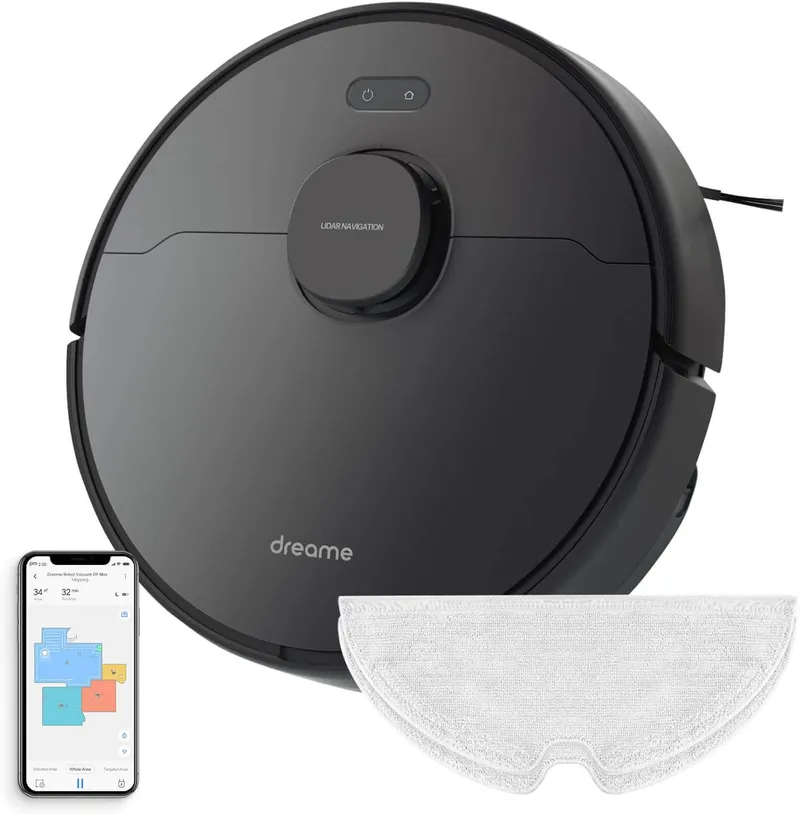
Compare with similar models:
Dreame D9 Max Robot Vacuum
The Dreame D9 Max proves that you don’t need to spend $500+ to get a robot vacuum with serious capabilities. Released in late 2021 and still going strong, this budget-friendly cleaner packs LiDAR navigation, 4,000 Pa suction, and a mopping function into a package that regularly sells for under $200. It’s not perfect—no robot at this price is—but it nails the fundamentals better than most competitors in its class.
What You’re Getting
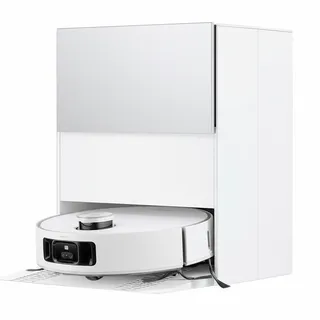
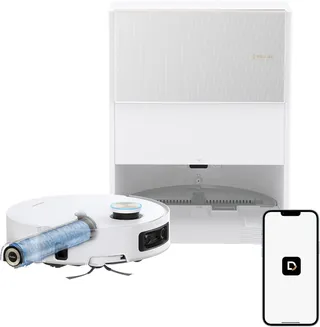
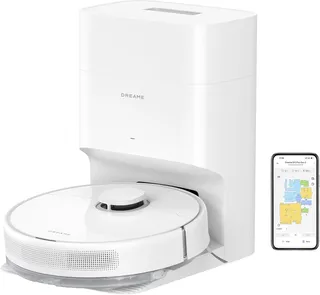
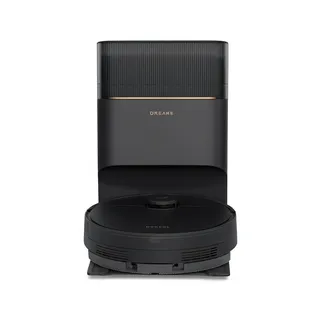
The D9 Max weighs 3.67 kg (about 8 lbs) and measures 350mm in diameter with a height of just 96mm (3.8 inches). That compact profile lets it slide under most sofas and beds without getting stuck. You can pick it up in either glossy white or matte black.
The original D9 Max launched around $299, but street prices have dropped significantly. Expect to pay $150–$200 in the US during 2025, with similar budget pricing in other markets. A Gen 2 refresh from 2023 bumps the suction to 6,000 Pa and extends runtime to 240 minutes if you want slightly better specs.
You’ll find it on Amazon, AliExpress, Dreame’s official store, and brick-and-mortar retailers in Europe and the UK.
Hardware That Punches Above Its Weight
Suction Power: The 4,000 Pa maximum suction comes from a quality Nidec brushless motor. (Some listings incorrectly claim 18,000 Pa—that’s wrong. The official spec is 4,000 Pa.) Independent testing of similar Dreame models measured around 16 CFM peak airflow in Turbo mode.
Dustbin: The 570ml internal bin needs manual emptying since there’s no self-empty dock option. Some listings mistakenly say 1,000ml, but that’s incorrect.
Filtration: A washable HEPA-type pleated filter traps fine dust and prevents debris from escaping. Let it air-dry for 24 hours after washing before reinstalling.
Brush System: A single 16.8cm main brush features a V-shaped fin pattern with comb-like teeth that resist hair tangles. The all-rubber design with detachable end caps makes cleaning straightforward. One tri-spoke nylon side brush handles edge sweeping. Dreame also sells an optional “TriCut” anti-tangle brush that slices through long hair.
Navigation: The spinning LiDAR turret provides SLAM navigation for efficient, methodical cleaning paths. Cliff sensors prevent stair tumbles, and wall distance sensors help it hug baseboards. What it lacks: any AI camera or 3D obstacle detection. The D9 Max will bump into unseen objects like cables or socks rather than avoiding them—more on that later.
Battery: The 5,200 mAh lithium-ion pack delivers up to 210 minutes in quiet mode on hard floors—roughly 250 square meters of coverage in ideal conditions. Real-world mixed vacuum/mop use typically yields around 150 minutes. Testing showed the robot easily handled a 156 square meter home with 65–73% battery remaining. Charging takes about 3 hours.
Climbing Ability: Handles thresholds up to 20mm (just under an inch) without trouble.
Noise Level: Expect 63–65 dB in Quiet/Standard modes (a low hum you can talk over) rising to around 70 dB on maximum power.
The Mopping Reality Check
The D9 Max handles both vacuuming and mopping, but set your expectations accordingly. This is passive mopping—a microfiber pad attached to a 270ml water tank drags along the floor, kept damp by electronically-controlled water flow. Three water levels let you adjust wetness through the app.
What it does well: Light surface cleaning, picking up fine dirt, leaving floors with a mild sheen. Fresh spills get wiped up effectively.
What it doesn’t do: Scrub. There’s no downward pressure mechanism or vibrating action. In testing, the robot barely touched a dried ketchup stain without manual pre-soaking. Stuck-on grime needs multiple passes or pre-treatment.
The carpet problem: The D9 Max cannot lift its mop pad when crossing carpet. Any claim of “10mm lift” is incorrect—the mop stays fixed at floor level. If you run it with the mop attached, it will drag a wet pad across any carpet it encounters. Your options: create no-mop zones for rugs in the app, or remove the mop attachment entirely when vacuuming carpeted areas. This limitation makes mixed-floor homes less convenient unless you run separate vacuum-only and mop-only jobs.
The 270ml tank covers roughly 150–200 square meters per fill. The app offers “Daily” and “Deep” mopping modes—Deep uses tighter overlapping passes, though the difference is subtle since there’s no actual scrubbing action.
After mopping, wash the pad immediately to prevent odors. The app will remind you. Plan to replace pads every 3–6 months with regular use.
App and Smart Features
The Dreamehome app (Android/iOS) controls everything. Fair warning: it has a 2.2-star rating on Google Play, with users reporting sluggish map editing, occasional connection hiccups, and some translation oddities. The features work, but the experience can be rough around the edges.
Mapping: The LiDAR creates a detailed, editable floor plan on the first run. The robot automatically divides rooms (which you can rename or adjust), and supports up to three separate maps for multi-floor homes. You can draw no-go zones, no-mop zones, and virtual walls wherever needed.
Cleaning Modes: Choose between vacuum-only, mop-only, or combined cleaning. Suction adjusts across four levels (Quiet, Standard, Strong, Turbo), water flow across three. Carpet Boost automatically kicks suction to maximum when the robot detects carpet, then drops back to normal on hard floors.
Room and Zone Cleaning: Tap specific rooms on the map for targeted cleaning, set the number of passes, or use spot-clean mode for concentrated areas.
Scheduling: Set up automated cleanings by time, day, room, and mode. Early reviews noted missing scheduling features, but app updates resolved this.
Voice Control: Works with Amazon Alexa and Google Assistant out of the box. Siri Shortcuts are supported, though there’s no native HomeKit or Matter integration.
Firmware Updates: OTA updates come through the app, but support for the D9 Max has been minimal. Some mapping bugs were never fully patched, and significant updates stopped as Dreame shifted focus to newer models.
The Basic Dock
This is a charging-only dock—no auto-empty, no water tanks, no mop washing. The compact base (about 14cm × 13cm footprint, 9.4cm tall) uses two charging pins and an IR signal emitter for docking guidance.
When the battery runs low mid-clean, the robot returns to charge, tops up, then resumes where it left off. This recharge-and-resume behavior lets it handle larger homes across multiple charging cycles.
Place the dock on a hard, flat surface with about half a meter of clearance on each side. Avoid direct sunlight on the sensor window, which can confuse the docking IR sensors.
What’s in the Box and Ongoing Costs
The package includes: the robot with 570ml dustbin and HEPA filter pre-installed, the charging dock with power cord, a 270ml water tank with one washable mop pad, one side brush, a cleaning tool, and user manual. No spare filter or extra mop pad included.
Replacement Part Lifespans:
- Filter: roughly 150 hours (3–6 months)
- Main brush: roughly 300 hours (6–12 months)
- Side brush: roughly 200 hours (6–9 months)
- Mop pad: 3–6 months
2025 Prices:
- Filters: $15–$20 for a genuine 2-pack
- Main brush: $15 genuine, $10 generic
- Side brushes: $10 for a 2-pack
- Mop pads: $15 for a 2-pack
- Third-party combo kits: $20–$25
Battery Replacement: Compatible 14.4V packs (5,200–6,800 mAh) run $40–$60. The battery should last 2–3 years before noticeable capacity loss. Replacing it requires removing the bottom cover with screws—doable for anyone comfortable with basic tools.
Annual Cost Estimate: Budget $40–$60 for typical usage. Homes with heavy pet hair might go through filters faster, adding a bit more.
Maintenance and Durability
Daily upkeep is minimal: empty the dustbin after full runs, clean hair off the brush weekly, wash the mop pad after each use. The dustbin and filter pop out with one button under the top lid. The main brush guard unlatches with a clip, and the side brush is a single screw. Everything except the electronics is washable—just dry thoroughly before reinstalling.
Monthly tasks include wiping the cliff sensors and LiDAR window to maintain navigation accuracy.
Build quality is solid for the price. The Nidec motor and LiDAR turret are proven components that typically last years. Expect the battery to run at 70–80% original capacity by year three—normal lithium-ion behavior.
Reported Issues: Some early units had noisy side brush motors or wheel squeaks. One user reported vacuum motor failure after 19 months. Mapping bugs occasionally cause the robot to corrupt or reset its map, requiring remapping. These issues affect a minority of units, but they’re documented.
With proper maintenance, expect 3–5 years of service before any major component needs replacement.
Warranty and Support
Standard warranty runs 12 months in North America and Asia (24 months effective in the EU/UK under consumer law). Coverage handles manufacturing defects and hardware failures under normal use—not wear items like brushes, filters, or mop pads.
Support channels include email (aftersales@dreame.tech) and web contact forms. Phone support isn’t available everywhere. For hardware failures within warranty, Dreame typically offers replacement or refund rather than repair, since they don’t maintain widespread service centers.
User experiences with support are mixed. Some report quick, helpful responses; others find it slow or script-driven. If you buy through Amazon, their return process often proves faster for initial issues.
Cleaning Performance
Hard Floors: The D9 Max excels here. Fine dust, pet hair, and crumbs get picked up effectively in one pass. The sealed dustbin and HEPA filter mean it doesn’t blow debris back out. One caveat: larger or lightweight debris (dry oats, cat litter) can scatter initially before getting captured on subsequent passes. Using Quiet or Standard mode reduces flicking compared to Turbo.
Carpets: Impressive for a robot at this price. With Carpet Boost enabled, the 4,000 Pa suction concentrated through the brush opening removes 90%+ of fine debris from medium-pile carpet in one or two passes. It cleans spilled materials from carpet almost entirely after two passes. Larger particles don’t get flung around like they do on hard floors. Very plush or high-pile carpets may stall it or see reduced performance.
Pet Hair: Multiple pet owners report excellent results. The anti-tangle brush design means long fur rarely jams the roller—you won’t spend much time cutting hair off compared to older bristle-brush vacuums. Heavy shedders might fill the 570ml bin in a single run.
Edges and Corners: The round shape can’t physically reach deep into 90-degree corners, but the side brush and wall-tracking sensor do decent work sweeping debris into the suction path. Edges are well-cleaned except for a fine line right against the wall. Performance here matches other round robot vacuums—adequate but not perfect.
Deep Cleaning: Don’t expect miracles. The D9 Max keeps surfaces tidy but won’t replace an upright vacuum for deeply embedded carpet dirt. After the D9 Max reports a full dustbin, running a Dyson stick vacuum will still pick up additional deep dust. That’s normal for robot vacuums—they’re maintenance tools, not heavy-duty cleaners.
Navigation and Obstacle Handling
The LiDAR navigation plans efficient zig-zag paths: outline the room perimeter, then fill in with straight lines. Coverage typically exceeds 95% of accessible floor area. The robot looks logical and efficient rather than bouncing randomly like older bump-based models. It also navigates in complete darkness since LiDAR doesn’t need light.
The obstacle problem: Without an AI camera or structured light sensor, the D9 Max relies on its bumper to detect objects. Small or low obstacles—cables, socks, pet toys—don’t register until contact. In testing, it ran over a cable (getting tangled), tried to suck up a sock, and pushed a shoe around. It didn’t spot any of them beforehand.
This means floors need pre-tidying before unattended runs. If your home frequently has clutter on the floor, the D9 Max will struggle. In a reasonably tidy home, it navigates furniture legs and common obstacles well after mapping them.
Getting Stuck: Rare, thanks to the 20mm climbing ability and good traction. It handles thresholds, rug edges, and floor transitions smoothly. Watch out for furniture with just slightly too low clearance—the LiDAR turret needs about 100mm to pass under.
Return to Dock: Highly reliable. LiDAR gives it global positioning, so it plots a direct path back rather than roaming aimlessly.
Pet Owner Considerations
The D9 Max handles pet hair effectively on all surfaces. The HEPA filter traps dander and fine particles, reducing allergens. Multiple pet households report significantly reduced fur buildup with daily runs.
Critical warning: The D9 Max cannot detect pet waste. If it encounters solid waste on the floor, it will smear it with the brush and wheels. No AI avoidance cameras exist on this model. Don’t run it unattended if an untrained puppy or sick pet might leave surprises.
Most pets acclimate to the robot fairly quickly. The relatively quiet operation (especially on lower settings) and predictable movement patterns seem less threatening than erratic older models. If your pets are skittish, run it while they’re in another room initially.
Consider creating no-go zones around pet food and water bowls. Light plastic bowls can get tipped; heavy ceramic ones are usually fine. Do a “toy sweep” before runs—small toys can jam the brush or cause the robot to stop.
Home Compatibility
Coverage: Handles up to roughly 250 square meters on one charge in ideal conditions. For larger homes, it automatically manages multiple recharge cycles.
Multi-Floor: Supports up to three separate maps, but you need to manually switch maps when carrying it between floors—there’s no automatic floor detection.
Floor Types: Compatible with hardwood, laminate, tile, linoleum, marble, and carpets up to medium pile. Transitions between surfaces seamlessly with automatic suction adjustment. One caveat: very dark/black carpets may trigger cliff sensors as false “cliffs,” causing the robot to avoid them. This is a general limitation of IR cliff sensor technology.
Clearance: At 96mm tall, it fits under most furniture with 4+ inches of clearance. Measure low pieces before running—if a gap is 3.5 inches, the robot will wedge itself trying to squeeze under.
Stairs: Cliff sensors prevent falls. Works reliably on standard stairs; very dark marble or glass floors might occasionally confuse sensors.
Cables and Lightweight Items: These need management. Thin charging cables will get snarled. Very lightweight mats without rubber backing may get pushed or bunched.
How It Compares
In the ~$200 range, the D9 Max outclasses random-navigation robots (like many Eufy or Roomba 600 series models) thanks to LiDAR. It covers homes more efficiently and completely.
Compared to the Roborock Q5 (LiDAR, 2,700 Pa, no mop), the D9 Max adds mopping capability and slightly stronger suction. The Q5+ package with auto-empty dock (~$350) offers the self-emptying the D9 Max lacks.
Spending more ($400–$600) gets you features like auto-empty docks, mop lifting for carpets, AI obstacle avoidance, and vibrating mop pads. The D9 Max’s cleaning performance actually holds its own against many of these pricier options—what you’re really paying extra for is convenience and automation.
Best for: Budget-conscious buyers who want high-end navigation and cleaning performance but can handle manual dustbin emptying and mop maintenance. Pet owners needing daily fur cleanup. Anyone wanting a capable entry into robot vacuums without spending a fortune.
Not ideal for: Very cluttered environments (the obstacle avoidance will frustrate you). Anyone who hates emptying dustbins (look for a model with auto-empty). Homes requiring serious mop scrubbing power.
Known Issues
Mapping bugs: A minority of users report corrupted maps requiring remapping, or the robot “drifting” over time and needing position resets.
App problems: Sluggish processing, clunky room division tools, occasional connection hiccups, and poor localization (odd translations in some menus).
Hardware quality control: Isolated reports of noisy side brush motors, wheel issues, or early motor failure. These appear to be manufacturing flukes rather than design flaws, but they’re documented.
Firmware: Minimal updates since release. Known bugs remain unpatched as Dreame focused on newer models.
No recalls have been issued, and no widespread safety issues reported.
Limitations Worth Knowing
- Cannot identify or avoid small hazards (cables, socks, pet waste)
- No self-empty or mop self-cleaning—requires manual intervention after each run
- Mop pad doesn’t lift for carpets
- Cannot scrub floors or remove stubborn stains
- Cannot climb obstacles higher than 20mm
- Indoor use only
- Very dark floors may trigger false cliff detection
- 2.4 GHz Wi-Fi only; no HomeKit or Matter support
- Minimal on-device controls without the app
The Bottom Line
The Dreame D9 Max delivers genuinely impressive cleaning and navigation for its price. The 4,000 Pa suction handles debris well, the LiDAR mapping provides efficient coverage, and the long battery life tackles larger homes without issue. It’s not the most automated or convenient robot vacuum you can buy—you’ll empty the bin, wash the mop pad, and tidy floors before runs. But if you want effective daily floor maintenance without spending $400+, the D9 Max remains one of the best values in its category.